
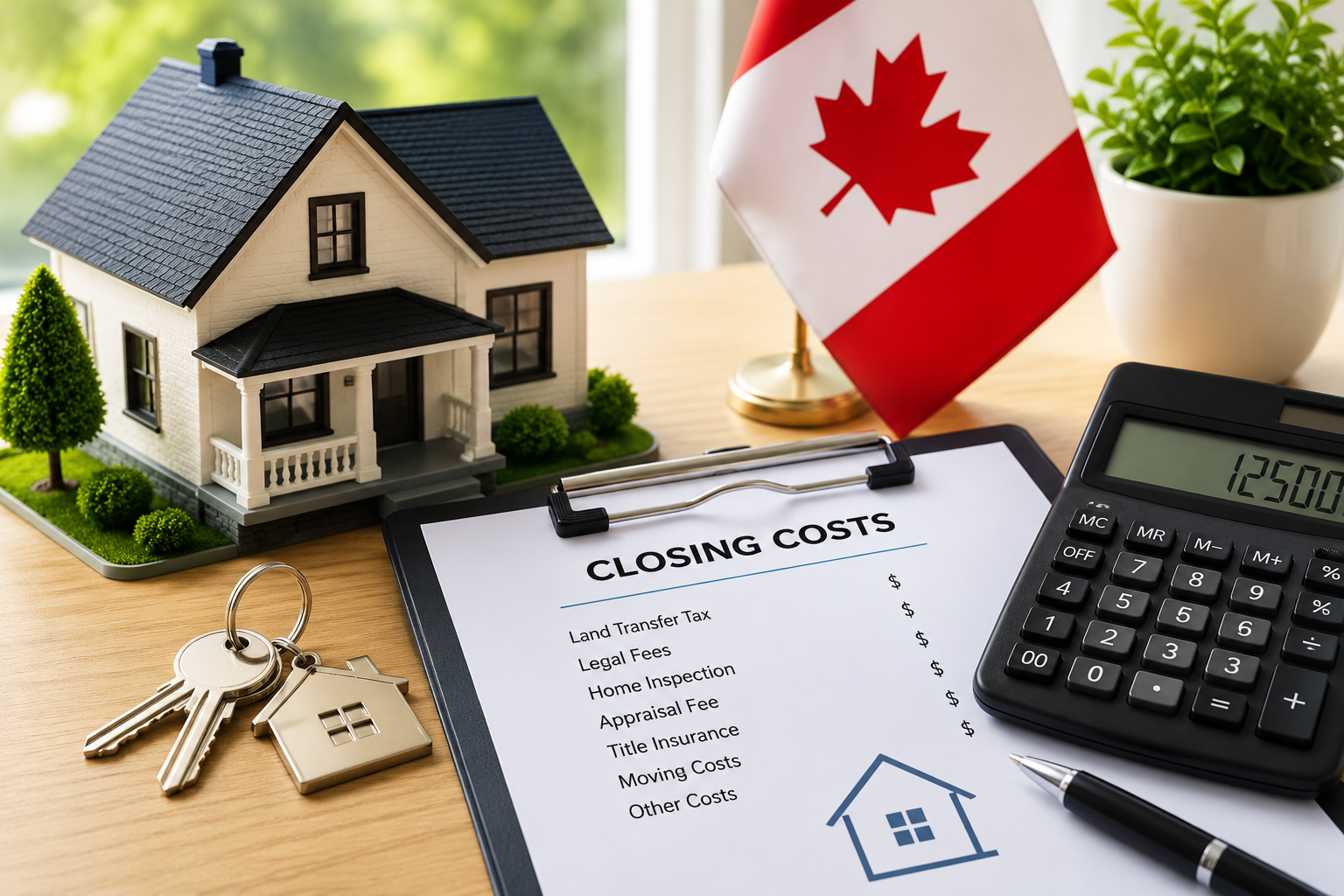
Buying a home involves more than saving for a down payment and qualifying for a mortgage. Home buyers also need to prepare for expenses associated with completing the purchase.
These expenses are commonly referred to as closing costs. The amount you pay can vary significantly depending on the province or territory, the property, the purchase price and the services required to complete the transaction.
Understanding closing costs in Canada before making an offer can help you build a more realistic home-buying budget and avoid unexpected expenses near your closing date.
Table of Contents
What Are Closing Costs in Canada?
Closing costs are expenses associated with completing a home purchase that are separate from the home’s purchase price and down payment.
There isn’t one standard closing-cost amount that applies to every Canadian home buyer. Some costs depend on provincial or municipal rules, while others depend on your property and transaction.
For example, a typical purchase may involve a land transfer tax or similar tax, legal fees, title insurance or survey-related expenses.
This is why it’s important to consider more than your mortgage payment when deciding how much home you can afford. The Financial Consumer Agency of Canada also advises prospective homeowners to consider the full costs of home ownership.
Common Closing Costs for Home Buyers
Here are some of the expenses you may encounter when purchasing a home in Canada.
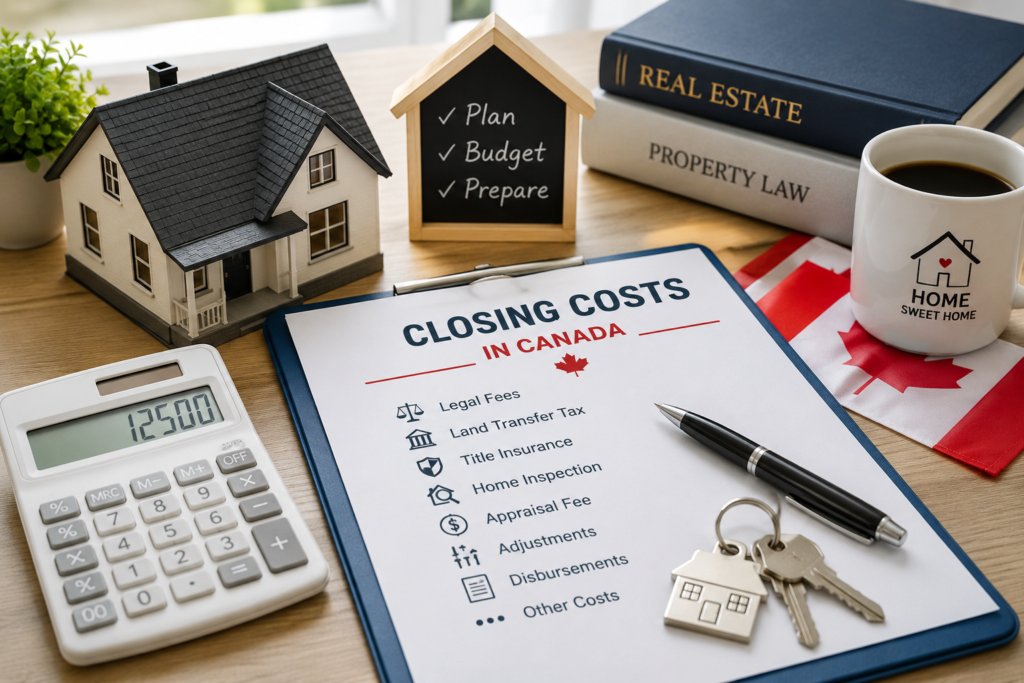
| Closing Cost | What It May Cover |
|---|---|
| Land transfer tax | Tax associated with transferring ownership, where applicable |
| Legal fees | Lawyer or notary services required to complete the purchase |
| Title insurance | Protection against certain title-related risks |
| Home inspection | Professional inspection of the property’s condition |
| Property appraisal | Assessment of the property’s value when required |
| Property tax adjustments | Your share of taxes already paid by the seller |
| Moving expenses | Costs associated with moving into the home |
Not every buyer will pay every cost in this table, and amounts can vary substantially.
Land Transfer Taxes
One potentially significant expense is a land transfer tax, sometimes called another name depending on the jurisdiction.
These taxes aren’t uniform across Canada. The amount and rules depend on where the property is located, so buyers should check the requirements of their province, territory and municipality rather than relying on a single Canada-wide estimate.
This is particularly important when comparing homes in different locations.
Legal Fees and Title Insurance
Legal work is another common part of closing a home purchase.
A lawyer or notary may be involved in reviewing documents, completing the transfer of ownership and handling funds related to the transaction. The exact process varies by jurisdiction and transaction.
Title insurance may also form part of a home purchase. Government guidance lists survey costs or title insurance premiums, legal fees and associated legal disbursements among costs that can arise in a typical purchase transaction.
Home Inspection and Appraisal Costs
A home inspection can help a buyer learn more about the condition of a property before completing a purchase.
Canada.ca specifically recommends considering a home inspection when buying a home.
An appraisal is different. It estimates the property’s value and may be requested in connection with mortgage financing. Whether you need one and who pays for it can depend on the lender and transaction.
Because these costs vary, it’s better to obtain actual quotes than assume a fixed national price.
Don’t Forget Home Insurance
Home insurance is another expense to plan for when becoming a homeowner.
Your insurance costs can depend on factors including the property itself, location, coverage and deductible. We’ve covered this separately in our Home Insurance in Canada guide.
Canada.ca also lists home insurance among the ongoing costs prospective homeowners should plan for, along with property taxes, utilities, repairs and maintenance.
Property Taxes and Adjustments
Property taxes can also affect the amount required at closing.
Depending on the timing of your purchase, adjustments may be made between the buyer and seller for expenses that have already been paid.
Your lawyer or notary can explain the adjustments that apply to your particular transaction.
After closing, remember that property taxes become part of your ongoing cost of home ownership.
What About GST/HST on a New Home?
Taxes on new housing require special attention because the rules differ from buying a typical resale home.
Eligible buyers may qualify for GST/HST housing rebates. In addition, the federal First-Time Home Buyers’ GST/HST Rebate is now available.
The federal rebate provides 100% of the GST or federal portion of HST for eligible first-time buyers of new homes valued up to $1 million, with reduced relief for eligible homes between $1 million and $1.5 million. Eligibility conditions apply.
Because this is a specific tax program, buyers should check current CRA eligibility rules rather than assuming the rebate applies automatically.
How to Prepare for Closing Costs
The safest approach is to start planning for these expenses before making an offer.
Ask your mortgage professional, lawyer or notary which costs are likely to apply to your transaction. Check provincial and municipal taxes for the location where you’re buying, and get actual quotes for services such as inspections and legal work.
If you’re still preparing financially for a purchase, our guides to Mortgage Pre-Approval in Canada, Down Payment in Canada, and Home Insurance in Canada can help you work through the major stages of buying a home.
Frequently Asked Questions
Are closing costs included in the down payment?
No. A down payment is the amount you contribute toward the purchase price of the property. Closing costs are separate expenses associated with completing the transaction.
Are closing costs the same everywhere in Canada?
No. Taxes, legal procedures and other expenses can vary by province, territory, municipality and transaction.
Do I need a home inspection?
A home inspection can provide information about the property’s condition before purchase. Whether you make an inspection a condition of your offer is a decision that depends on your transaction and circumstances.
Do first-time home buyers get help with closing costs in Canada?
Some closing costs in Canada may be affected by federal programs and tax measures available to eligible first-time buyers. For example, the Home Buyers’ Amount is a federal non-refundable tax credit, and eligible buyers of qualifying new homes may now benefit from the First-Time Home Buyers’ GST/HST Rebate.
How much should I budget for closing costs?
There is no single amount for closing costs in Canada that applies to every buyer.
Closing costs in Canada depend on the property’s location, purchase price, taxes and services required. For accuracy, calculate the costs applicable to your specific transaction rather than relying on a universal estimate.
Official Resources
Canada.ca — Buying a Home
Canada.ca — Newcomers: Buying a Home in Canada
CRA — First-Time Home Buyers’ GST/HST Rebate
CRA — Home Buyers’ Amount