Christmas in Rome left me with a few memories I still think about.
One of the things I most wanted to do during the trip was visit the Jubilee Holy Doors in Rome before they closed. I had spent Christmas Eve at the Vatican, and on the evening of December 25, I went to the Basilica di Santa Maria Maggiore, hoping to walk through its Holy Door.
Table of Contents
Christmas Evening at Santa Maria Maggiore
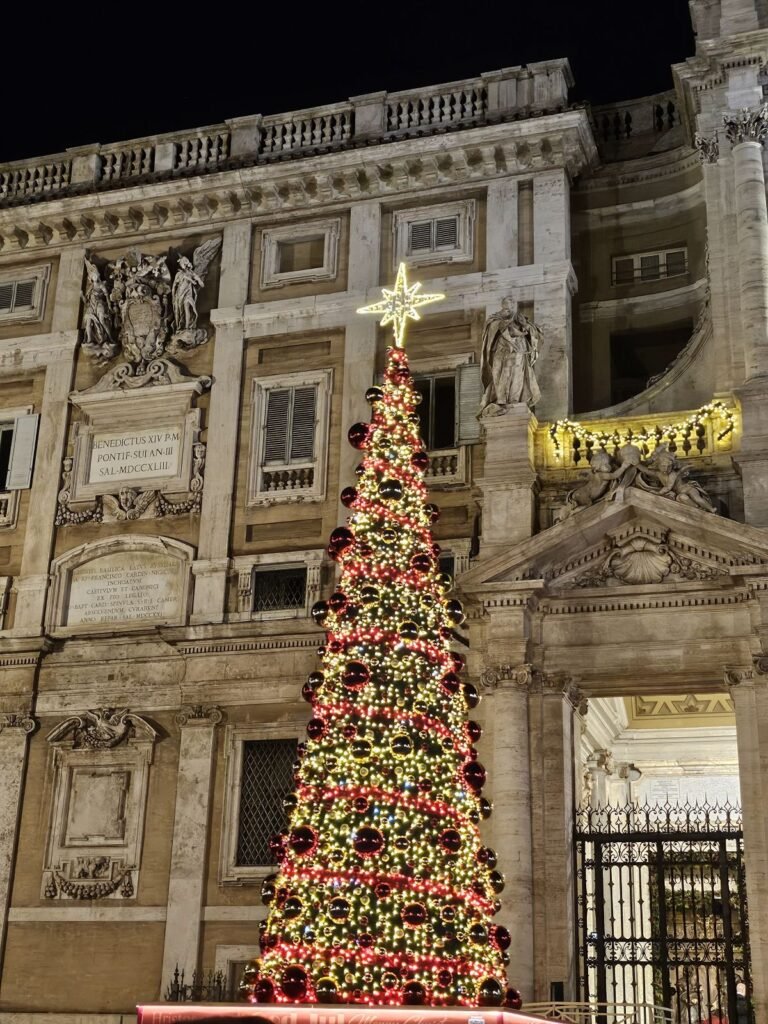
By the time I arrived, it was already dark.
A large Christmas tree was lit up in front of the basilica, and there were people everywhere. The line was much longer than I expected.
At first, I just thought it was because it was Christmas Day. Still, the line seemed unusually long.
I had come all the way there hoping to walk through the Holy Door.
But when I got closer, I realized I was too late.
The Holy Door Was Already Closed
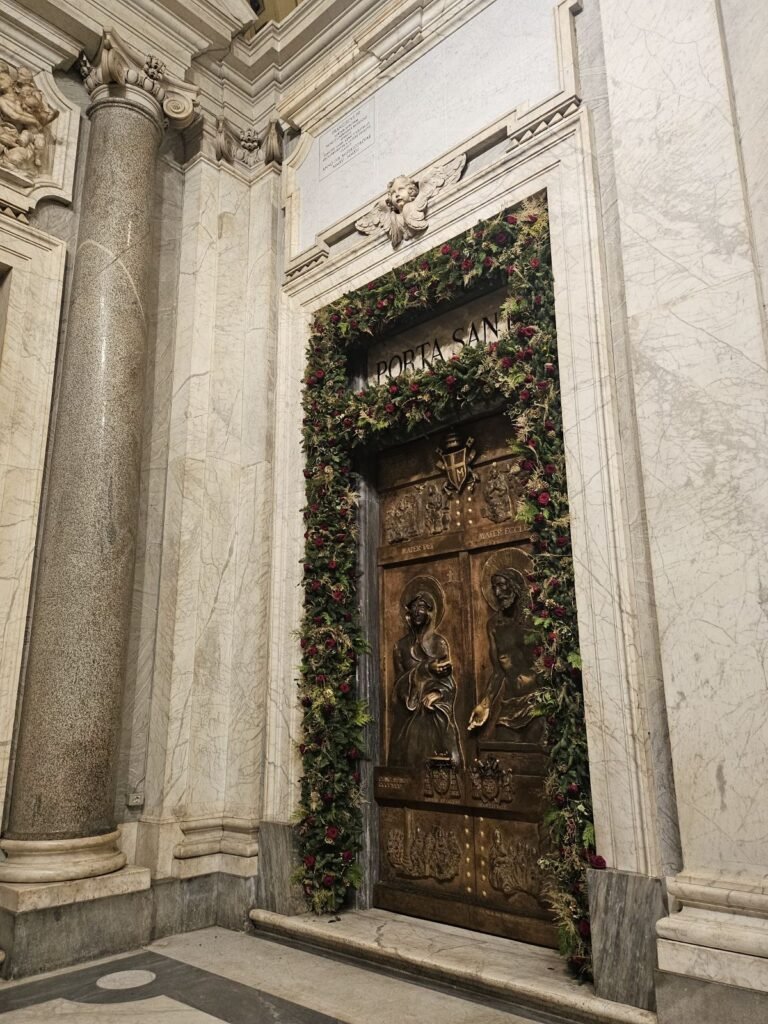
That same evening, Santa Maria Maggiore had held the ceremony and Mass for the closing of its Jubilee Holy Door.
I hadn’t known that before I went.
By the time I arrived, the ceremony was already over and the door had been closed.
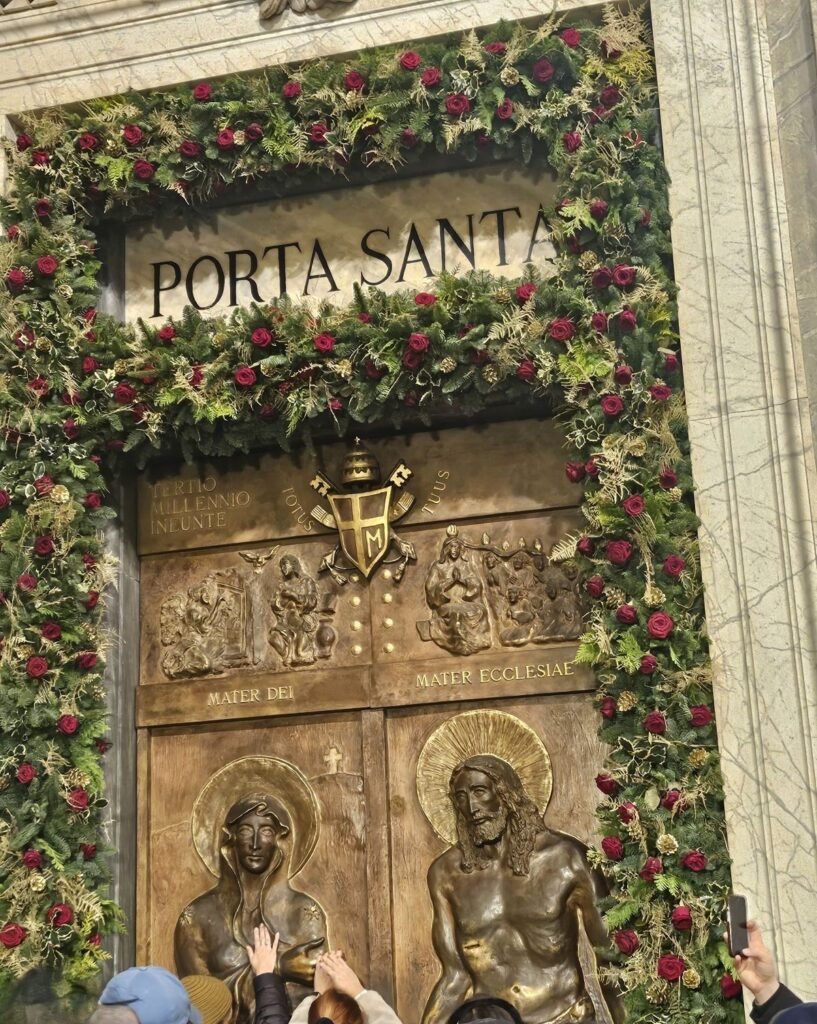
I was so disappointed.
It wasn’t just that I had missed something famous. Walking through the Holy Door was the reason I had gone there in the first place.
Standing right in front of it and knowing I had just missed my chance was harder than I expected.
I ended up crying.
There was a woman standing near me who seemed to be in the same situation. I think she had also come hoping to walk through the door.
When she saw me crying, she came over and hugged me.
We didn’t know each other, and we barely said anything. But we both seemed to understand why the other person was upset.
I never got to walk through that Holy Door, but I still remember that woman.
Out of everything that happened that evening, her kindness is one of the things that stayed with me most.
Inside Santa Maria Maggiore
I didn’t turn around and leave after that. I went inside and attended Mass.
Santa Maria Maggiore is one of Rome’s four papal basilicas, and it also has a strong connection to the Nativity.
Inside is the Sacra Culla, or Holy Crib, which contains wooden fragments traditionally associated with the manger where Jesus was laid after his birth.
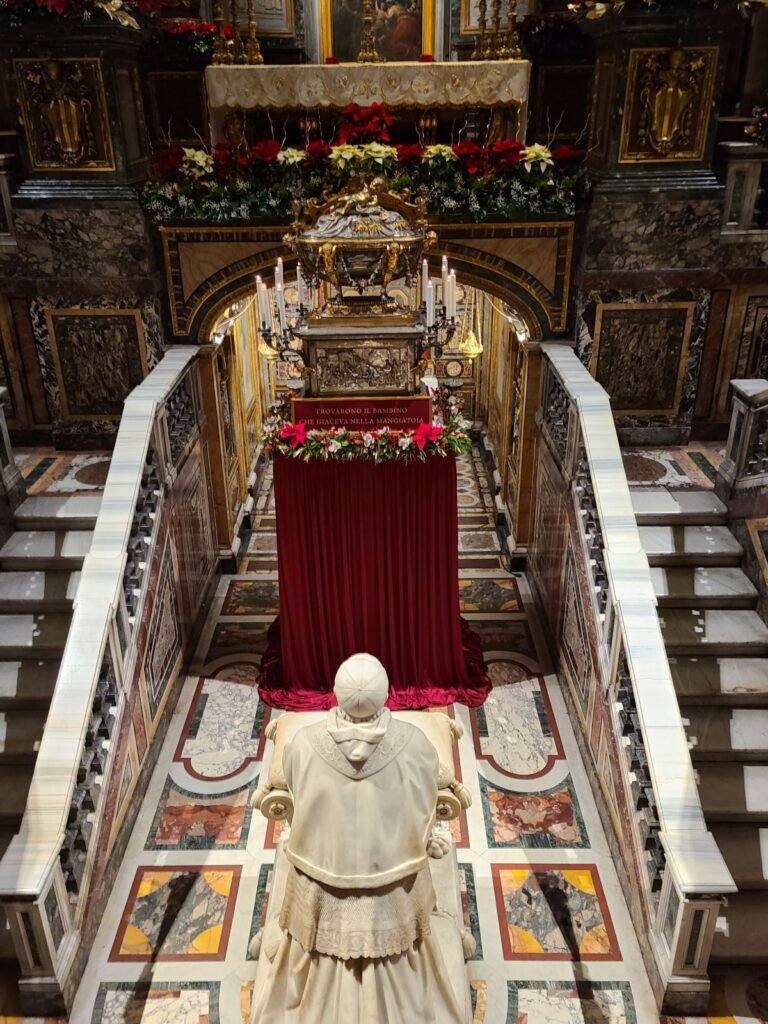
During the Christmas season, the area was decorated with red and white poinsettias.
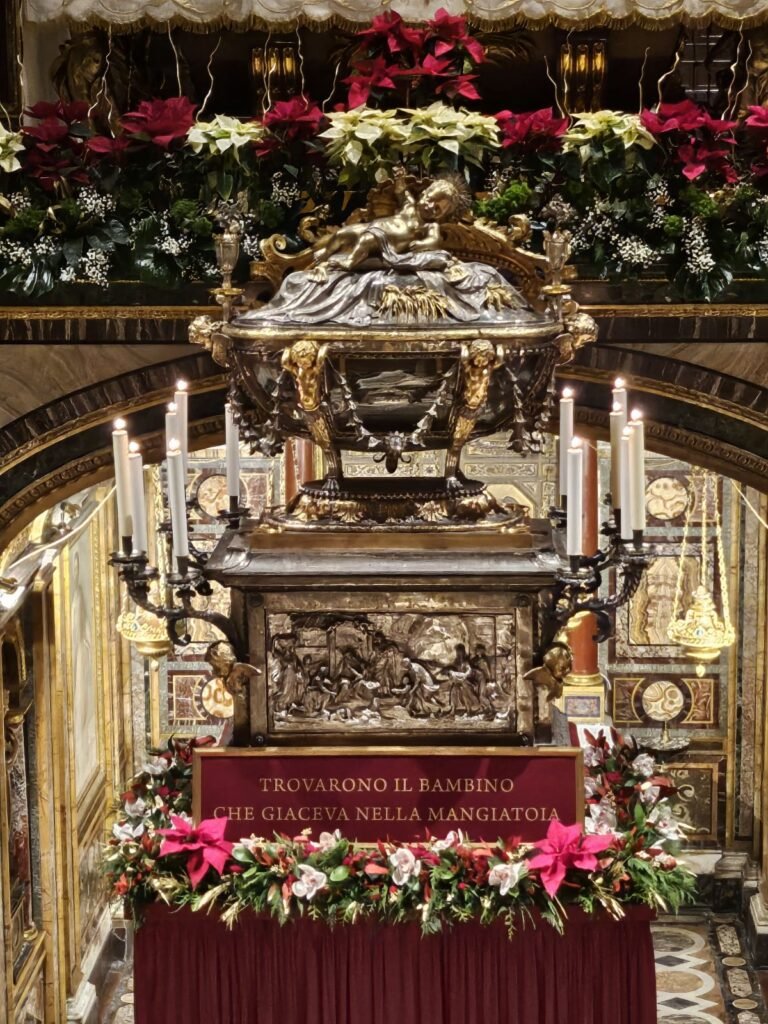
The display also included a figure of the baby Jesus, which felt especially fitting at Christmas.
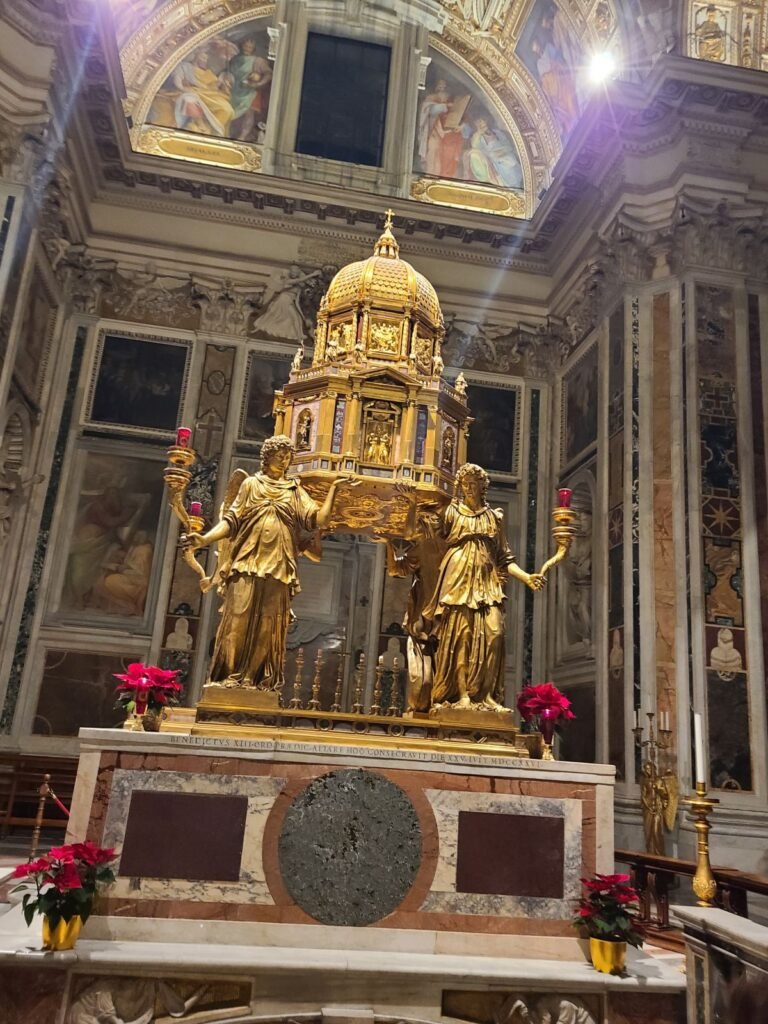
The basilica was beautiful, with gold details, marble, paintings, and decorated chapels.
Even though things did not go as planned, I was glad I stayed for Mass and spent some time inside Santa Maria Maggiore.
After that, I went back to rest and continued my church visits the next morning.
The Next Morning: St. Paul Outside the Walls
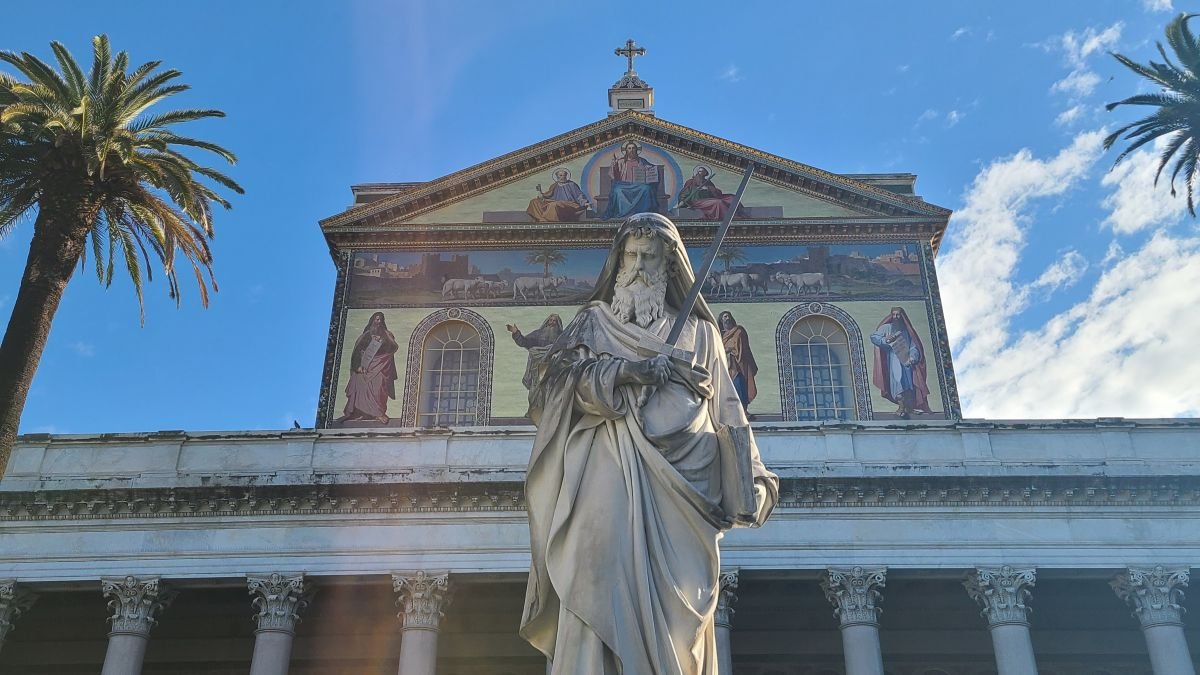
On December 26, my first stop was the Basilica of St. Paul Outside the Walls, or Basilica di San Paolo fuori le Mura.
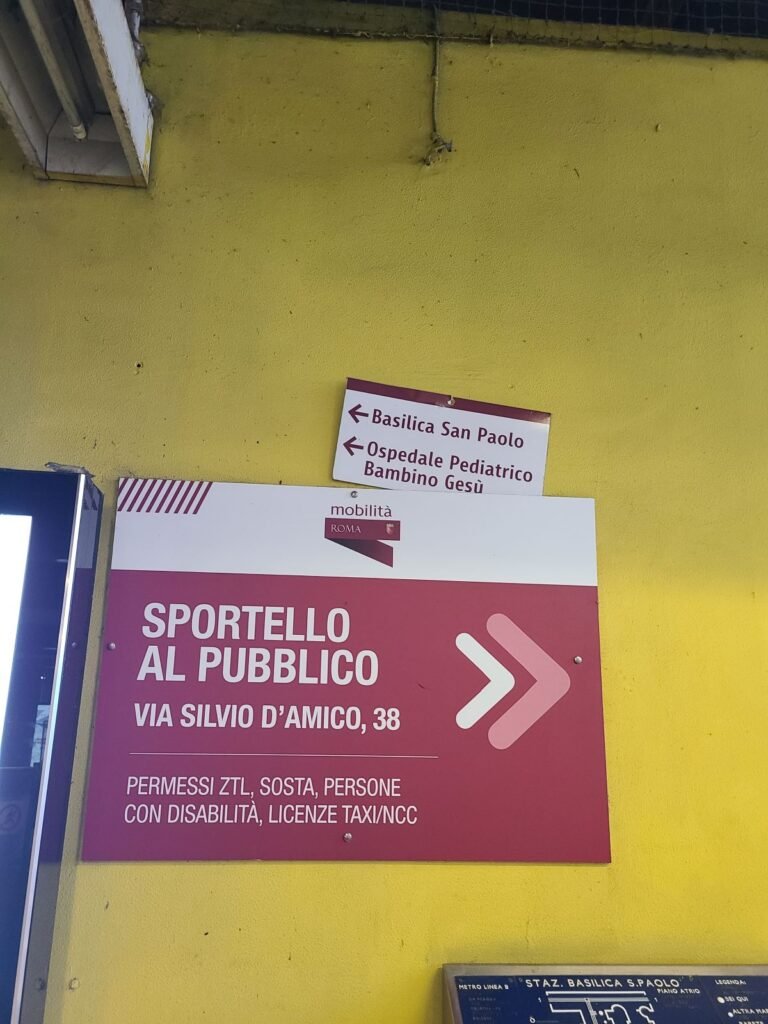
I got off the Metro and followed the signs toward the basilica.
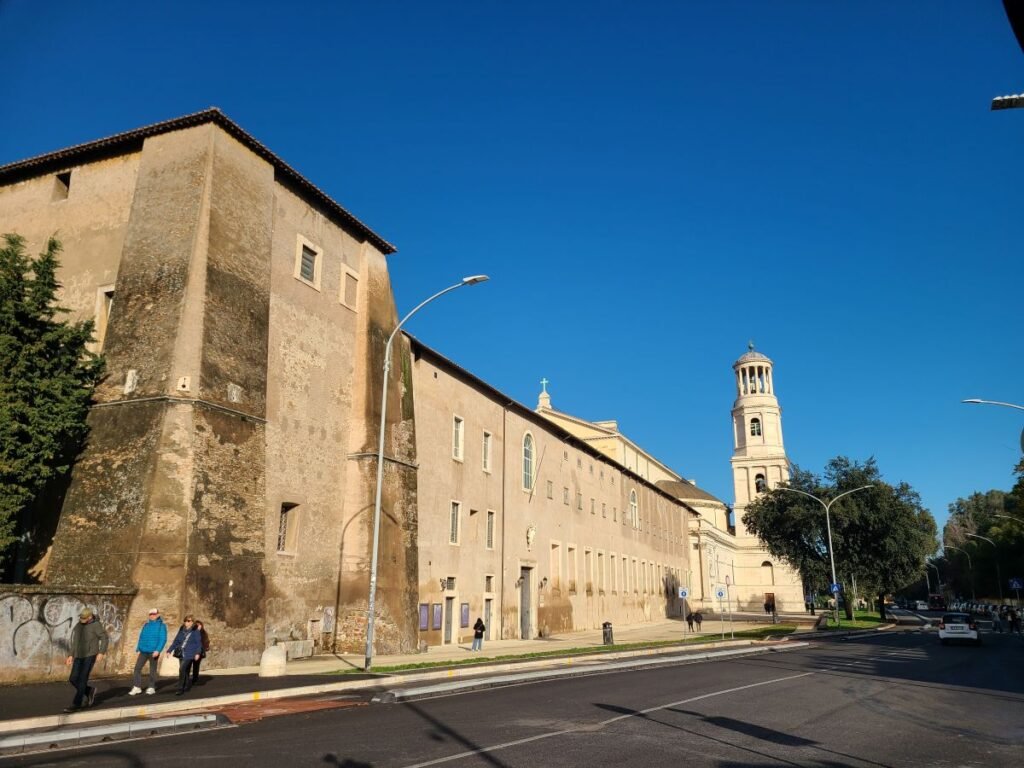
As I got closer, the building slowly came into view.
It felt quite different from Santa Maria Maggiore. There was much more open space around it, which made the basilica look even bigger.
Entering St. Paul Outside the Walls
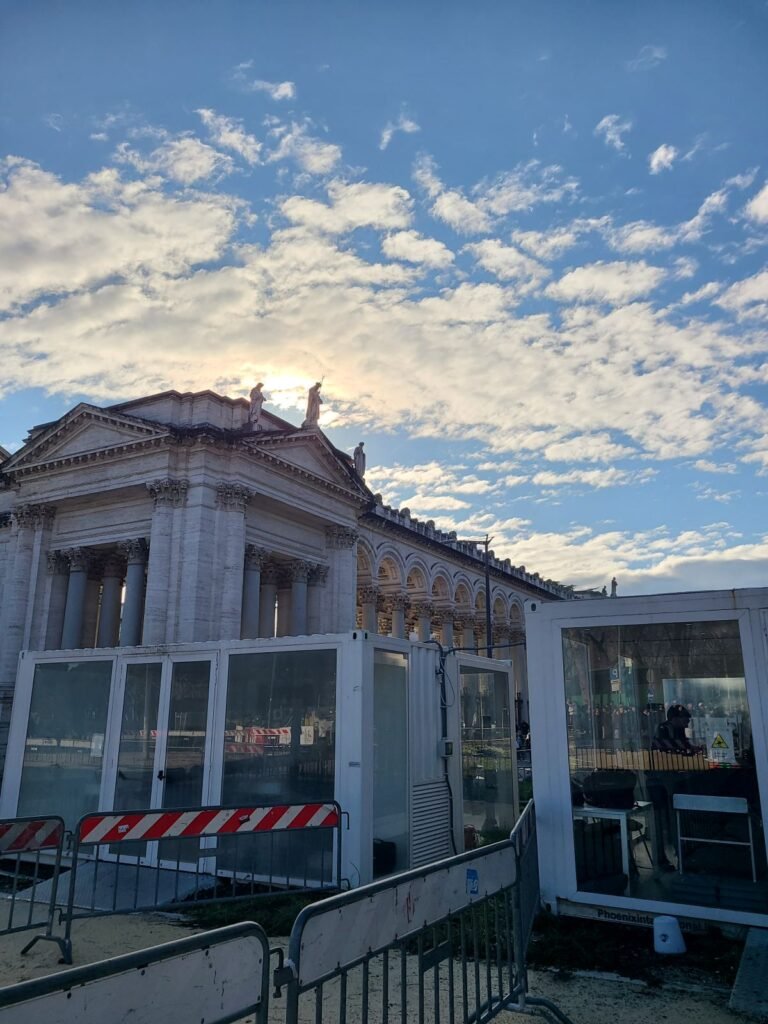
Before entering, everyone had to go through a security check.
There were temporary security booths and barriers outside, and visitors followed the line through the checkpoint.
After that, I finally got a proper look at the basilica.
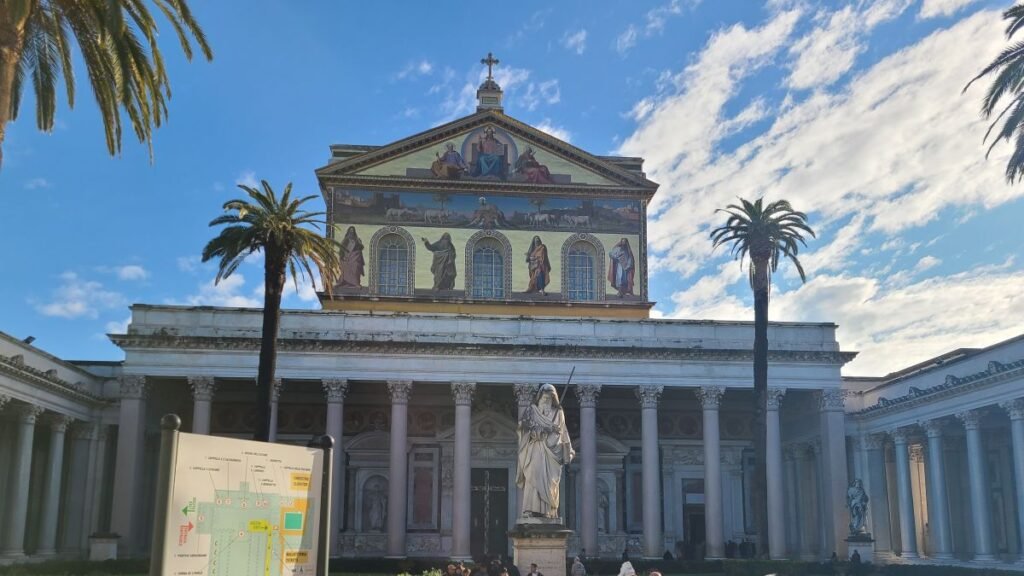
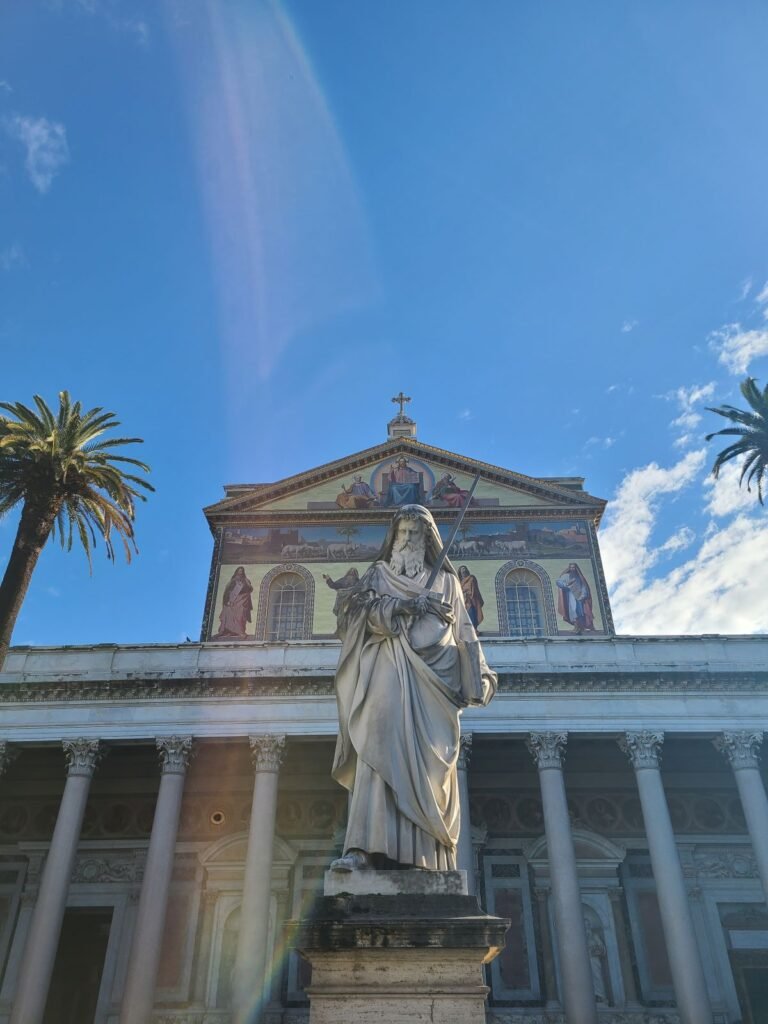
The long rows of columns and the huge facade were much more impressive in person than they looked in photos.
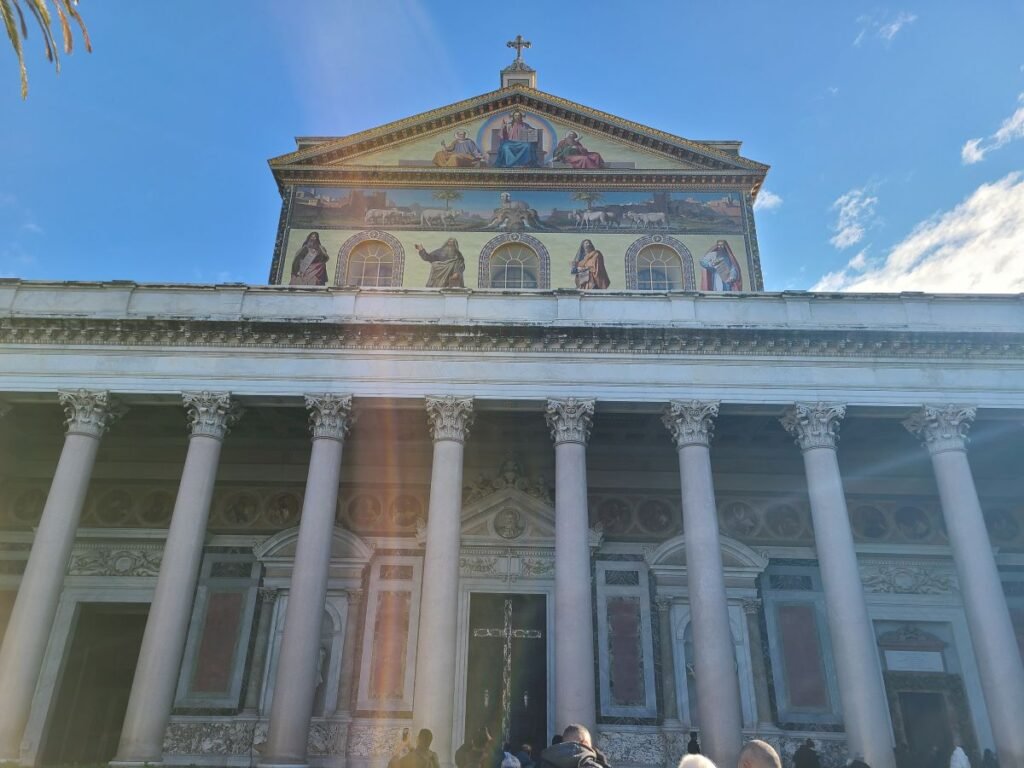
I walked through the portico and headed toward the entrance.
This Time, the Holy Door Was Open
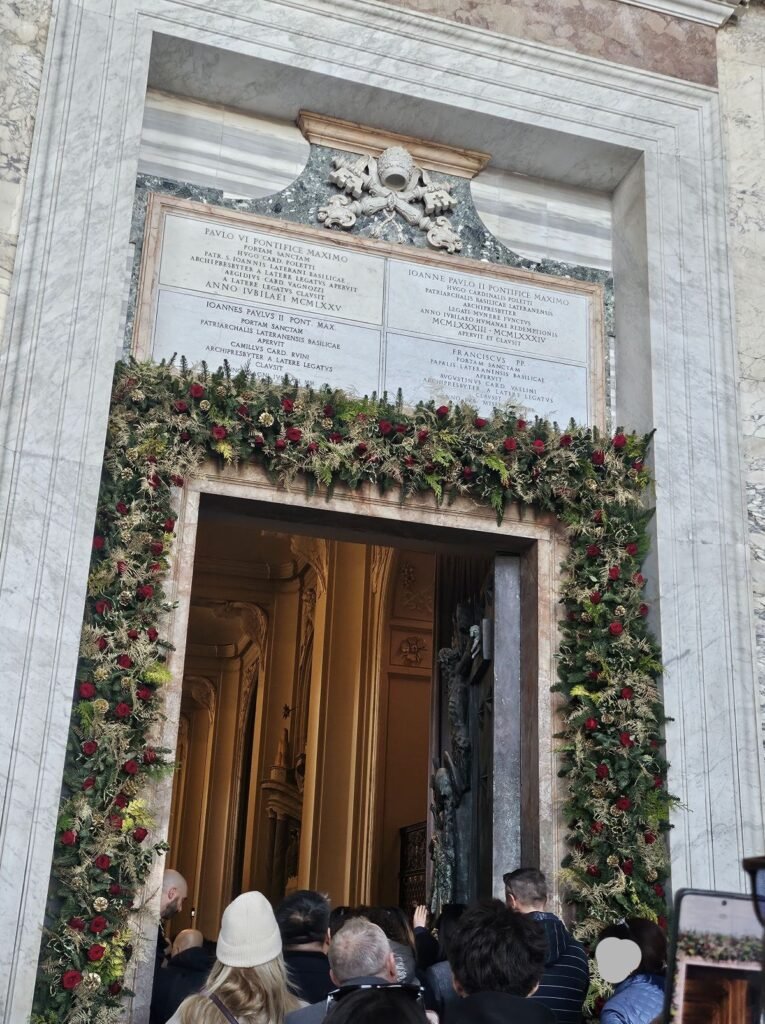
After what had happened the night before, seeing another Holy Door immediately reminded me of Santa Maria Maggiore.
This time, though, the door was still open.
St. Paul Outside the Walls was one of the Jubilee Holy Doors in Rome that was still open, and its closing ceremony was scheduled for December 28. So I had made it in time.
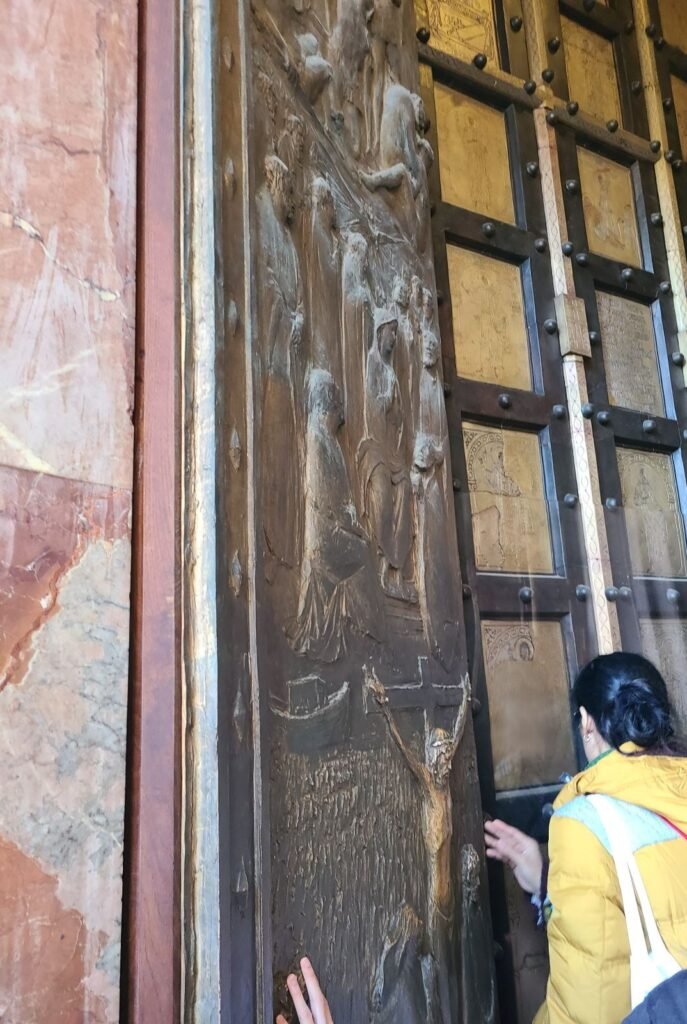
I was really glad I could walk through this one.
As people passed through, I noticed that many of them briefly touched the figure of Jesus on the door and stopped for a short prayer.
One part of the figure was noticeably shinier than the rest.
So many people must have touched the same spot as they passed through.
That small detail stood out to me.
Inside St. Paul Outside the Walls
The first thing I noticed inside was how long the central nave was.
Rows of marble columns stretched into the distance, and above them was a huge golden ceiling.
I already knew the basilica was large, but it felt much bigger once I was actually standing inside.
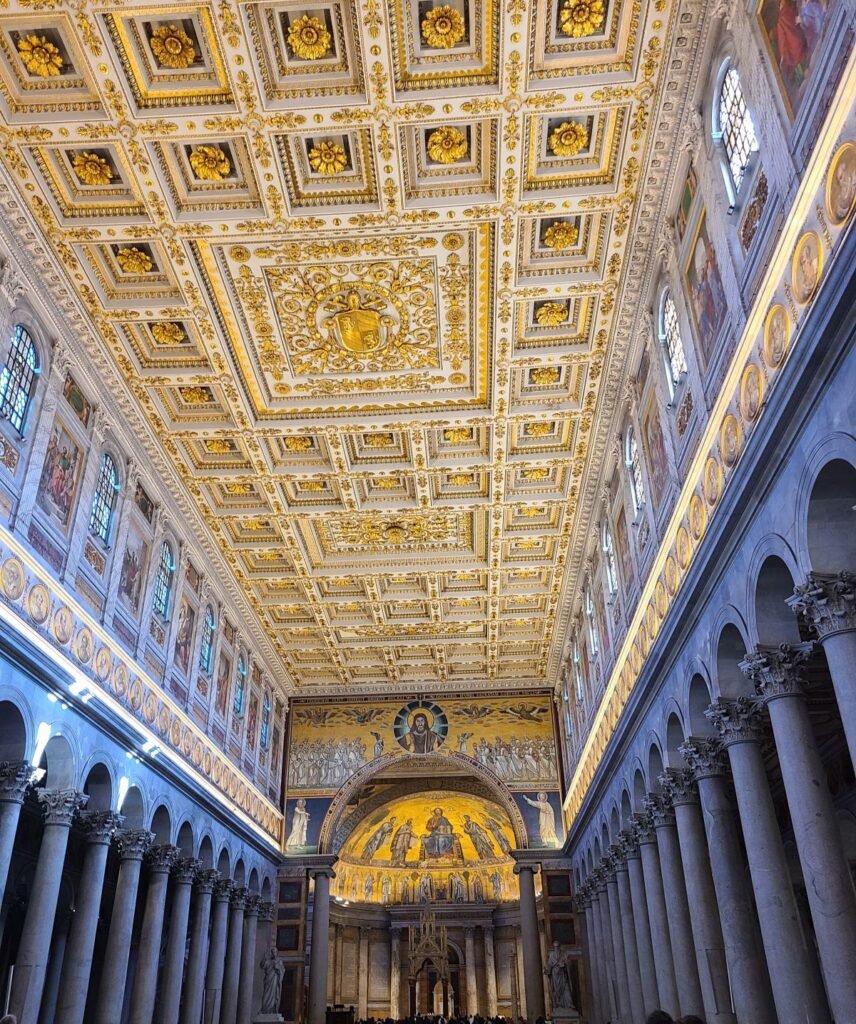
The ceiling was one of my favorite parts.
The gold decoration continued almost the entire length of the church, and the sunlight coming through the windows made everything look even brighter.
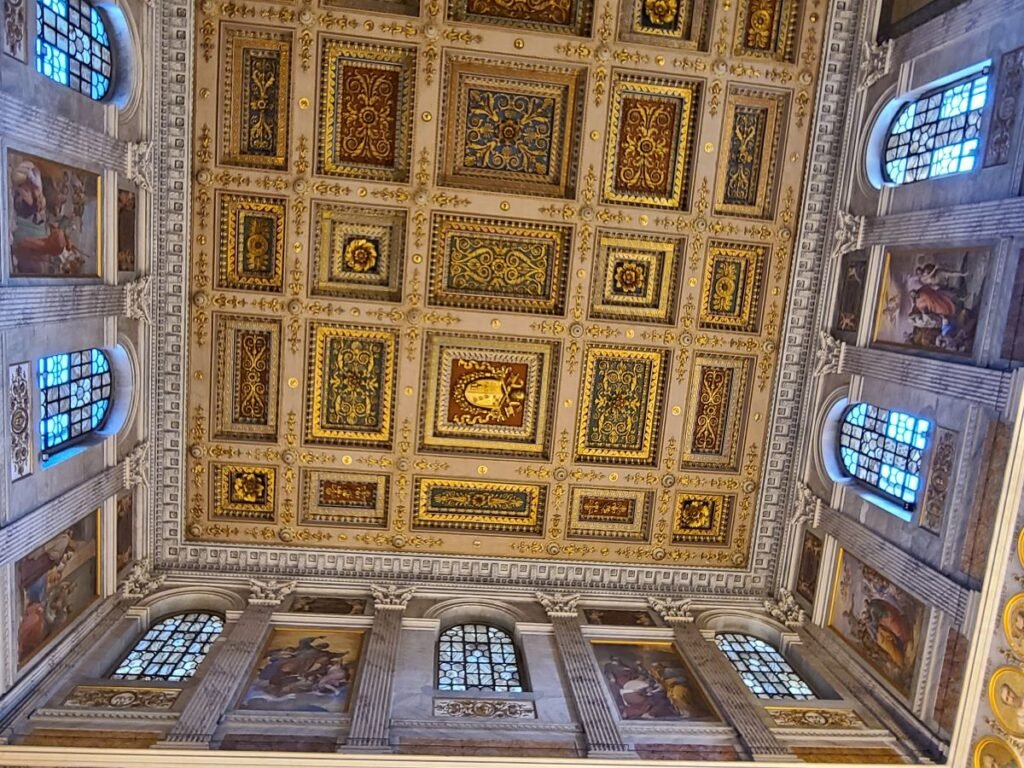
From far away, it looks like one long golden ceiling, but when you look more closely, each section has different details.
I spent quite a while just looking up.
The Tomb of St. Paul
One of the most important places inside the basilica is the tomb of St. Paul.
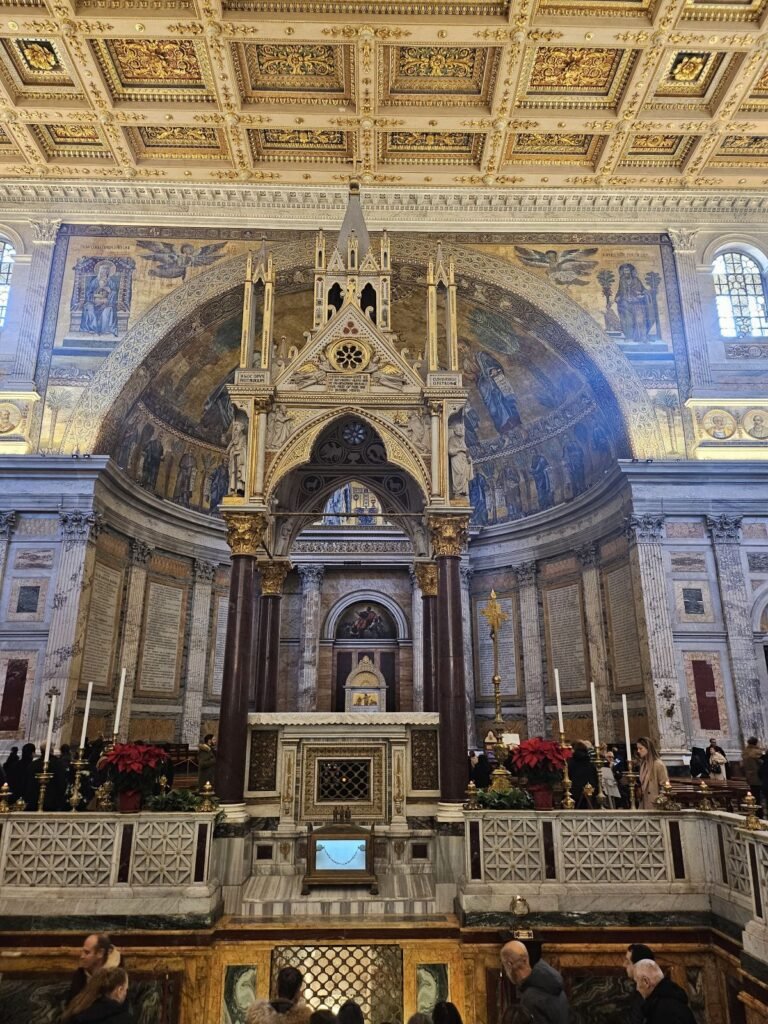
Above the papal altar is a Gothic-style ciborium, and beneath the altar is the tomb of the Apostle Paul.
The basilica was built around this site, so this is really the heart of the church.
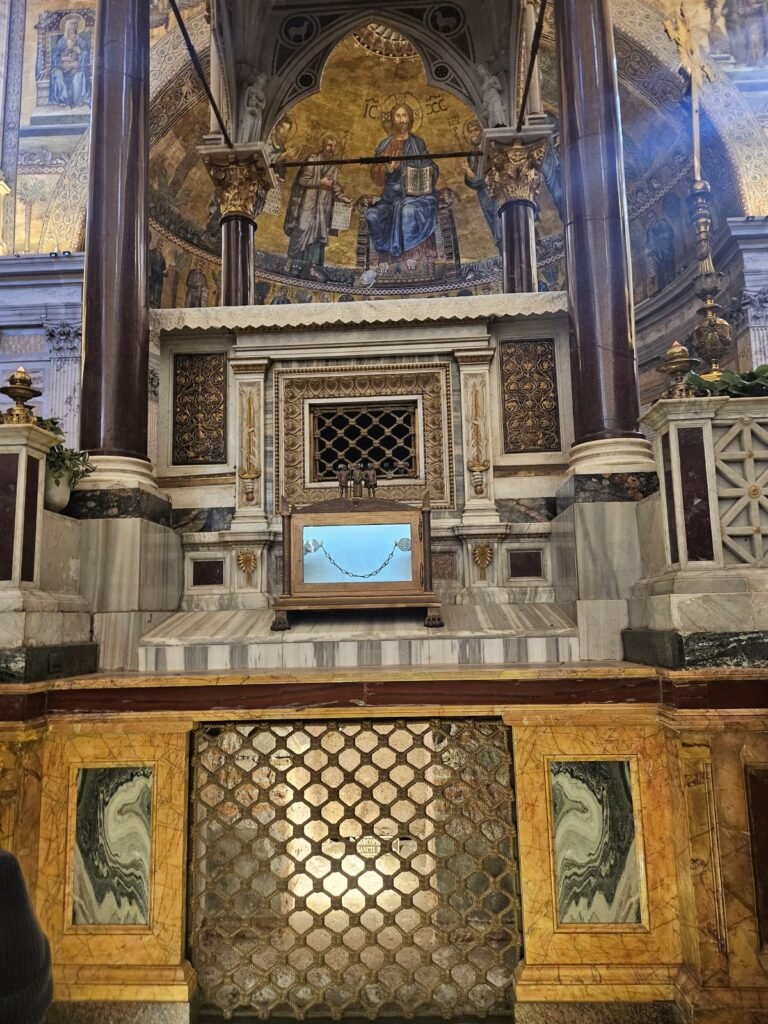
Looking down toward the area below the altar, I could see the space connected to the tomb.
There are so many beautiful things to look at inside the basilica, but this was the place that made the meaning of the church much clearer to me.
St. Paul’s tomb isn’t just one part of the basilica. It’s the reason this place became such an important pilgrimage site.
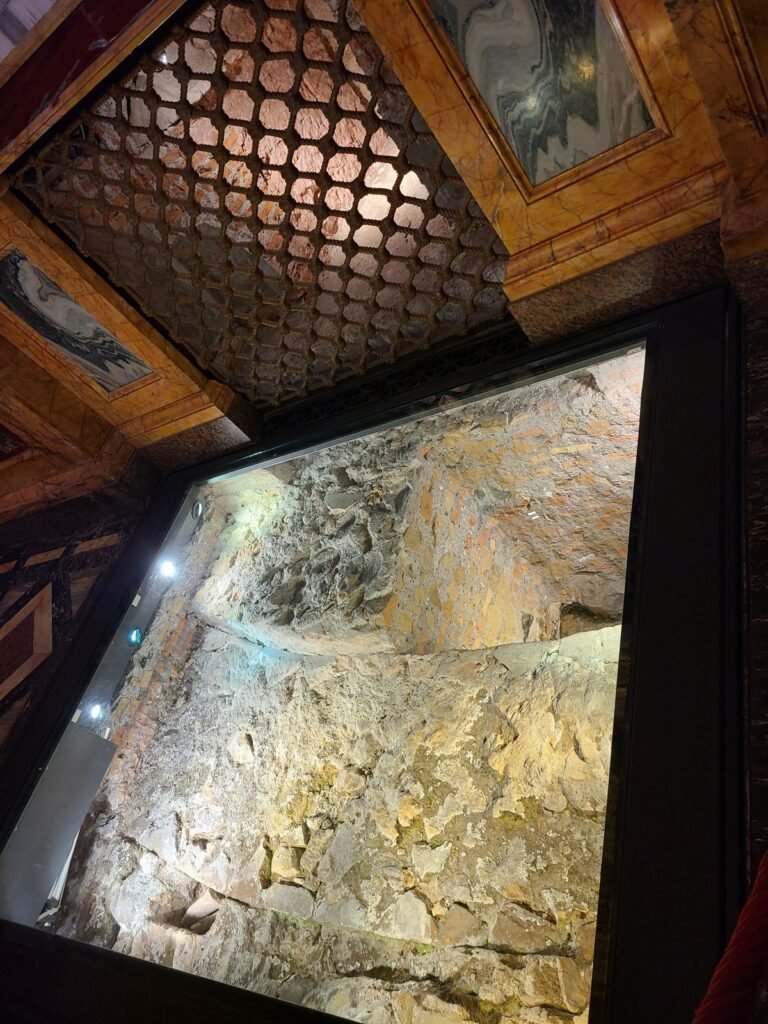
Near the tomb, there are also remains from an earlier basilica visible beneath glass.
I hadn’t expected to see something like that, so I stopped there for a while too.
The Altar of St. Paul’s Conversion
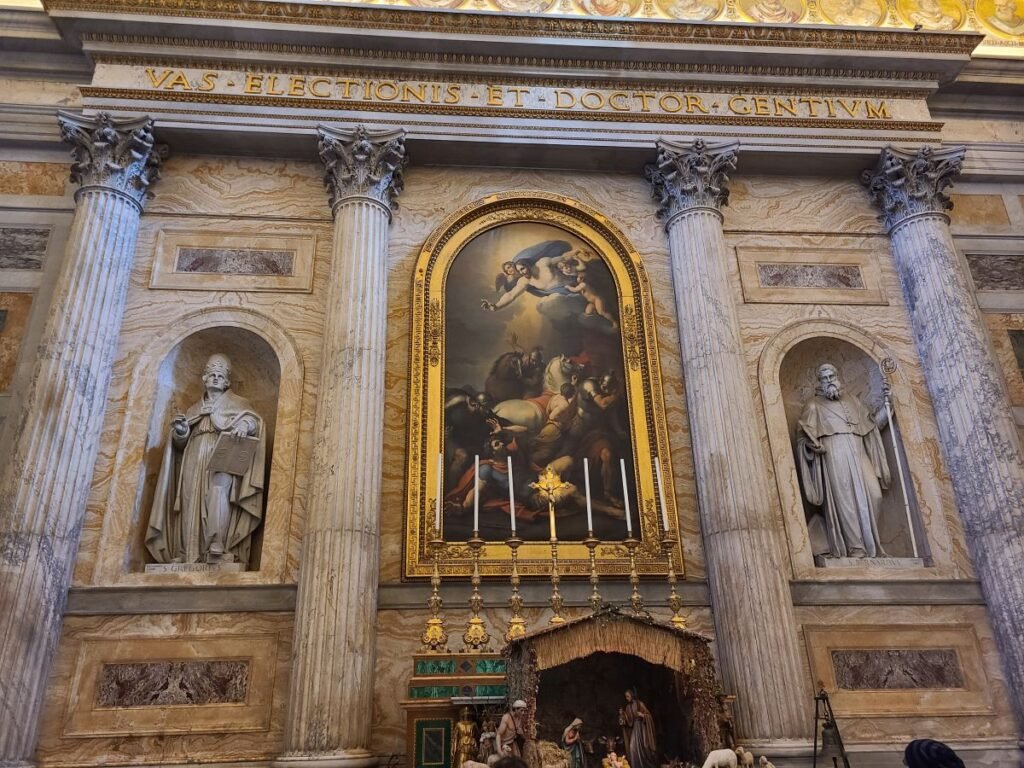
Another place I stopped at was the altar showing the conversion of St. Paul on the road to Damascus.
Above the image is the Latin inscription:
VAS ELECTIONIS ET DOCTOR GENTIUM
It refers to St. Paul as a “chosen vessel” and a “teacher of the Gentiles.”
It felt fitting to see this scene here, in a basilica built around his tomb.
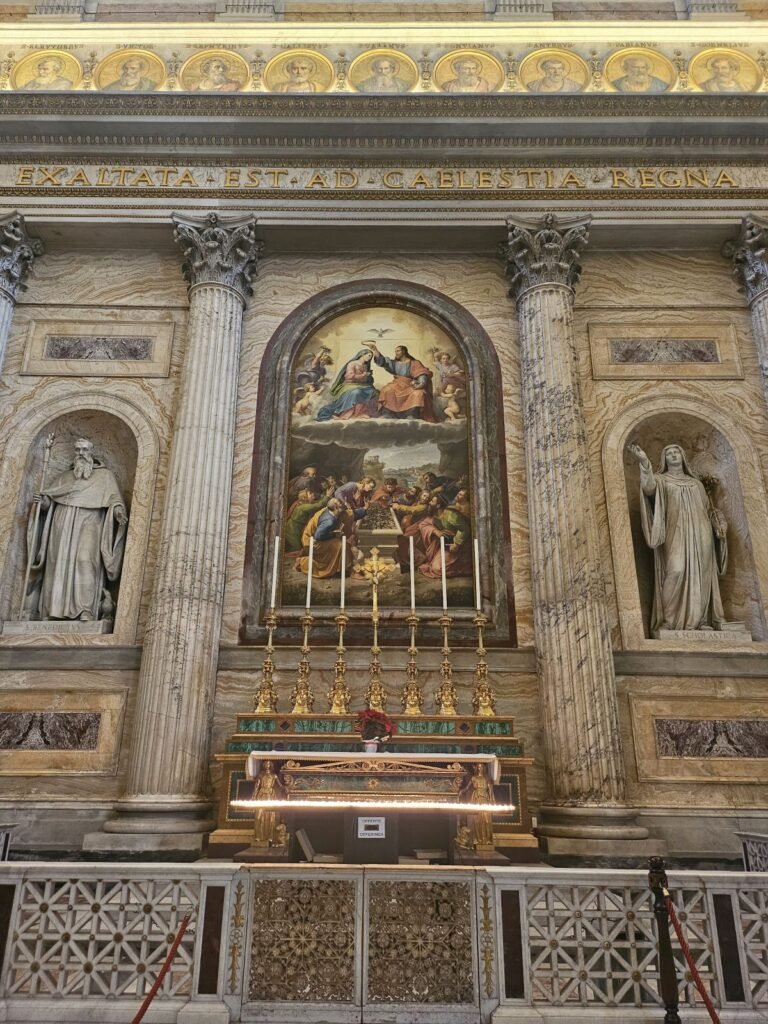
On the opposite side was another large altar with the Virgin Mary and the apostles.
There was much more to see inside than I expected, so what I thought would be a fairly quick visit ended up taking quite a while.
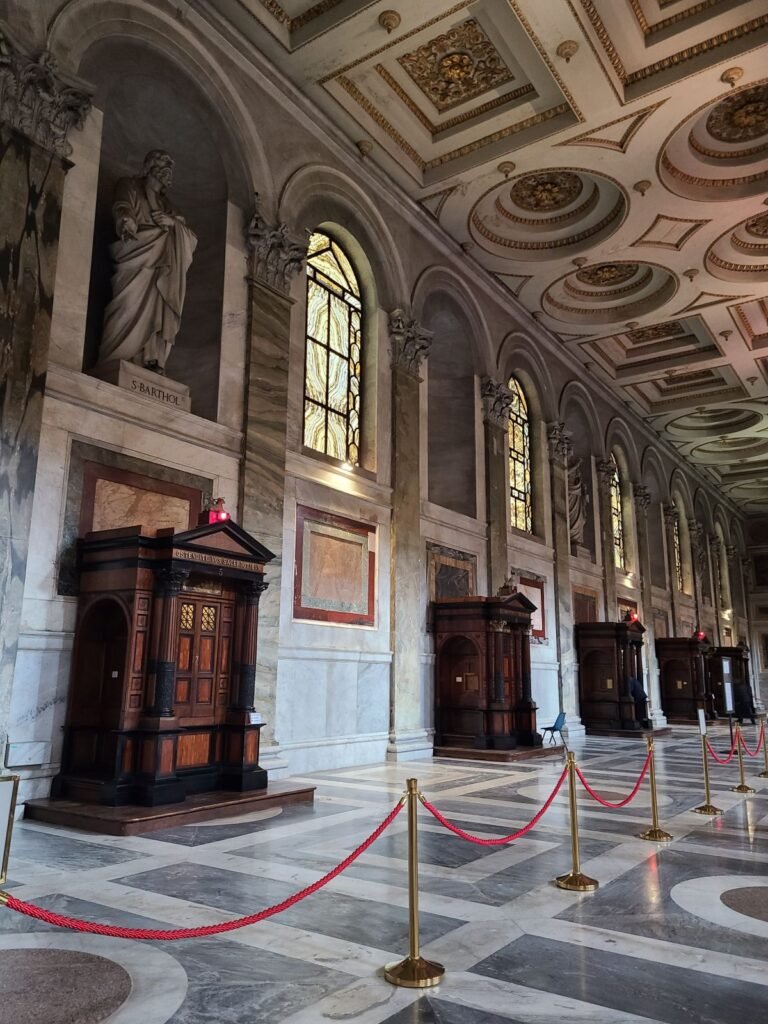
There were also confessionals and spaces for prayer.
Even with so many visitors walking around, it still felt like a real place of worship rather than just a historic building.
Continuing Through Rome
I ended up spending much longer at St. Paul Outside the Walls than I had expected. There was so much to see, and I was glad I had taken the time to look around slowly.
Visiting the Jubilee Holy Doors in Rome became one of the most memorable parts of my Christmas trip. After leaving the basilica, I continued my route through Rome.
That afternoon, I visited the Basilica of St. John Lateran, the Scala Santa nearby, and the Basilica of Santa Croce in Gerusalemme.
Those visits turned into another full afternoon of churches, history, and walking through Rome, so I’ll continue with them in the next post.
If you want to start from the beginning of this Rome trip, you can read my previous post here: Christmas Eve in Rome: From Paris to the Vatican.