
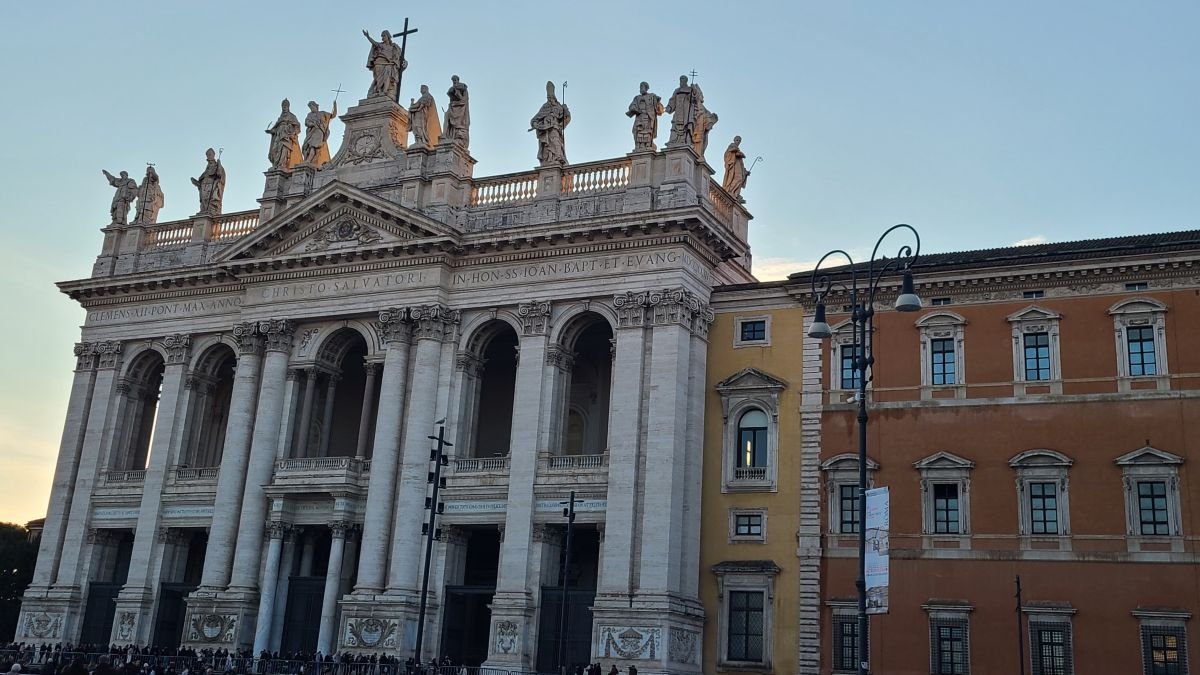
After visiting St. Paul Outside the Walls in the morning, I headed to St. John Lateran in Rome for my next stop. (Basilica di San Giovanni in Laterano).
I had stayed at St. Paul’s longer than I expected that morning, but there were still a few more places I wanted to see.
As I got closer to St. John Lateran, the old walls of Rome came into view.
Table of Contents
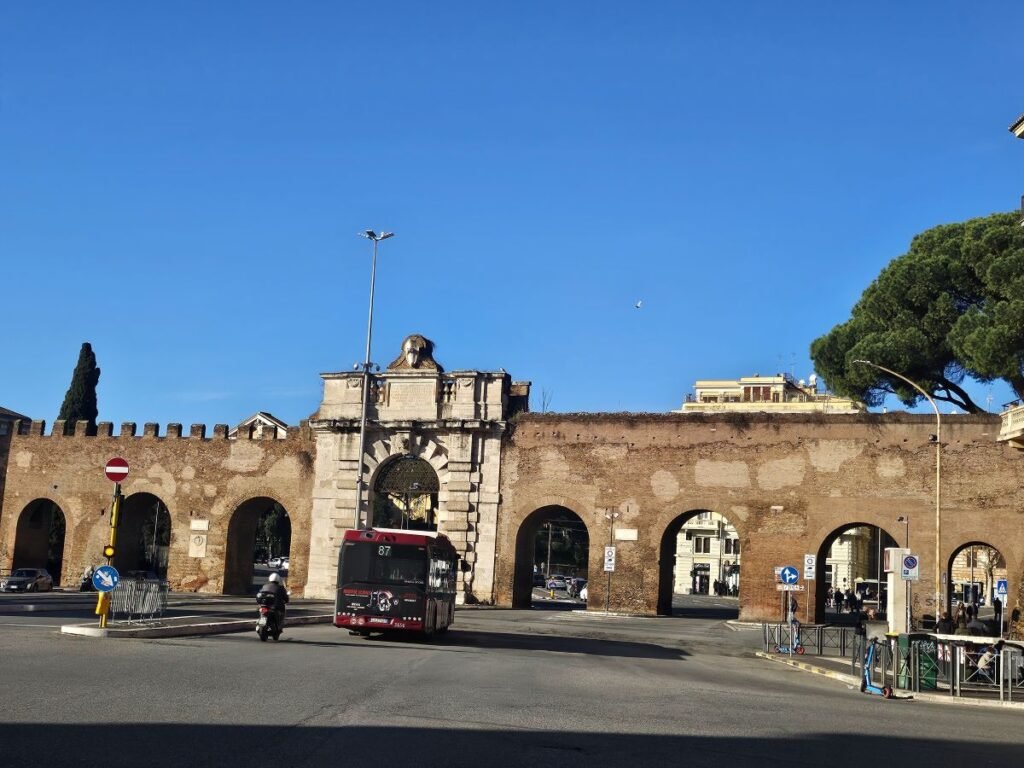
This is Porta San Giovanni, a historic gate in Rome’s ancient city walls. With its big arch, I first mistook it for a triumphal arch, but it was actually a gate people once used to enter and leave the city.
I walked through the gate, and after a short stroll, the Basilica of St. John Lateran appeared.
The Basilica of St. John Lateran
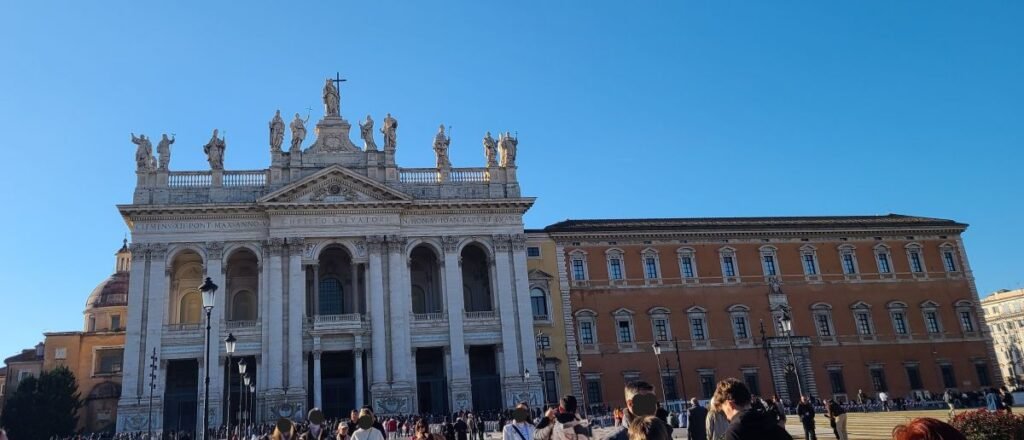
Standing in front of the basilica, the first things I noticed were the huge columns and the statues of saints lined up along the roof.
St. Peter’s Basilica at the Vatican is so famous that I hadn’t known much about this one, but St. John Lateran is the church of the Pope in his role as Bishop of Rome. That makes it one of the most important churches in the Catholic faith.
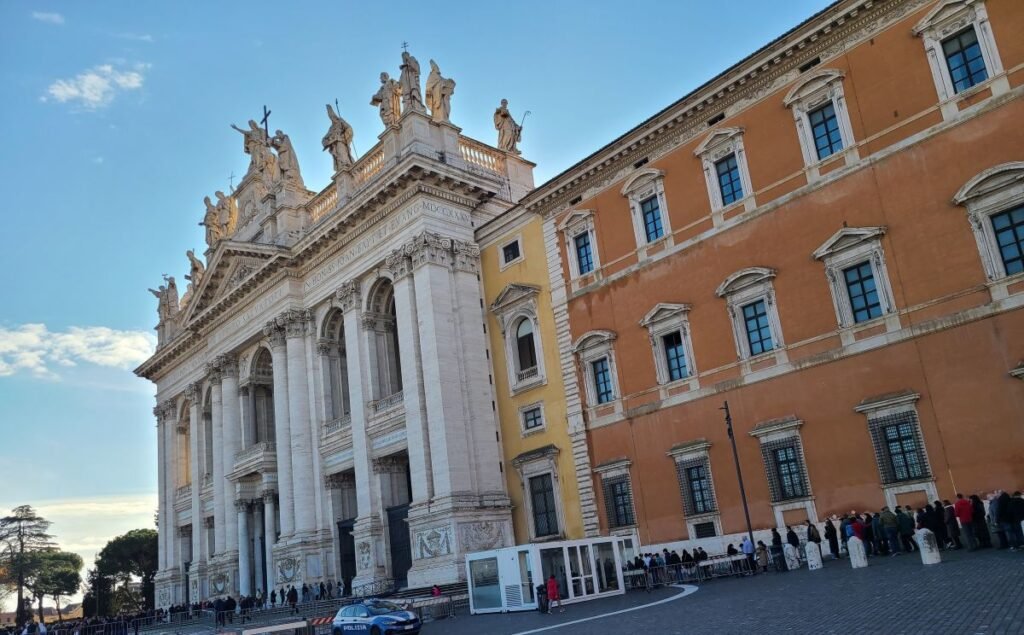
Seen from the side, the building looked even bigger.
Since 2025 was a Jubilee Year, there was a Holy Door here too.
The Holy Door at St. John Lateran
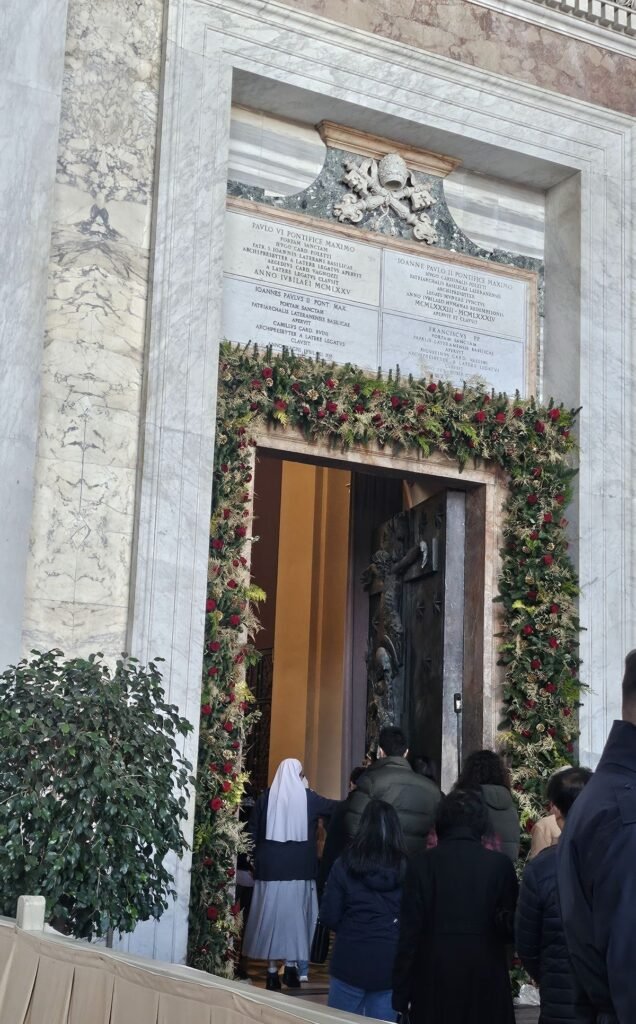
People were lining up and passing through the door one by one on their way into the church.
The day before, I had turned away from a Holy Door that was already closed at Santa Maria Maggiore. That morning, I had walked through the Holy Door at St. Paul’s. And now I was about to pass through yet another one at St. John Lateran.
Even though they were all Holy Doors, each church’s door and the atmosphere around it felt a little different, so each one stayed in my memory in its own way.
A Dazzling Interior
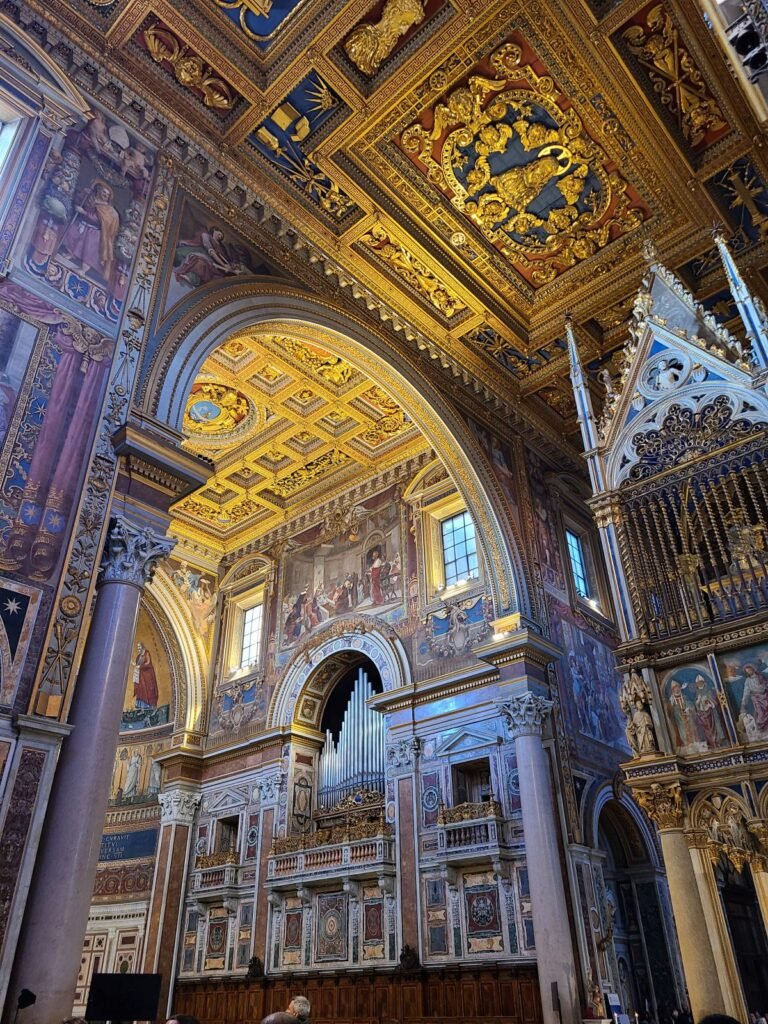
As soon as I stepped inside, the golden ceiling, wall paintings, and marble decorations all came into view at once.
What stood out at St. Paul’s was the long, open space stretching ahead. Here, it was the ornate decoration running from the ceiling down to the walls without any gaps. There was so much to look at in every direction that I found myself walking slowly.
The Papal Altar and Its Pointed Canopy
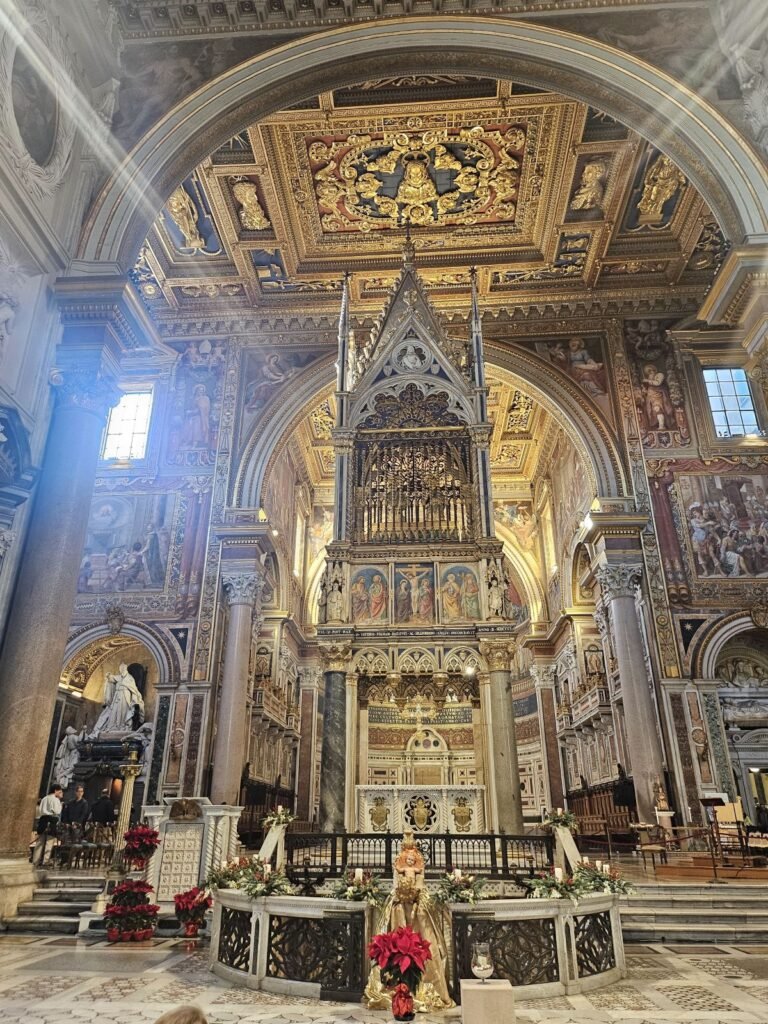
The thing that caught my eye most was the papal altar in the center, with a tall, pointed structure rising above it. It’s called a Gothic ciborium (a canopy over an altar), and it stood out so clearly even from far away that my eyes were drawn straight to it.
This is one of the most important spots in St. John Lateran, and I was told that traditions about relics connected to St. Peter and St. Paul are tied to this place. Looking back at the photos, I realized that places I had thought of as just “fancy altars” at the time were actually quite meaningful.
The Blessed Sacrament Altar
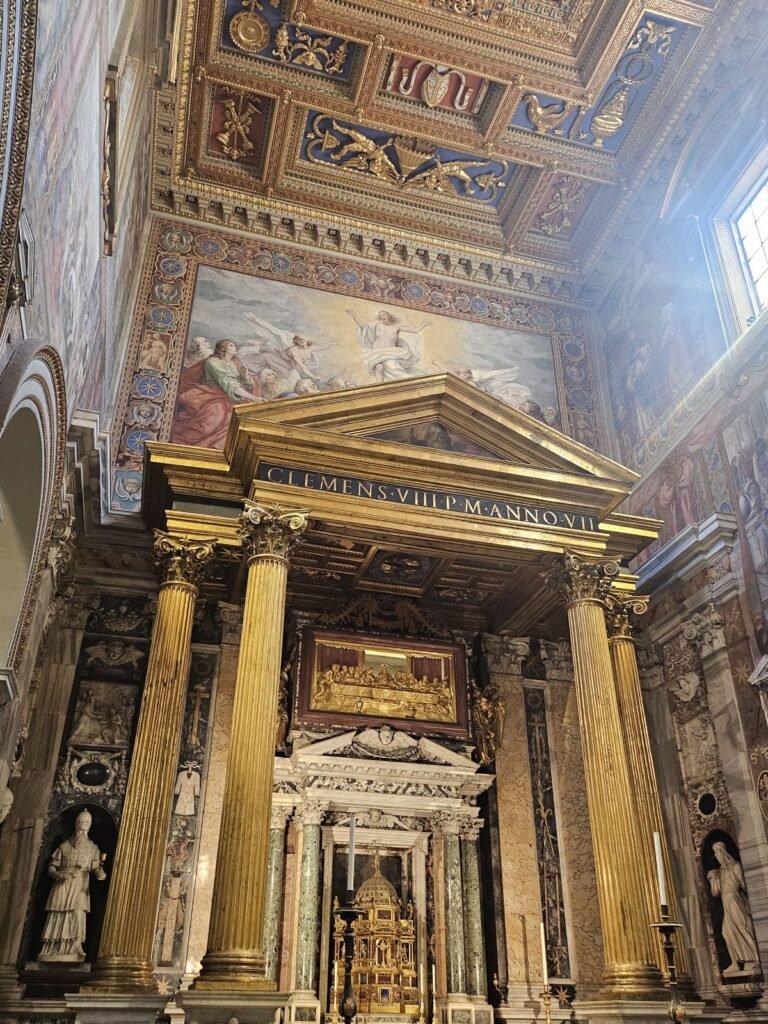
A little farther in, there was the Blessed Sacrament altar, surrounded by huge golden columns.
A scene of the Last Supper was displayed above it, and the whole structure was so large that it stood out even from a distance. They say a relic believed to be connected to Jesus’ Last Supper is kept here.
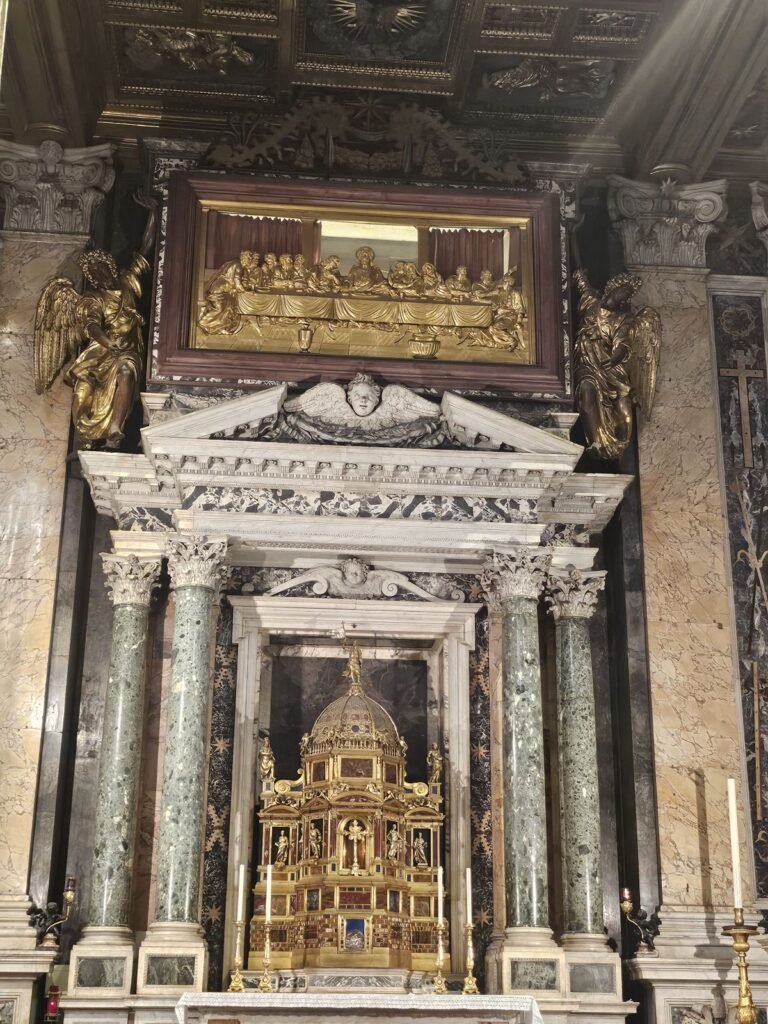
Up close, even the small details were wonderfully ornate.
The Golden Mosaic
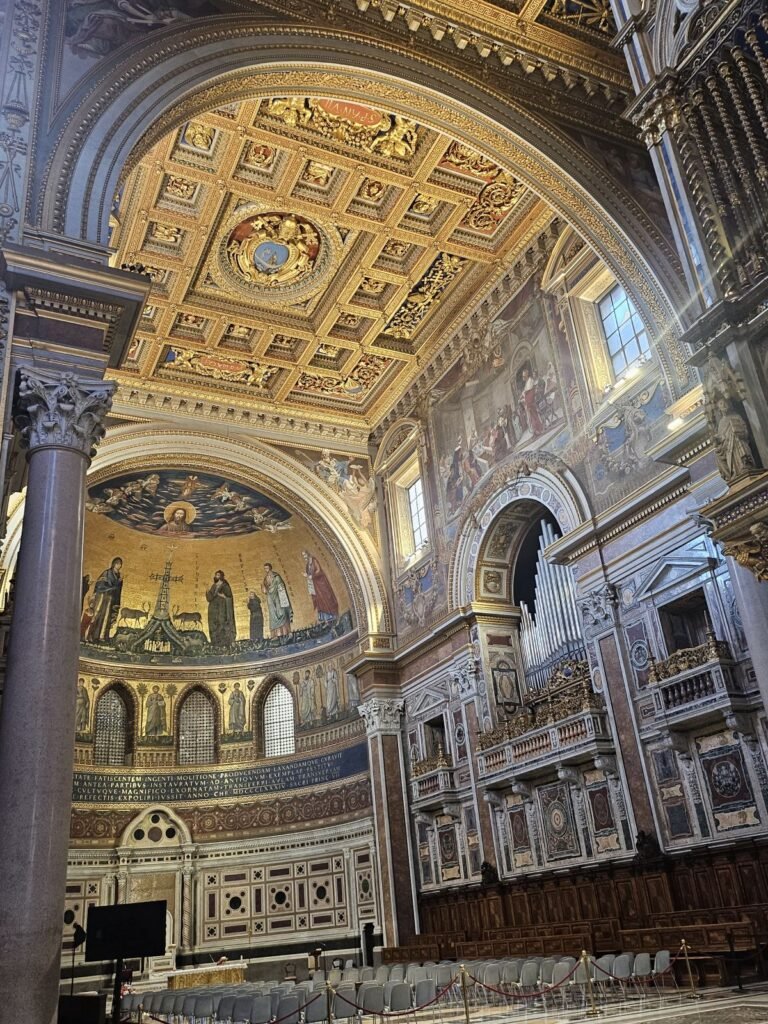
On the wall at the back of the church, there was a huge golden mosaic.
In the photo it looks like a single scene, but in person it fills the entire curved wall, so it’s quite grand. The golden background and the figures of the saints matched the splendid atmosphere of the church perfectly.
The Tomb of Pope Leo XIII
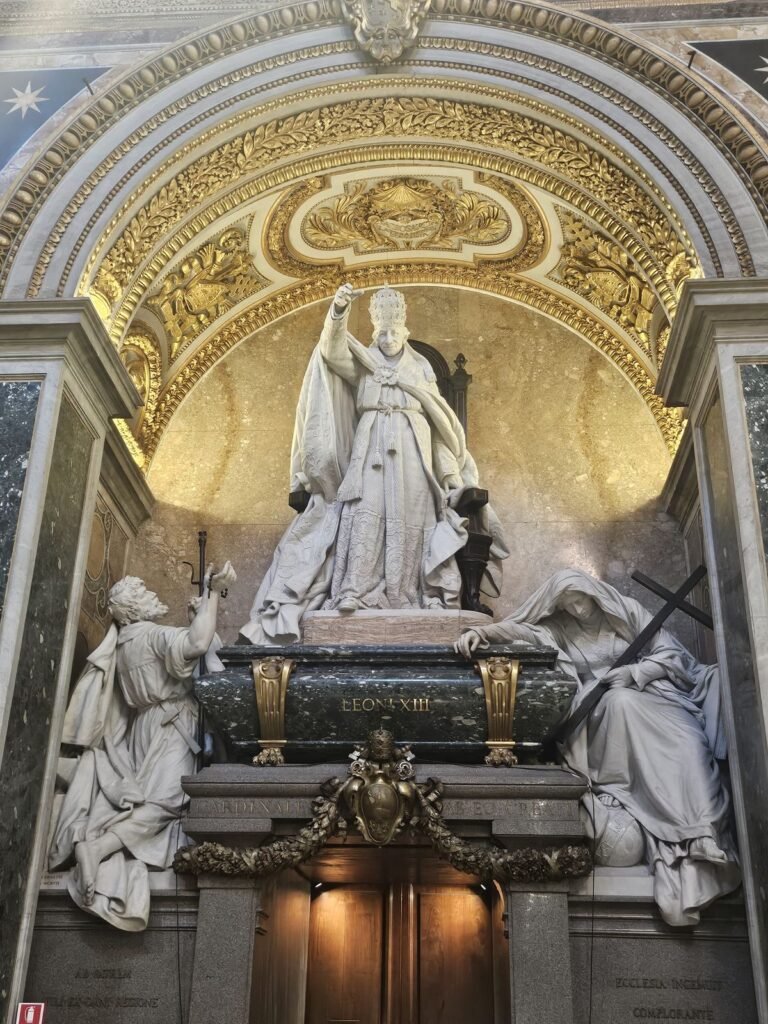
While looking around, I also came across the tomb of Pope Leo XIII. The name LEONE XIII was carved on the stone coffin in the center, so I could easily recognize it later while sorting through my photos.
I also found it interesting that spaces connected to popes from many different eras, saints, and relics were all gathered in one place.
The Christmas Nativity Scene
After seeing almost the whole church, I also visited the Christmas nativity scene.
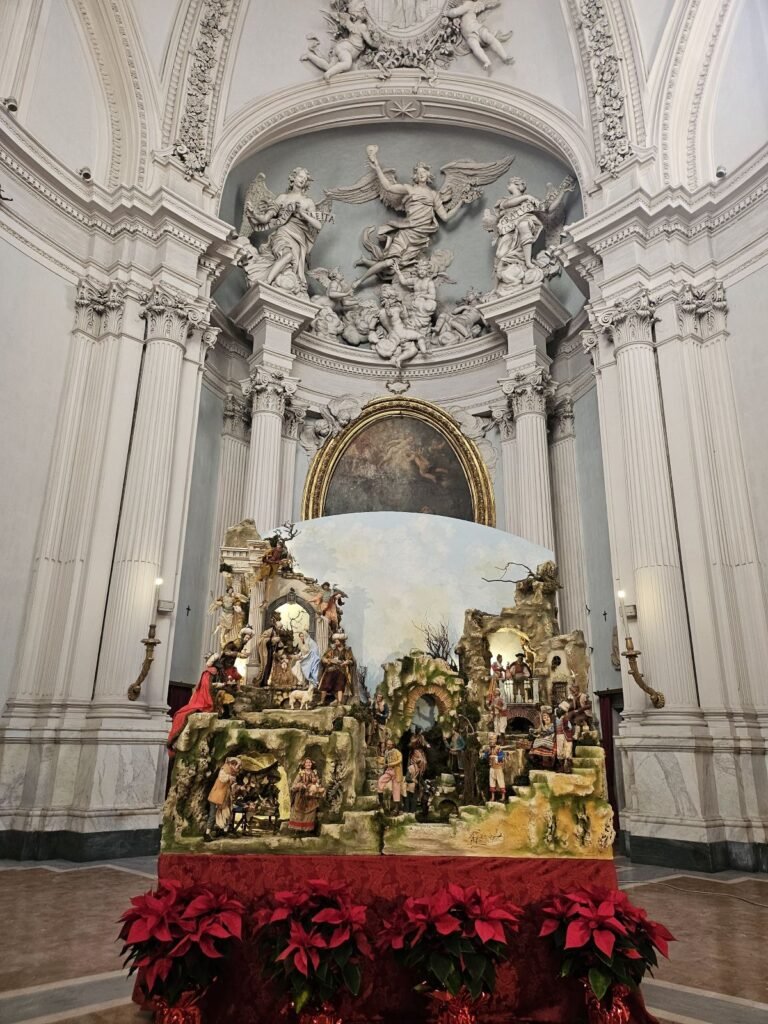
Walking through Rome’s churches in December, it was fun to see how each one displayed its nativity scene a little differently. After looking at all the grand altars and mosaics, standing in front of the nativity gave me a warm, gentle feeling.
After spending some time at St. John Lateran in Rome, I headed to the Scala Santa, right across the street.
The Scala Santa
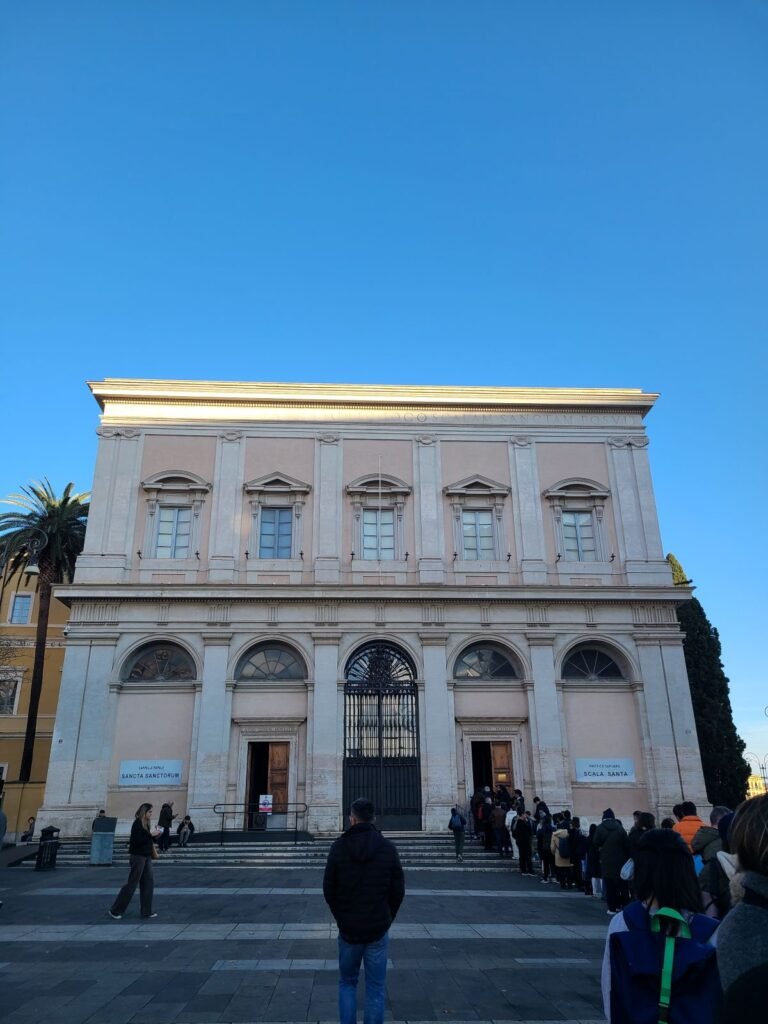
The Scala Santa was so close that I only had to cross the road.
It’s famous for the “Holy Stairs.” They are said to be the stairs from the governor’s residence in Jerusalem that Jesus climbed when he was put on trial. The 28 steps in the middle are still climbed on your knees, one step at a time, while praying, rather than walked up.
I climbed them on my knees too, praying on each step.
At first it felt easier than I expected, but as I went higher, my knees really started to hurt. Still, I kept praying slowly and made it all the way to the top.
Photos weren’t allowed inside, so I couldn’t capture the moment of climbing the stairs.
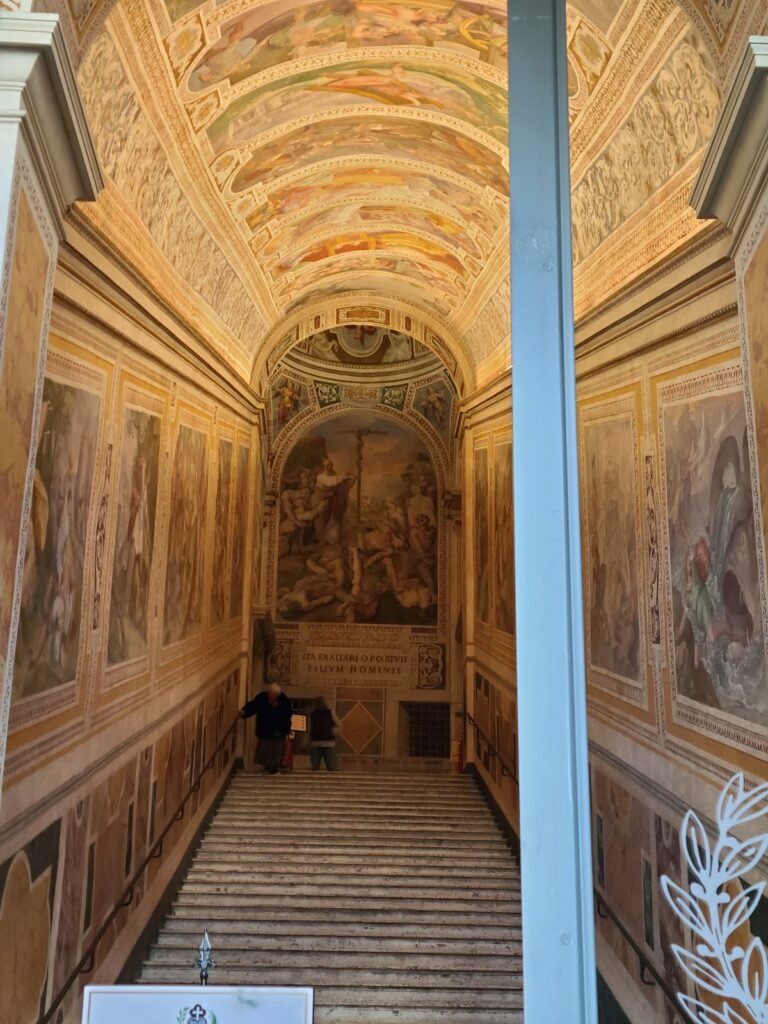
This photo shows one of the side staircases, not the Holy Stairs. The walls and ceiling were covered in paintings, so this side was stunning too.
Photography wasn’t allowed inside, so I don’t have any photos of the Holy Stairs themselves. I climbed those stairs on my knees, this is the place from that day that I remember most clearly with my body.
After leaving the Scala Santa, I made my way to the Basilica of Santa Croce in Gerusalemme (Basilica di Santa Croce in Gerusalemme).
Santa Croce in Gerusalemme
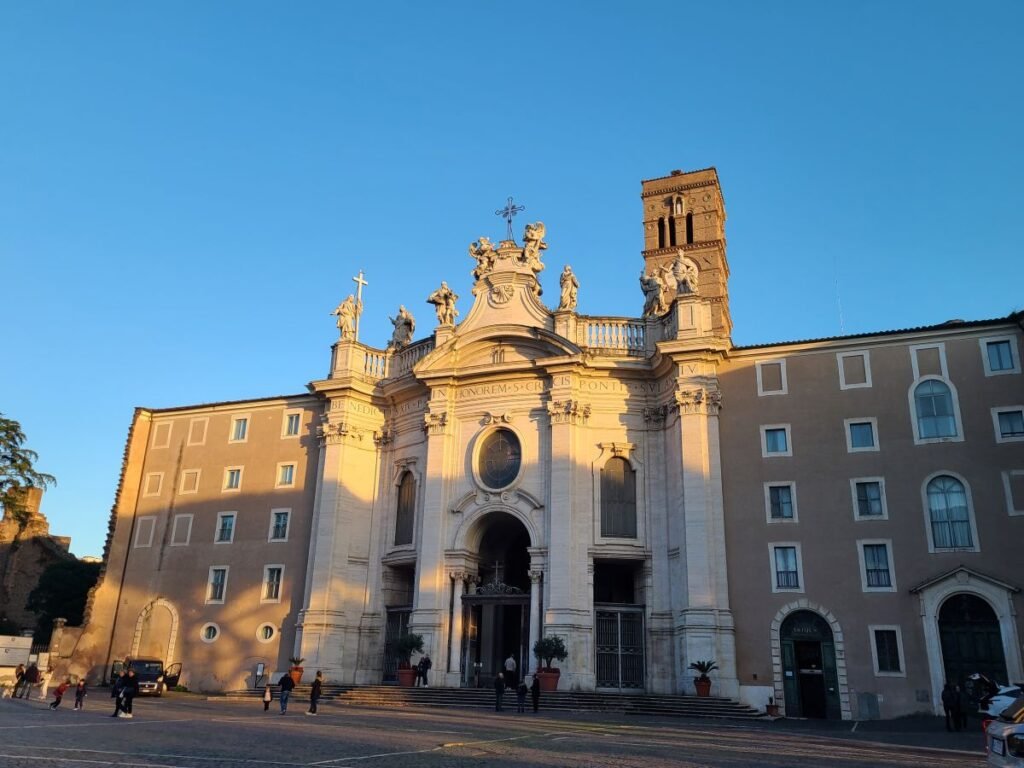
I arrived at Santa Croce in Gerusalemme in the afternoon, when the sunlight was warm.
Compared with the grandeur of St. John Lateran, it had a much calmer feel. But the main reason I came here wasn’t the building itself. I came to see the relics connected to the suffering Jesus went through on the cross.
Inside the Church
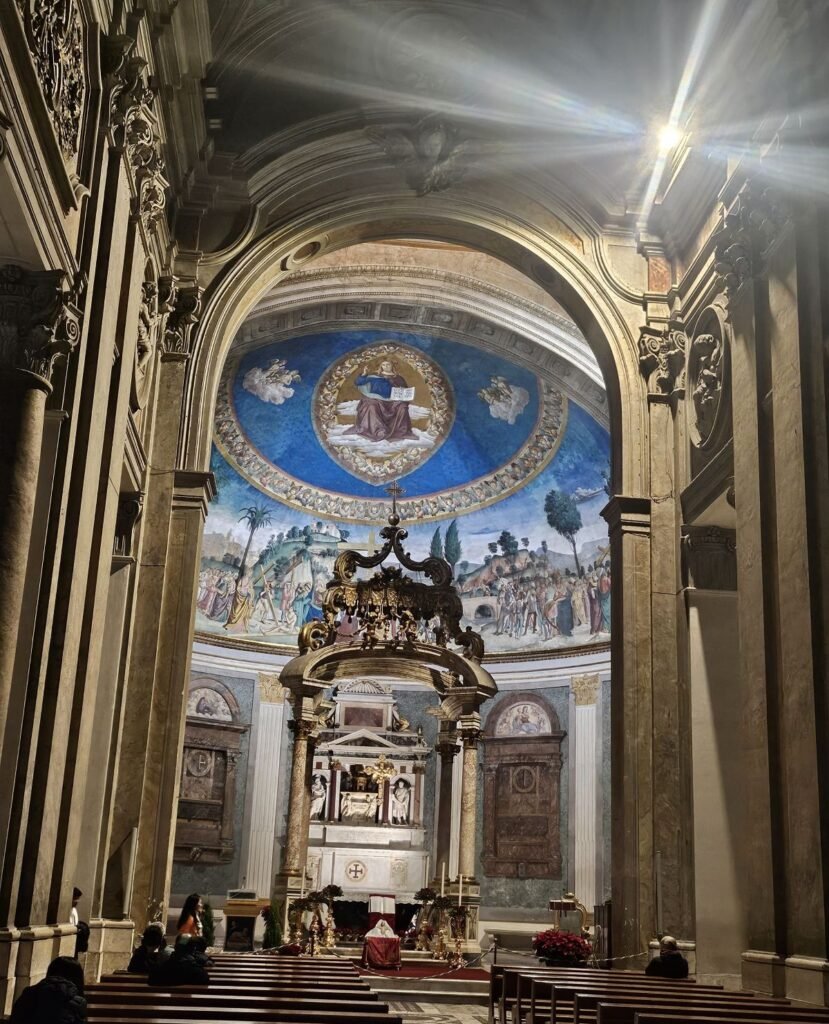
Inside, the church was much more ornate than it looked from the outside. The blue and gold decoration behind the altar especially stood out.
After looking around the church, I went to the room where the relics are kept.
Relics of the Passion
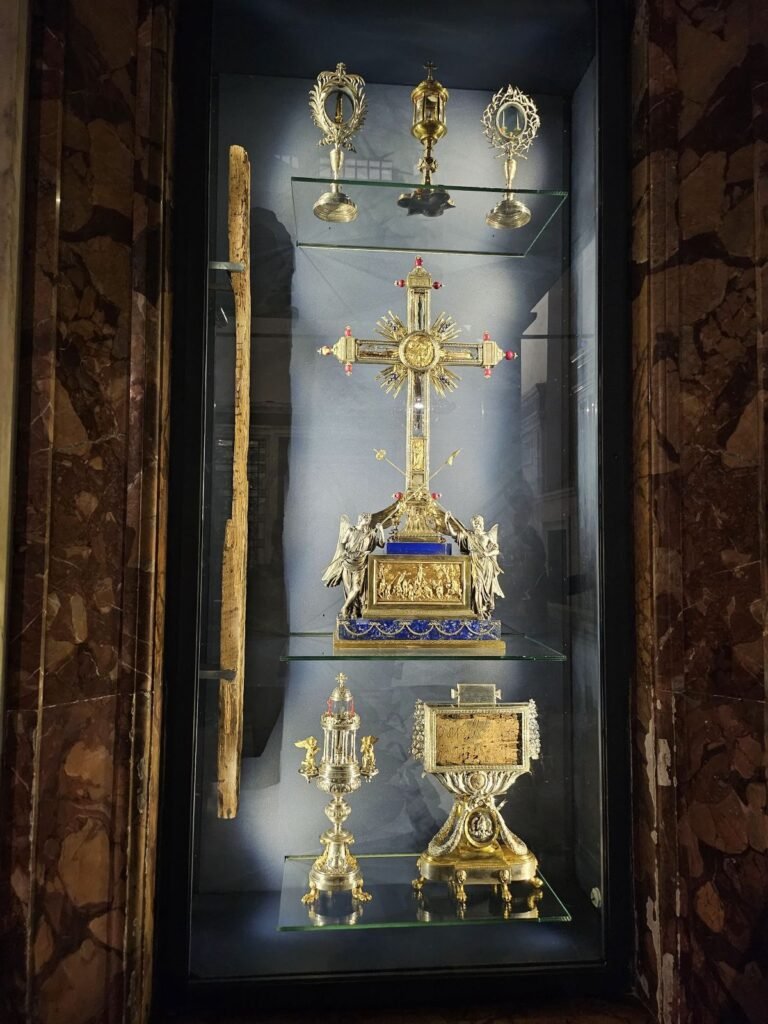
Inside a glass case, several reliquaries were displayed side by side.
They say this church was built in the 4th century by Helena, the mother of Emperor Constantine, to house relics she brought back from Jerusalem. That’s why the name of the church includes “Jerusalem.”
The Finger Bone of St. Thomas
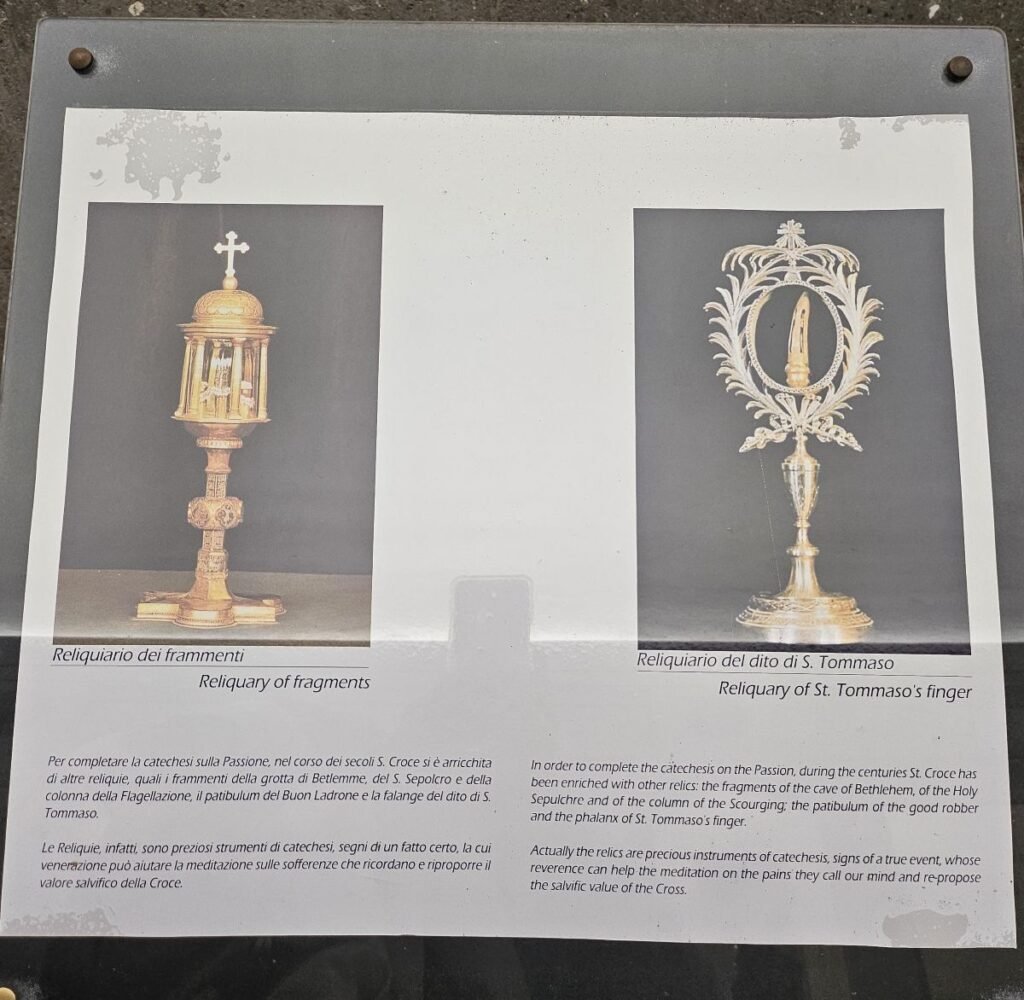
There was also a sign explaining a relic connected to St. Thomas. Thomas is the disciple famous for believing only after he put his finger in the wounds of the risen Jesus, and this relic is said to be the bone of that finger.
A Thorn from the Crown of Thorns
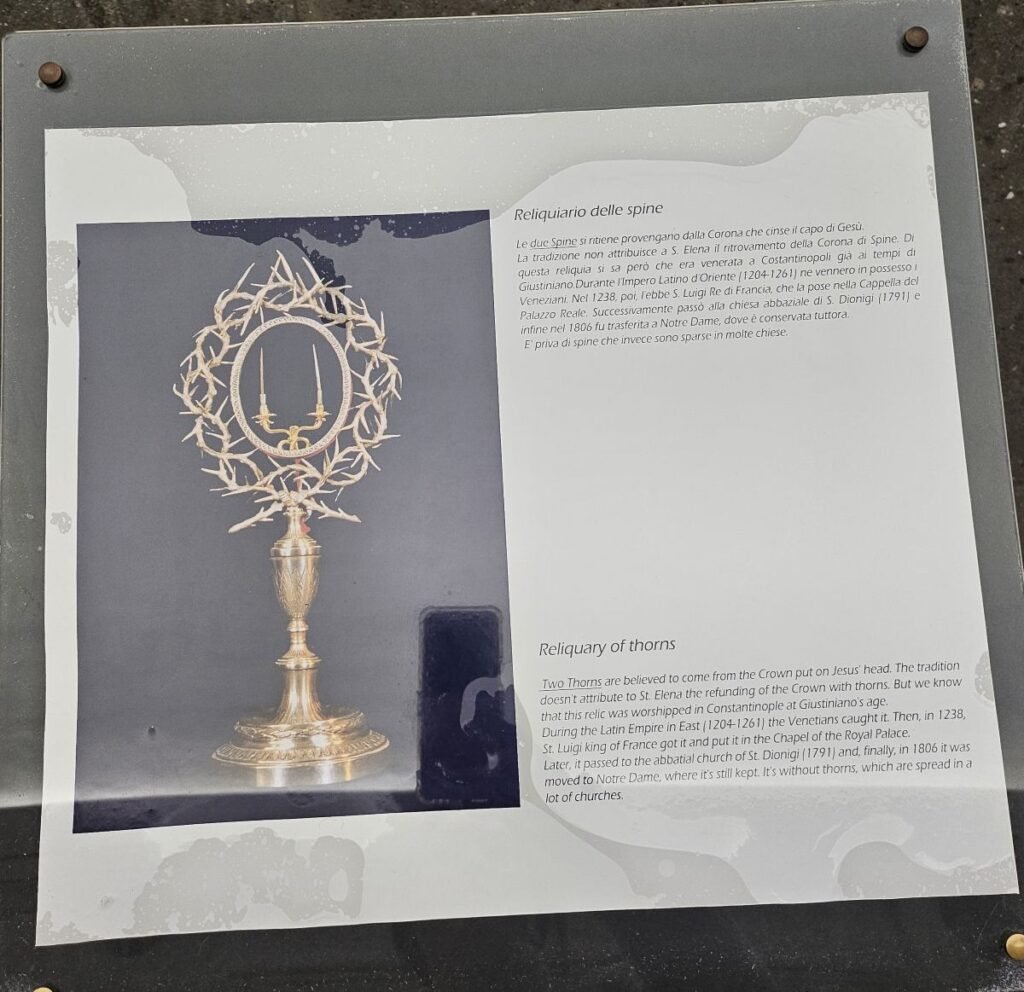
This is a thorn said to come from the crown Jesus wore. The church is said to keep two such thorns.
It looks tiny in the photo, but it holds great meaning for the pilgrims who come here.
A Nail from the Cross
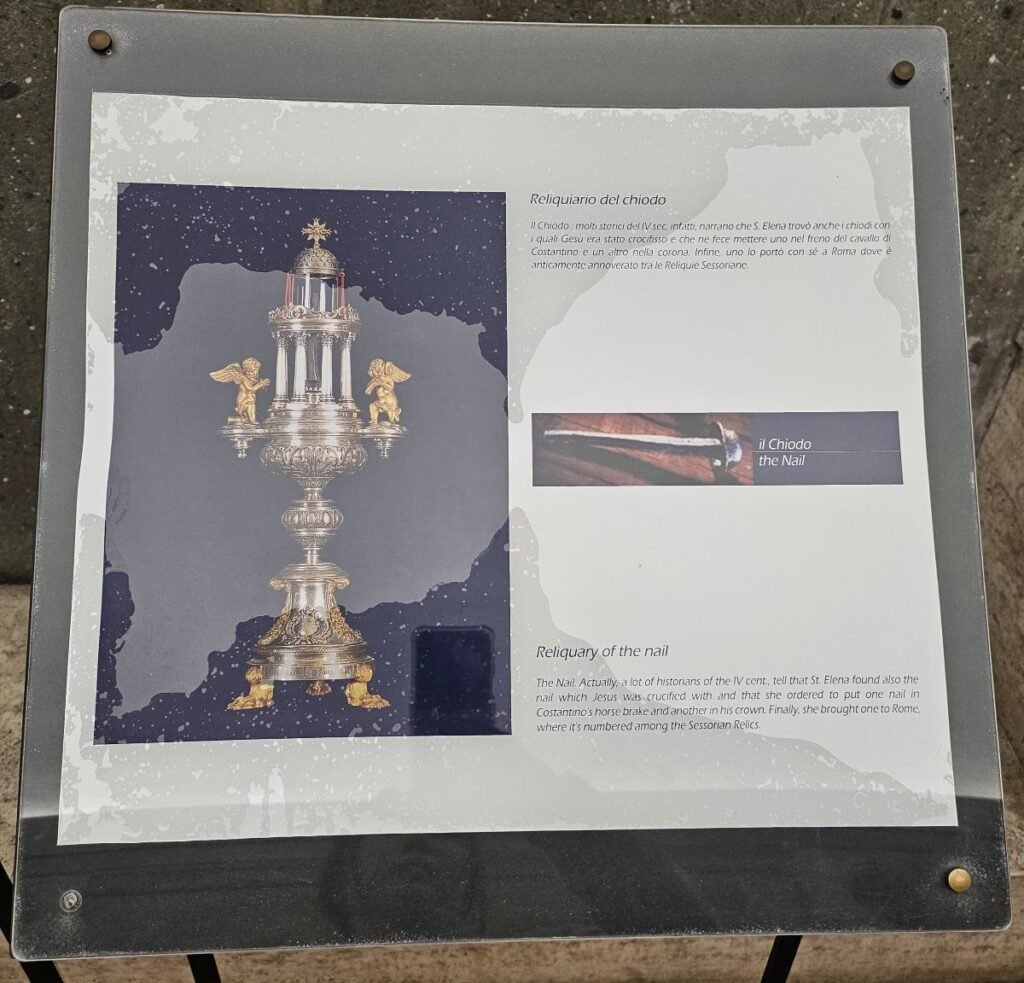
This is a nail said to have been used when Jesus was nailed to the cross.
Looking at these relics one by one, I understood a little better why this church is called the “Holy Cross.”
Titulus Crucis
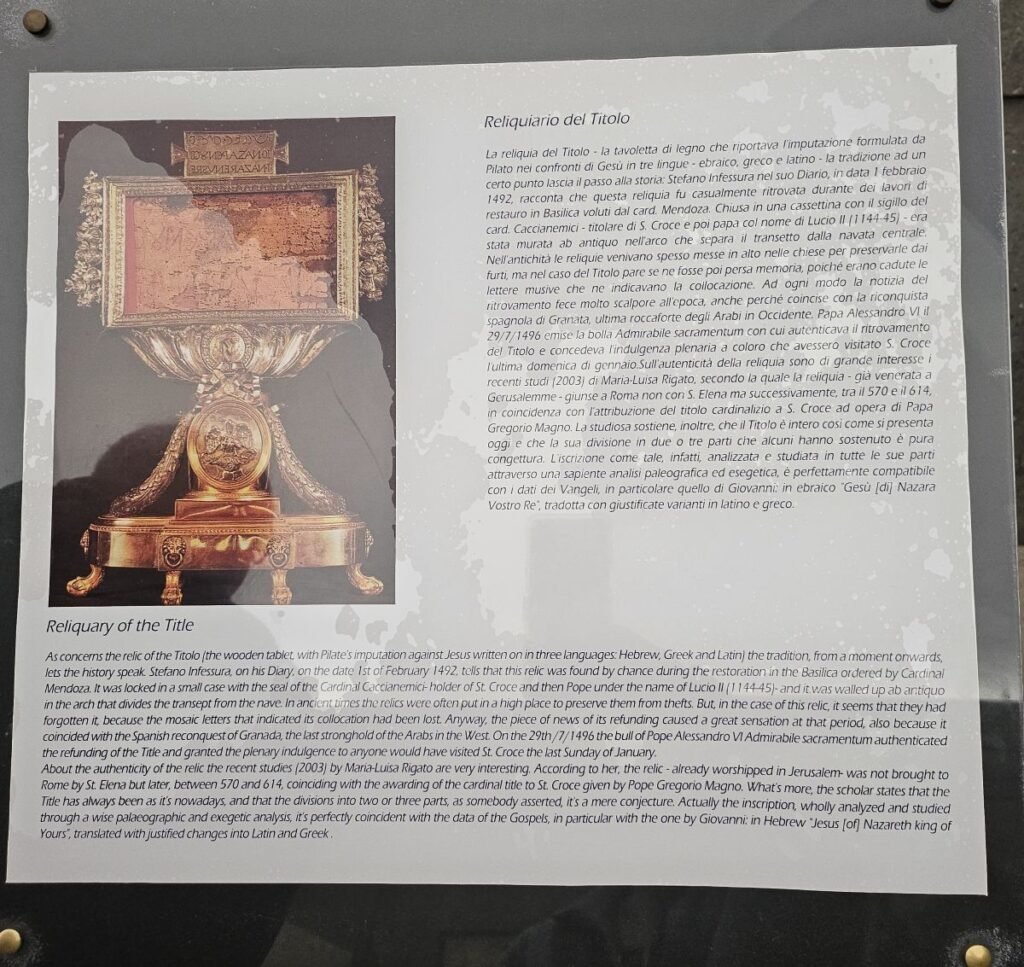
According to the information panel, “Titulus Crucis” means “the sign of the cross.” It’s a fragment of a wooden sign said to have hung above Jesus on the cross, and the word “Nazarene” is written on it in Hebrew, Greek, and Latin.
It was discovered in 1492 by chance during repairs to the church wall. Behind a brick carved with the words TITULUS CRUCIS, this piece was found.
Here, I found myself drawn less to the beauty of the building and more to the relics that have been kept for so long, and the stories behind them.
A Long Day in Rome
That day, I started at St. Paul Outside the Walls in the morning and then visited St. John Lateran, the Scala Santa, and finally Santa Croce, one after another.
They were all churches in Rome, but each one had a completely different atmosphere. At St. John Lateran, the ornate altars and mosaics stood out. At the Scala Santa, the memory of climbing the stairs on my knees while praying stayed with me for a long time. And at Santa Croce, the last stop, I got to see relics of the Passion up close.
I walked a lot from morning on, and my knees were quite sore, but it was a truly special day, getting to visit so many of Rome’s pilgrimage sites in a single day.
Read the earlier part of this trip: Santa Maria Maggiore and St. Paul Outside the Walls.