My trip to Lourdes, France was not simply about visiting another city. I came here mainly to visit the Sanctuary of Our Lady of Lourdes and the Grotto of Massabielle, where the Virgin Mary is said to have appeared to Saint Bernadette Soubirous in 1858.
Between February 11 and July 16 of that year, Bernadette reportedly experienced 18 apparitions at the grotto. Since then, Lourdes has become one of the world’s best-known Catholic pilgrimage destinations.
For me, visiting the site of the Marian apparitions was the main reason for traveling to Lourdes.
Table of Contents
Visiting Lourdes, France Just After Christmas
I visited Lourdes just after Christmas.
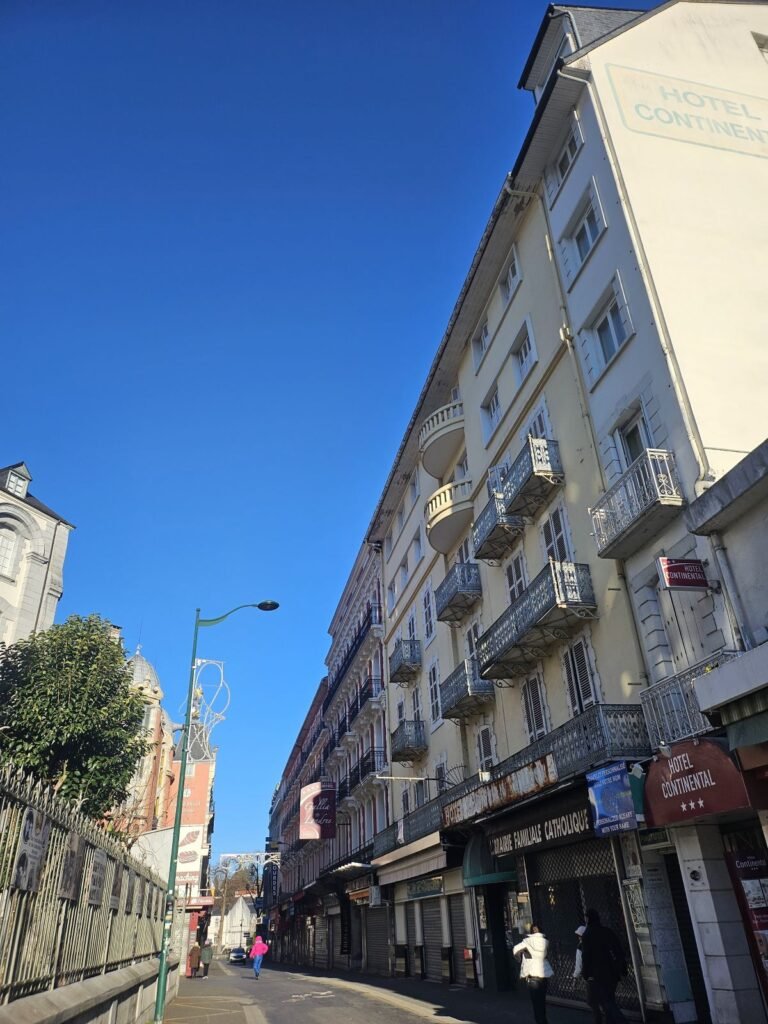
As I walked toward the sanctuary, the streets were almost empty. Many shops and restaurants were closed, and it was surprisingly quiet for such a famous pilgrimage town.
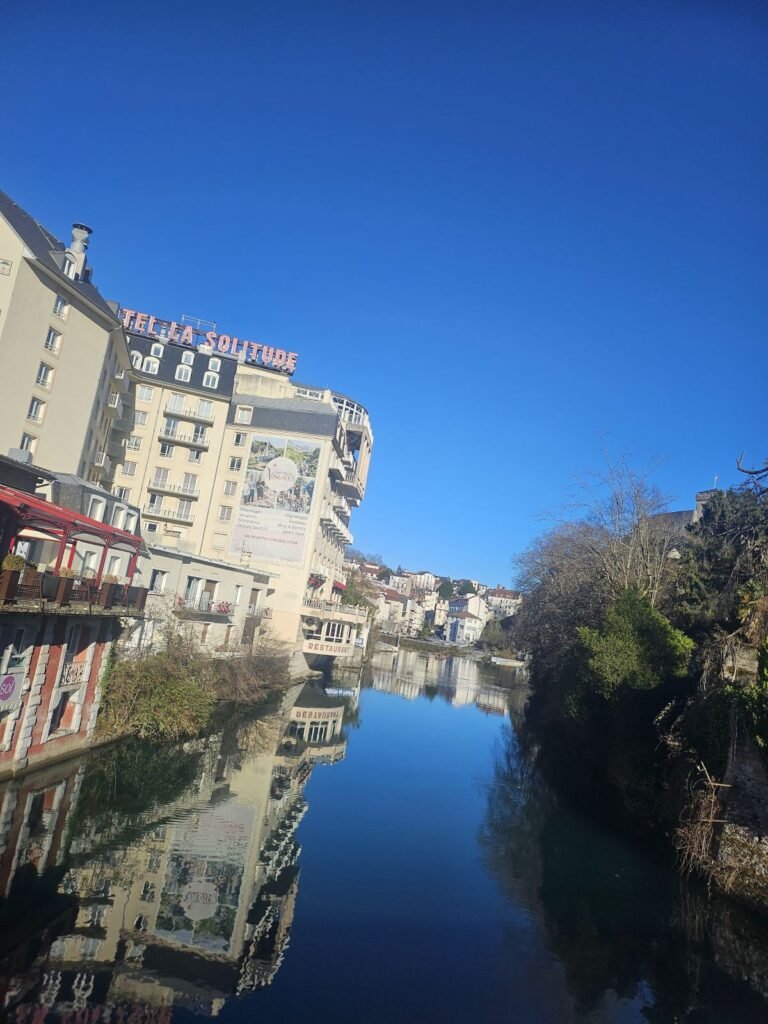
On the way to the sanctuary, I crossed a bridge and looked out over the river and the hotels nearby. The weather was beautifully clear, and the blue sky and buildings were reflected on the calm water.
I continued walking through the town.
There were hotels and shops along the streets, but because it was just after Christmas, most places were quiet and there were very few people around.
After walking a little farther, I began to see the tall spire of the sanctuary at the end of the street.
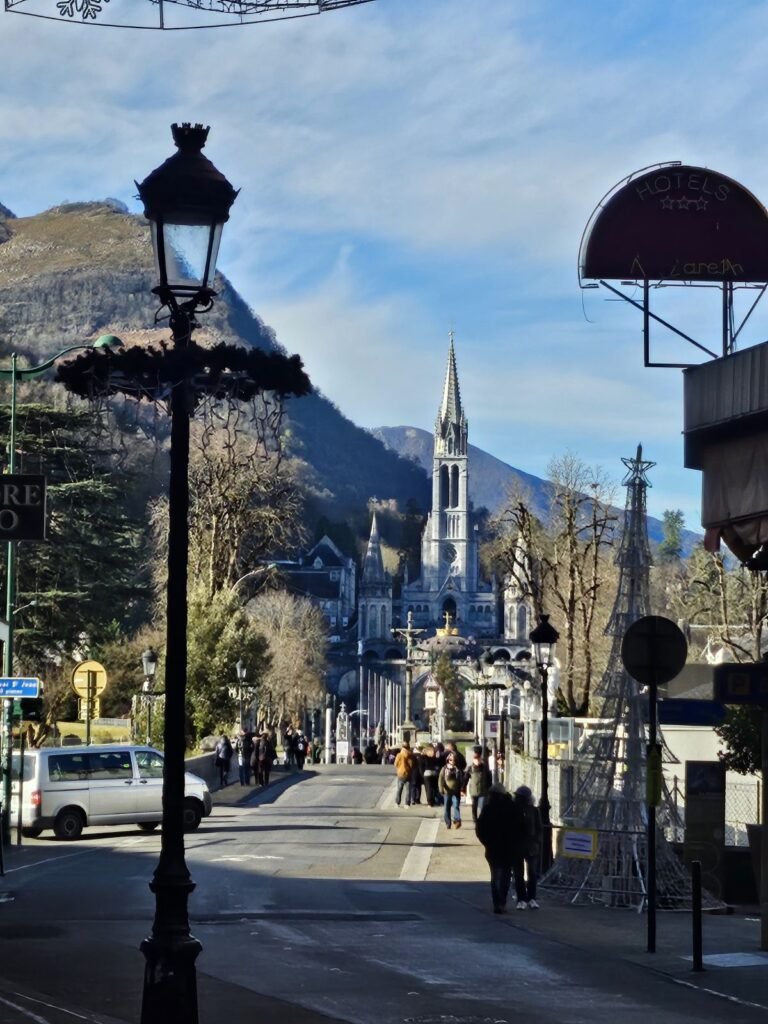
It was the Lourdes Sanctuary I had seen so many times in photographs. As I got closer, people gradually began to appear, in contrast to the nearly empty streets of the town.
Lourdes Sanctuary and Its Two Basilicas
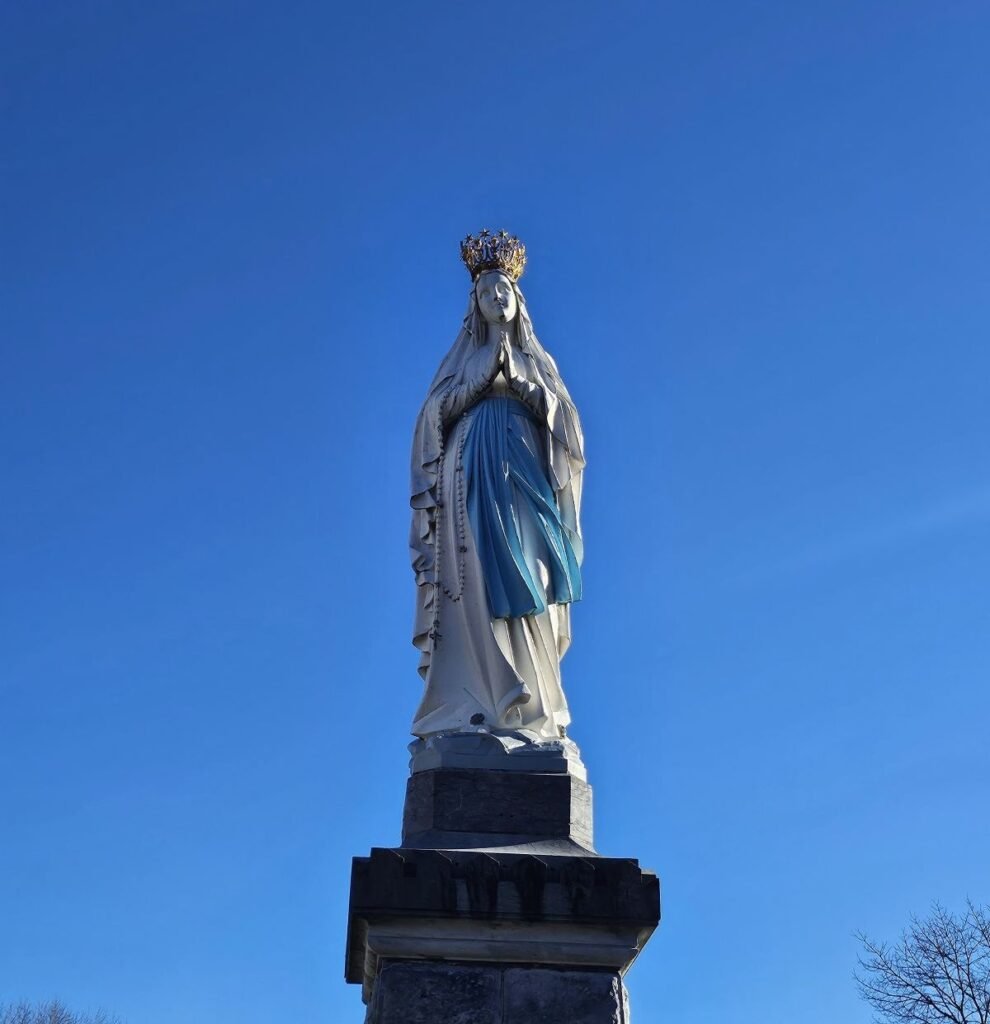
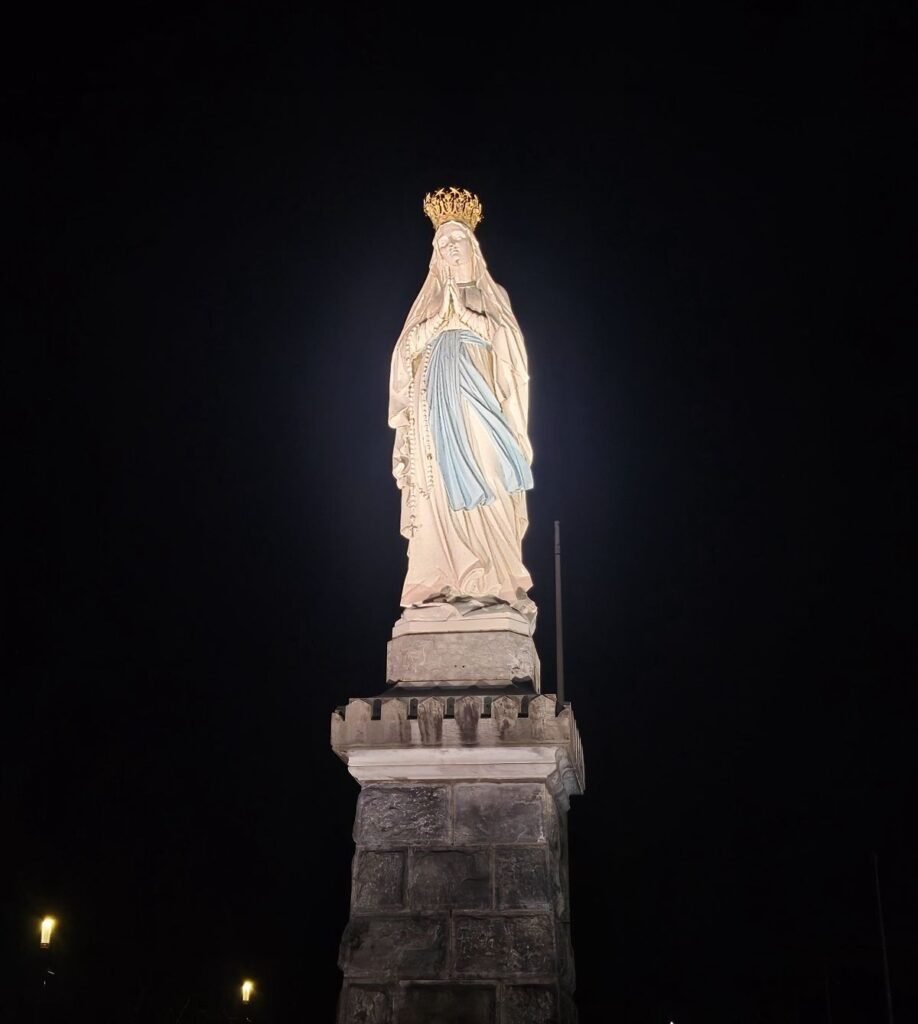
When I arrived at the sanctuary, the first thing I noticed was the Crowned Virgin statue standing in the middle of the square.
Wearing a golden crown and a blue sash, the statue stood high above the plaza and could easily be seen from a distance. Before heading up toward the basilica, I stopped for a moment in front of the statue.
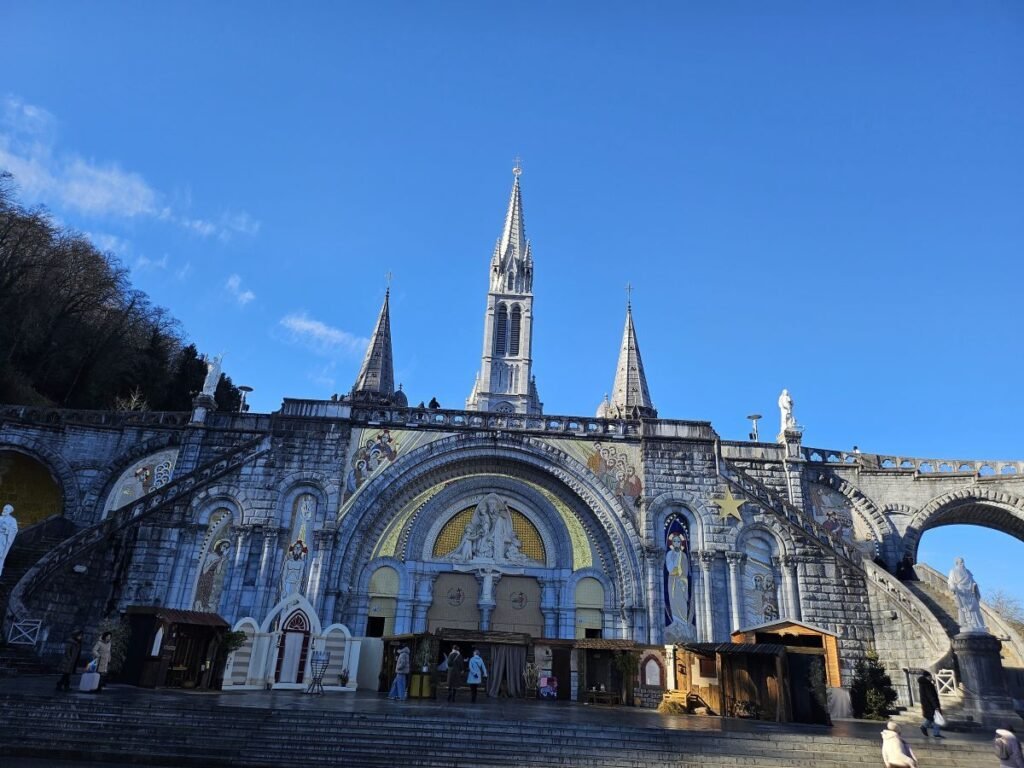
After greeting Our Lady, I turned around and saw the tall spire of the basilica directly in front of me.
At first glance, the sanctuary can look like one large church, but there are actually two basilicas built one above the other. The Basilica of the Immaculate Conception stands at the top, while the Basilica of Our Lady of the Rosary is located below it.
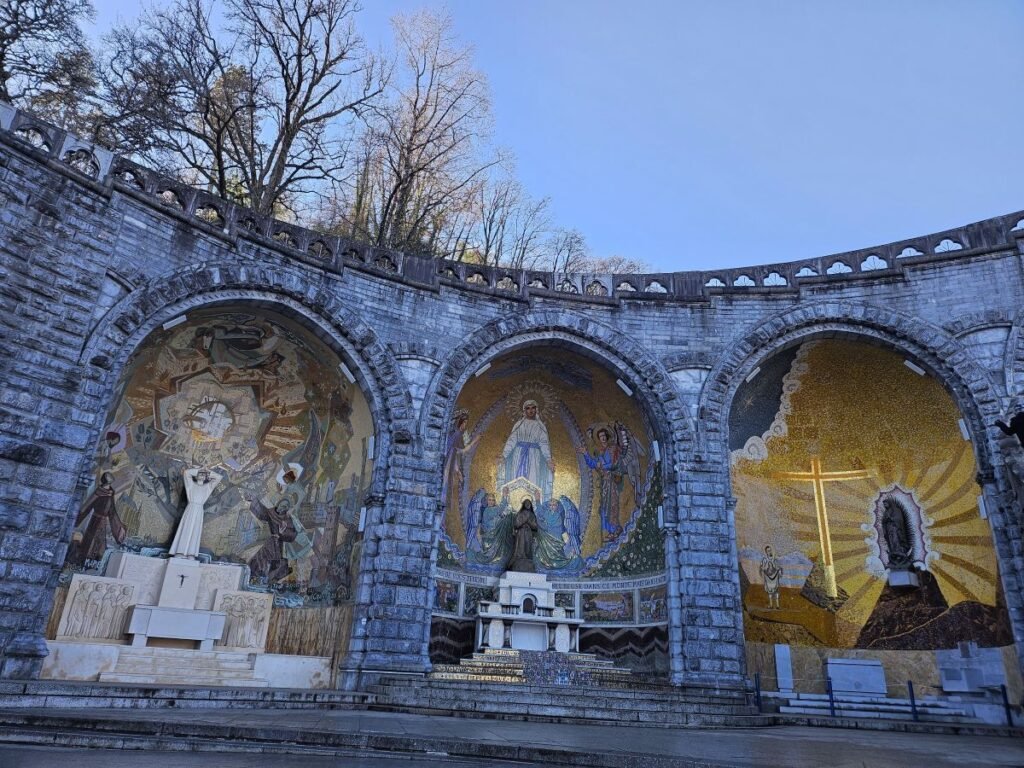
Along the exterior wall beside the basilica, a series of mosaics depicted the mysteries of the Rosary. The biblical scenes were filled with gold and vivid colors, and I found myself stopping to look at them one by one.
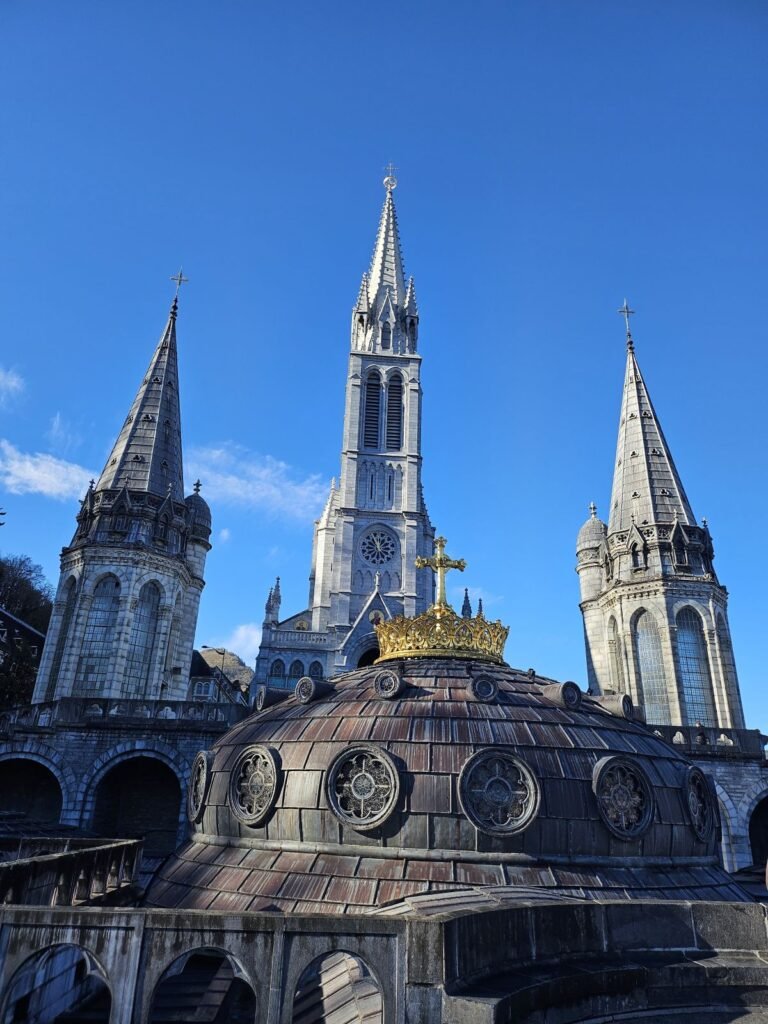
The upper Basilica of the Immaculate Conception was built in response to the request that the Virgin Mary is said to have given Bernadette: to tell the priests to build a chapel at this place. I walked up to the Basilica of the Immaculate Conception.
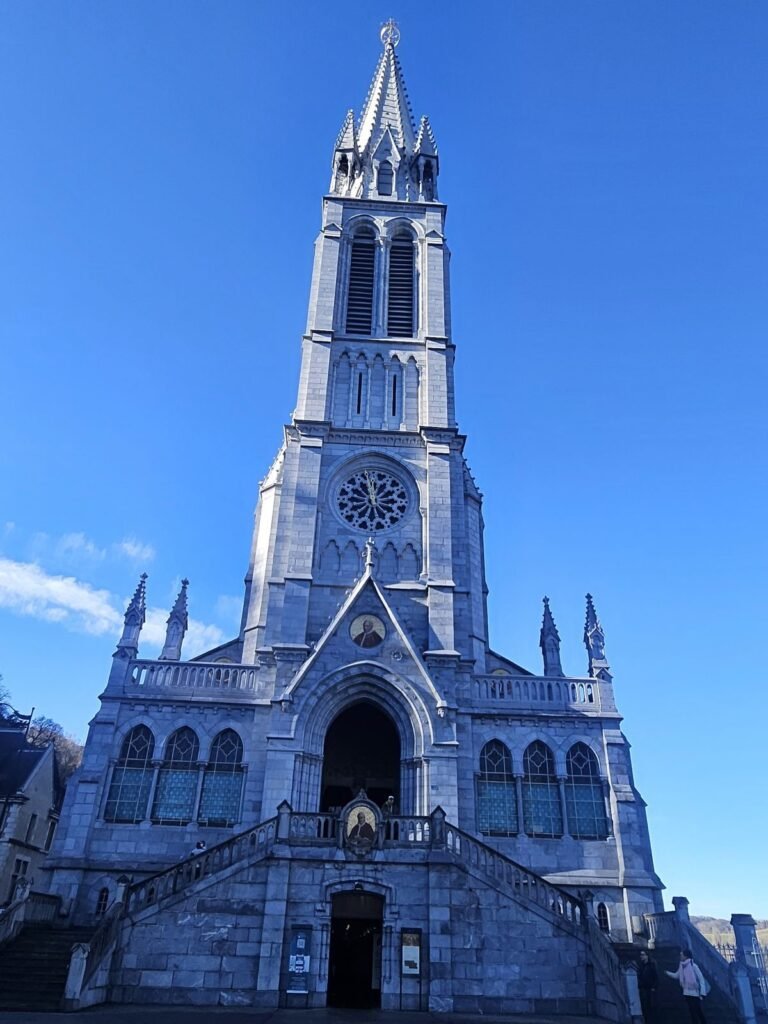
Inside, I sat quietly for a while and spent some time in prayer and reflection.
When traveling, I am usually walking, checking the time, or thinking about where I need to go next. Here, I was able to simply sit still for a little while. It gave me time to think again about why I had wanted to come all the way to Lourdes.
The Grotto of Massabielle
After visiting the basilica, I made my way down to the place I had wanted to see most: the Grotto of Massabielle.
This is the site where Saint Bernadette is said to have seen the Virgin Mary.
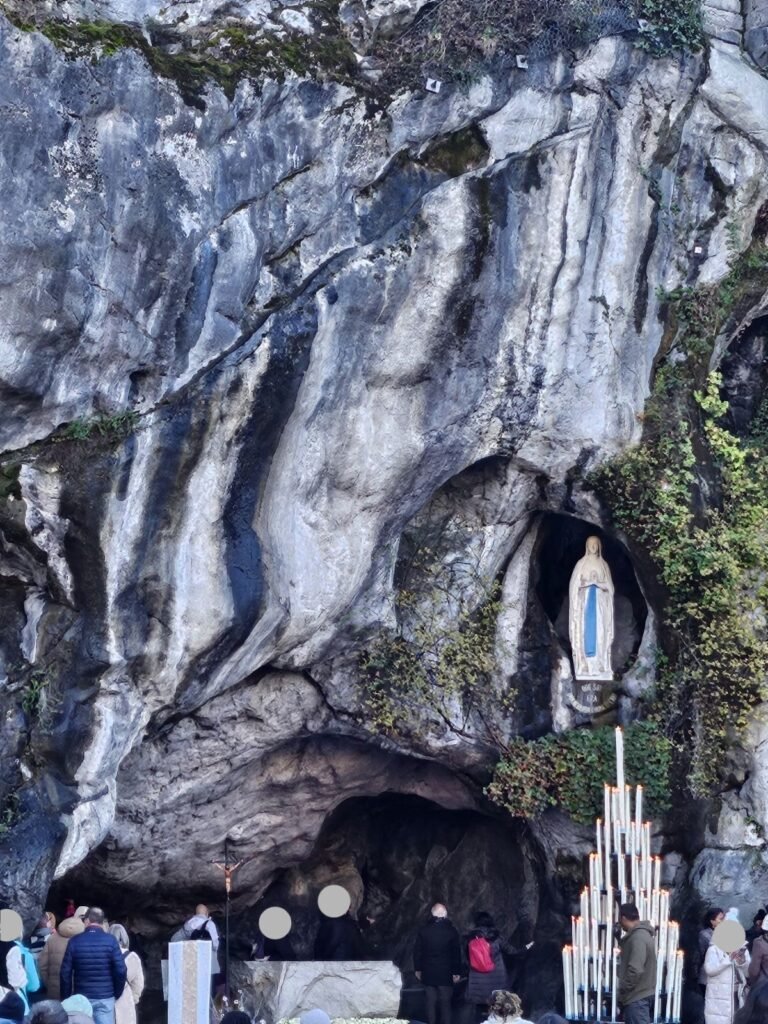
The grotto is not an elaborately decorated religious space. It is a natural cave beneath a large limestone rock, with a statue of Our Lady of Lourdes placed in a niche above. That niche marks the spot where the Virgin Mary is believed to have appeared.
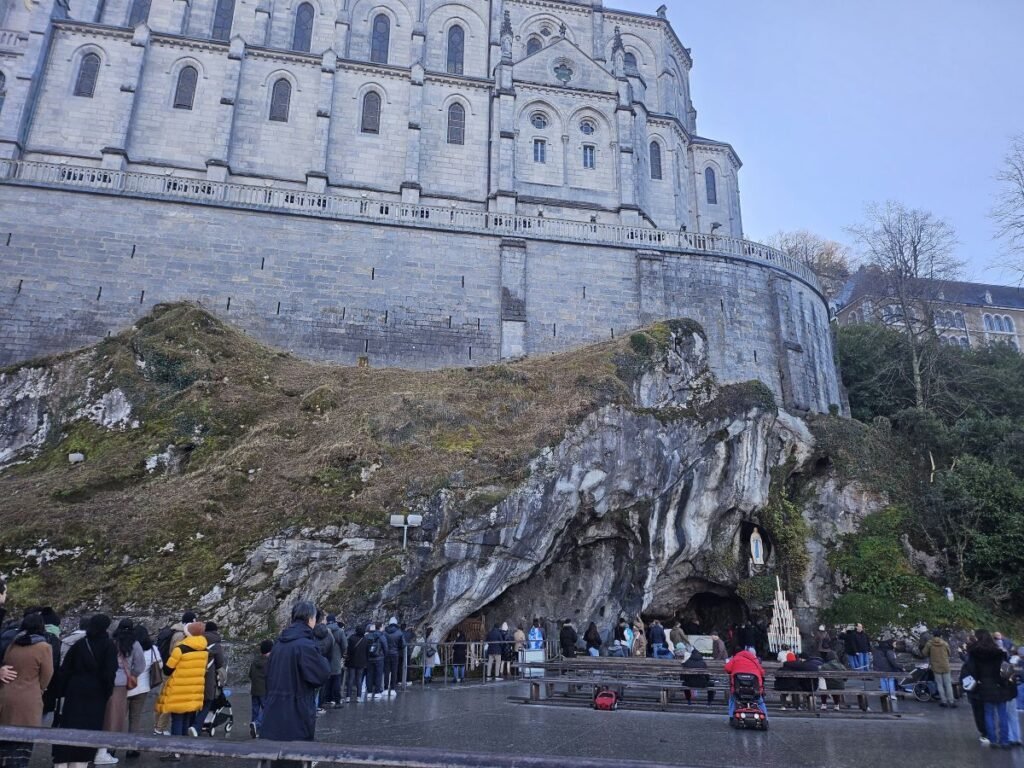
The streets outside the sanctuary had been almost empty, but there were many people gathered in front of the grotto.
Some were sitting on benches praying, while others stood quietly looking toward the statue. A few remained in the same place for a long time, absorbed in prayer.
Pilgrims Touching the Rock
At the Grotto of Massabielle, I saw people slowly walking along the rock wall.
Most did not simply walk past it. They placed their hands on the rock, gently running their palms along the surface, and some paused for a moment to pray.
This is not something visitors happen to do by chance. Touching the rock of the grotto, drinking the spring water, lighting candles, and praying the Rosary are all long-standing pilgrimage practices in Lourdes. Over the years, countless pilgrims have touched the same sections of rock, leaving parts of the surface smooth and damp.
I followed the path through the grotto as well.
Standing outside and looking at the grotto is one thing, but walking through it among people quietly praying gave me a better sense of why so many pilgrims spend time here.
The Water of Massabielle
Near the grotto, there are fountains where visitors can collect water from Lourdes.
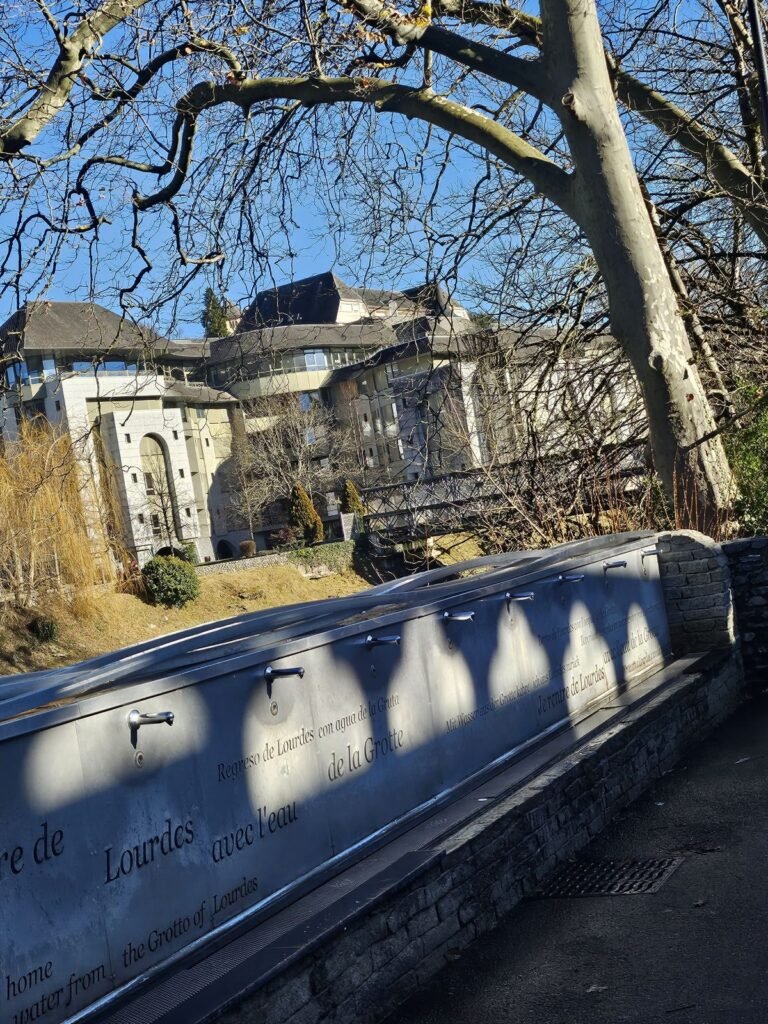
The spring is said to have been discovered on February 25, 1858, during the ninth apparition. According to the story, Bernadette dug into the ground and water began to emerge. Today, visitors can drink the water from fountains within the sanctuary or fill containers to take with them.
It is commonly referred to as “Lourdes holy water,” although more precisely, it is water from the spring at Massabielle.
Around the sanctuary, souvenir shops sell bottles and containers in many different sizes specifically for carrying Lourdes water.
I bought one of the containers myself and filled it at the fountain. Since it would have been inconvenient to carry it around for the rest of my trip, I went to the post office in Lourdes and mailed it home.
Many pilgrims also take the water back for family members or friends who were unable to visit Lourdes themselves, so it is common to see people filling bottles and containers at the fountains.
Rather than simply buying a souvenir, collecting the water yourself is part of the pilgrimage culture you see throughout Lourdes.
Taking Part in the Water Gesture
Near the Grotto of Massabielle, pilgrims can also take part in the Water Gesture.
This practice comes from the account of the Virgin Mary telling Bernadette to go to the spring, drink from it, and wash herself.
When I visited, I went at the scheduled time and waited in line until it was my turn to enter. Inside, the volunteers asked where each visitor was from and provided a prayer in the appropriate language. I was given a Korean prayer to read as I took part in the ritual.
After the prayer, I washed my hands and face with the Lourdes water and drank some of it as well.
Lourdes also has a more traditional Immersion in the Baths, in which pilgrims immerse themselves in the water. During my winter visit, however, the simpler Water Gesture was being offered instead of full immersion.
Schedules and procedures can vary depending on the season, so it is a good idea to check the sanctuary’s current schedule if you would like to participate.
Lighting a Candle and Praying
Candles are another familiar sight throughout Lourdes.
Lighting a candle has long been part of the pilgrimage tradition here. The sanctuary describes it as a way of allowing one’s prayer to continue symbolically even after leaving the place.
During the day, I also prepared a candle, lit it, and spent some time praying.
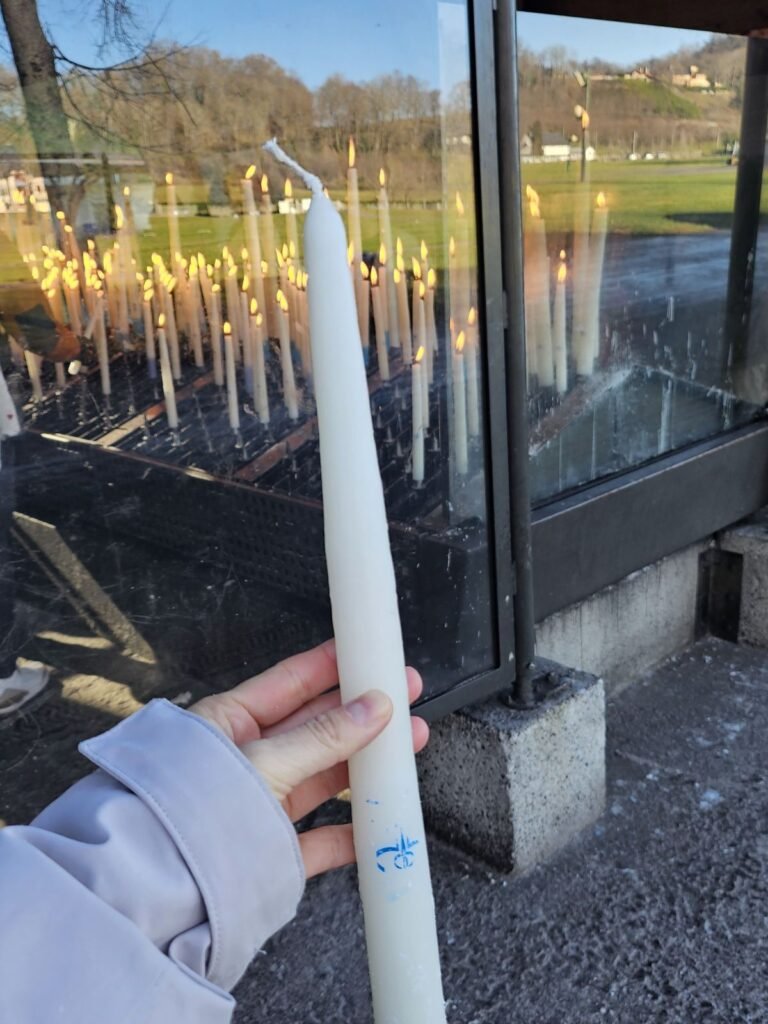
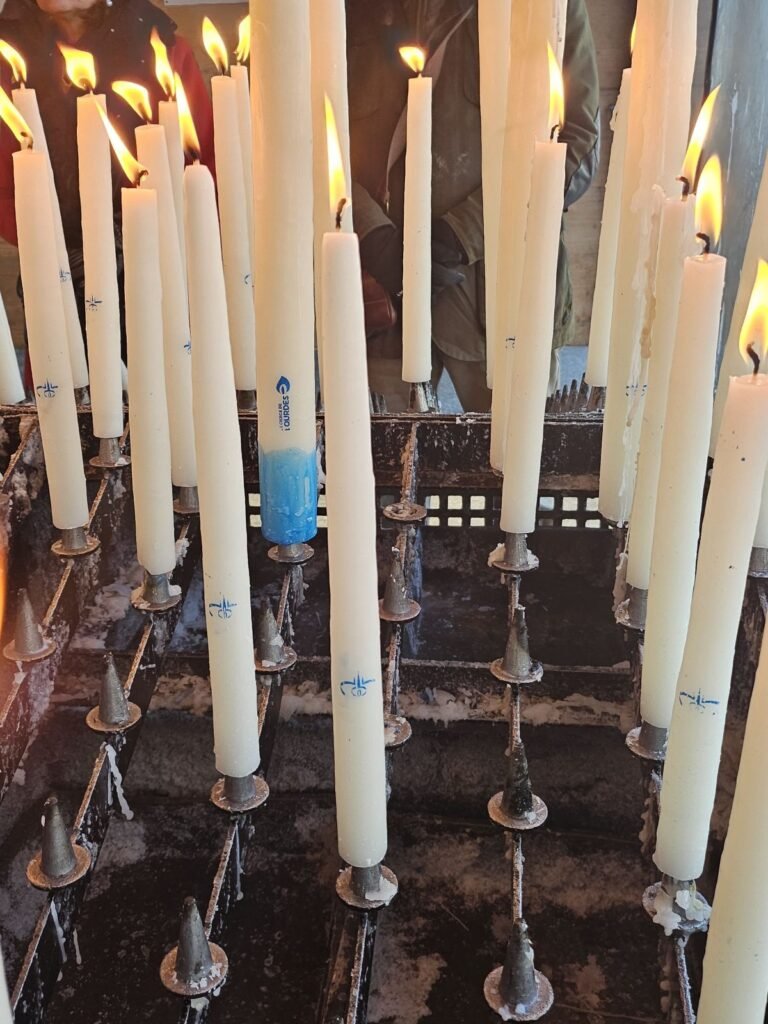
I had been walking around the basilicas and the grotto for much of the day, so this was one of the moments when I simply stayed in one place for a while.
Discovering the “Chemin de Bernadette”
While walking around the sanctuary, I noticed a small circular marker set into the ground.
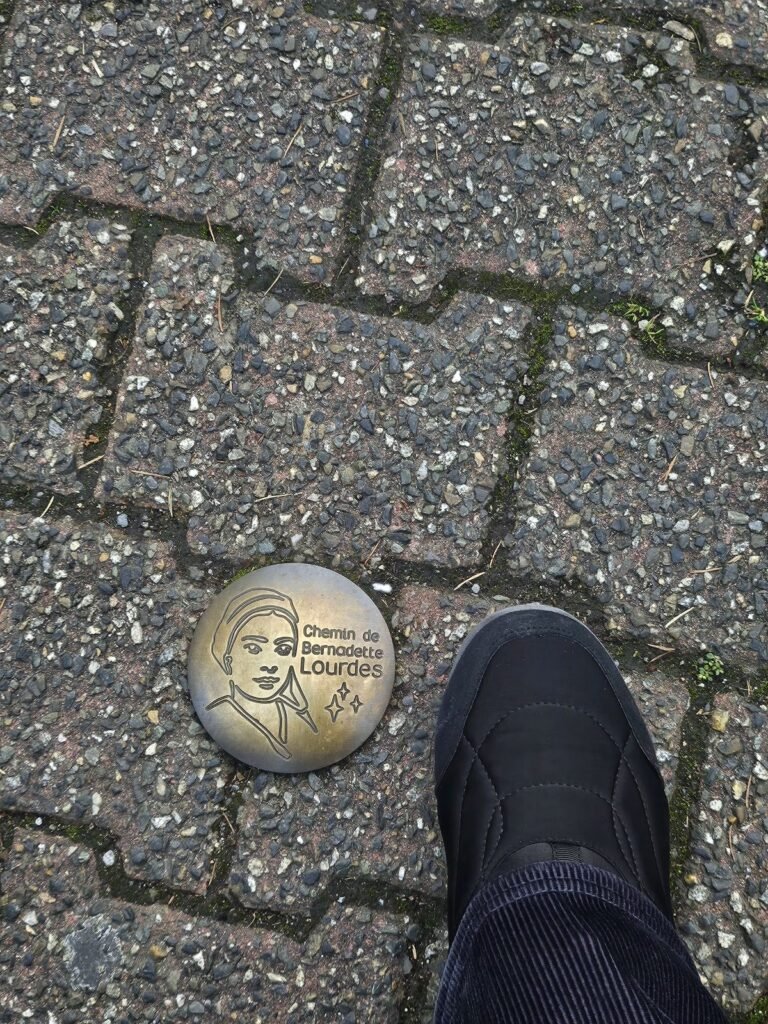
At the time, I assumed it was simply a marker showing the way around Lourdes.
Later, I found out that it marked the Chemin de Bernadette, or “Bernadette’s Way,” a route connecting places associated with the life of Saint Bernadette.
Around Lourdes, several places connected to her life can still be visited, including Boly Mill, where she was born; the Cachot, where her family lived after falling into poverty; the Saint Bernadette Hospice; and the parish church where she was baptized.
There are also guided walks following these sites, which take around two hours according to the official information.
I did not have enough time in Lourdes to visit Bernadette’s birthplace or the other locations. If I return someday, I would like to follow the route properly.
After spending the daytime around the sanctuary, the basilicas, and the Grotto of Massabielle, I went back to my hotel to rest for a while.
Then, in the evening, I returned to the sanctuary.
Returning to the Grotto in the Evening
I went back in the evening to take part in the candlelight Rosary held in front of the Grotto of Massabielle.
Lourdes is famous for its large Marian candlelight processions that fill the esplanade during the main pilgrimage season. During the quieter winter season, depending on the schedule, pilgrims gather in front of the grotto instead and pray the Rosary together by candlelight.
That evening, people were already gathering in front of the grotto with candles in their hands.
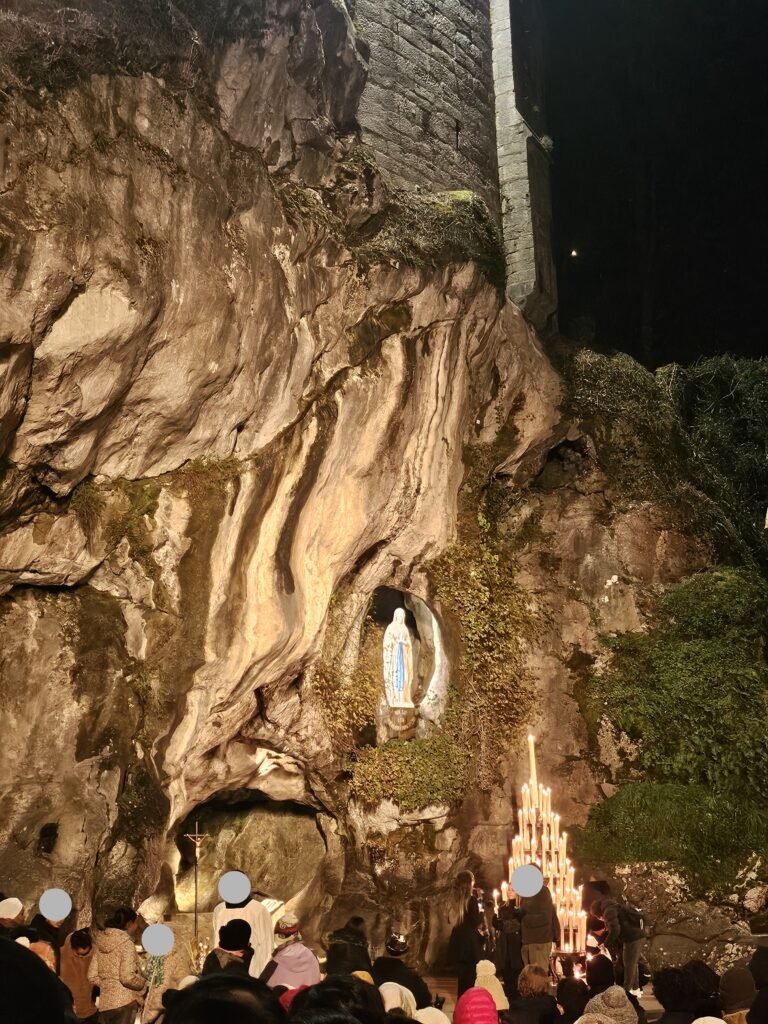
I joined them and prayed the Rosary with my own candle.
During the day, people had been praying individually around the grotto, but in the evening everyone gathered together in the same place and continued the Rosary as a group.
I held a small candle protected by a paper wind guard.
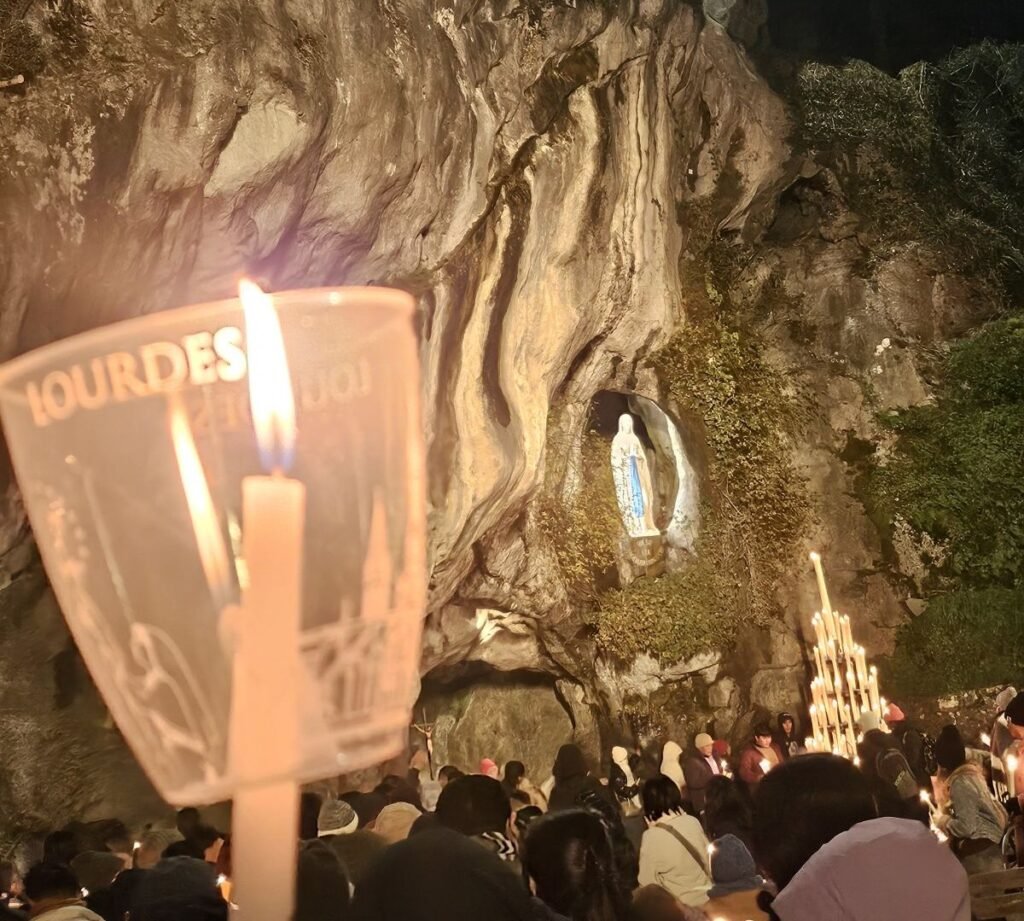
Standing in front of the dark grotto with a candle in my hand, I could see the statue of Our Lady above the rock and the glow of candles around me.
I had seen photographs of pilgrims holding candles in Lourdes many times before. This time, I was there myself, praying alongside them.
Lourdes Sanctuary at Night
After the prayers ended, I looked back at the sanctuary as I was leaving.
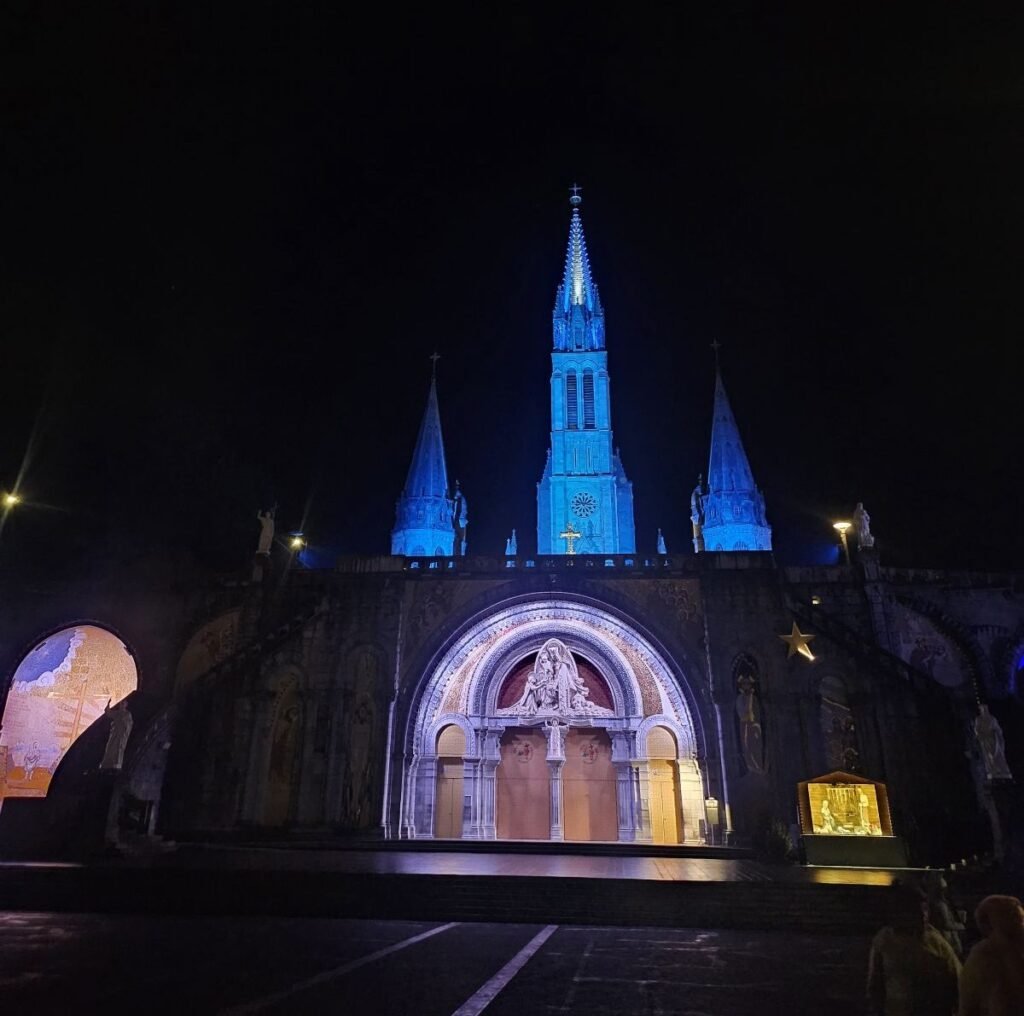
During the day, the white stone buildings had stood out against the bright blue sky. At night, the basilica was illuminated in blue and could be seen clearly from a distance.
Lourdes was not a destination I visited simply to see as many attractions as possible or collect photographs. From the beginning, what mattered most to me was visiting the place where the Marian apparitions are believed to have taken place. Once I arrived, I found myself spending much more time in the same places than I normally would while traveling.
What stays with me most clearly is the sight of people praying quietly in front of the Grotto of Massabielle, and the evening when I stood among other pilgrims holding a candle and praying the Rosary. It felt almost surreal to be praying in a place I had previously only seen in photographs.
I did not have enough time to visit Bernadette’s birthplace or explore many of the other sites around Lourdes, but that was not the main purpose of this visit. When I think of Lourdes now, I imagine that the first things I will remember are not the grand basilicas, but the Grotto of Massabielle and the small candle flames glowing in front of it at night.
Before this visit to Lourdes, I spent my final morning in Rome at the Church of the Gesù. You can read the previous part of my journey here: Leaving Rome: The Church of the Gesù and My Journey to Lourdes