
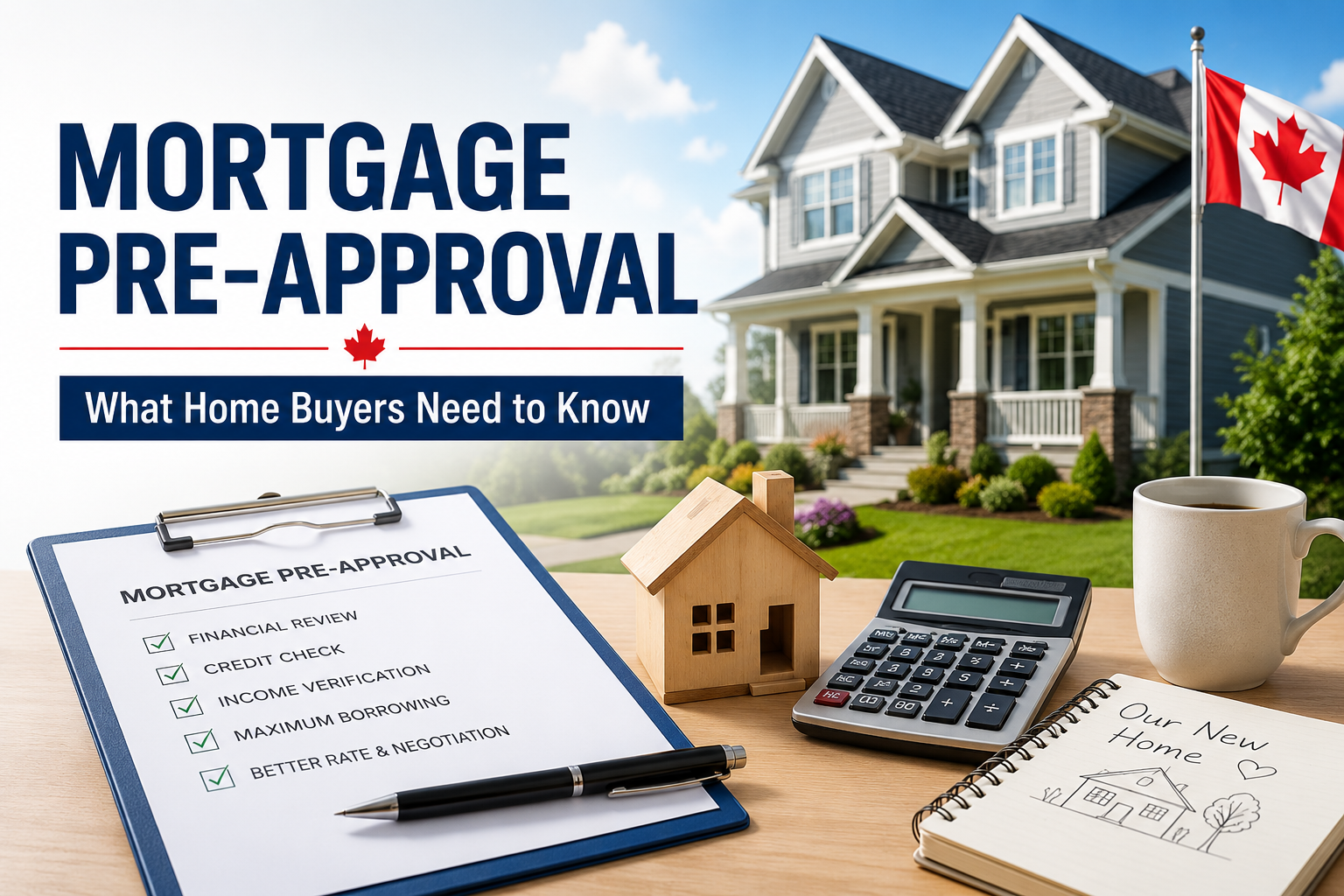
Buying a home is a major financial decision, and knowing how much you may be able to borrow can make the process easier to navigate.
A mortgage pre-approval in Canada can give you an estimate of the mortgage amount you may qualify for, your potential mortgage payments, and, depending on the lender, an interest rate that may be held for a certain period. However, a pre-approval is not a guarantee that your mortgage application will ultimately be approved.
If you’re planning to buy your first home, understanding the mortgage pre-approval process in Canada before you start house hunting can help you set a more realistic budget.
Table of Contents
What Is Mortgage Pre-Approval in Canada?
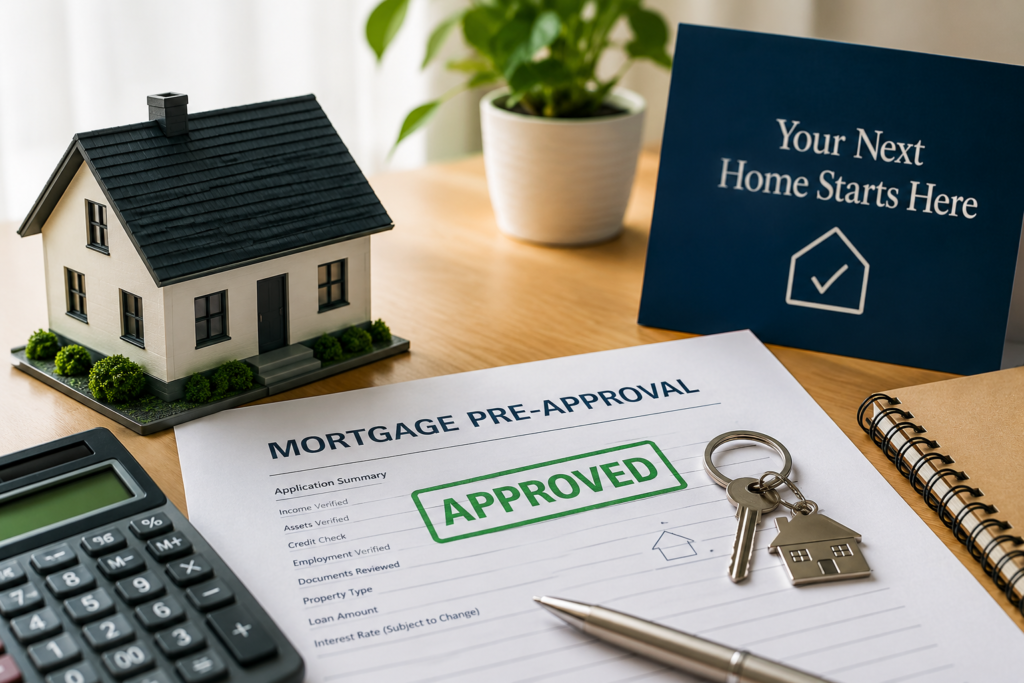
Getting a mortgage pre-approval in Canada is an assessment by a lender or mortgage broker of your financial situation to estimate how much they may be willing to lend you.
The lender may review your income, employment, assets, debts and other financial obligations. They will likely also check your credit.
A pre-approval may help you:
- Estimate the maximum mortgage amount you could qualify for
- Estimate your potential mortgage payments
- Understand what price range may be realistic
- Potentially lock in an interest rate for a limited period
According to the Financial Consumer Agency of Canada (FCAC), some lenders may hold a pre-approved rate for 60 to 130 days, depending on the lender.
Mortgage Pre-Approval vs. Mortgage Approval
No.
This is one of the most important things to understand.
A pre-approval is based on the information available when the lender evaluates your finances. Once you find a property, the lender still needs to evaluate the specific property and complete the final approval process.
FCAC specifically notes that a pre-approval does not guarantee approval for a mortgage. A lender could still refuse the mortgage later, even after pre-approving you.
So, think of pre-approval as an important step in the home-buying process—not a promise that your mortgage is finalized.
What Do You Need for a Mortgage Pre-Approval?
When applying for a mortgage pre-approval in Canada, the exact documents required vary by lender, but you will generally need information about several areas of your finances.
| Information | Examples |
|---|---|
| Employment | Employer, position, length of employment, recent pay stubs |
| Income | Salary or other income information |
| Down payment | Amount available and where the money comes from |
| Assets | Bank accounts, investments and other assets |
| Debts | Credit cards, car loans, student loans, lines of credit |
| Identification | Government-issued identification |
| Self-employment | CRA Notices of Assessment and other income documentation |
CMHC also notes that buyers should be prepared to show they have enough money for closing costs. Its guidance says closing costs are usually around 1.5% to 4% of the home’s purchase price, although the actual amount varies depending on the transaction.
What Do Lenders Look At?
Lenders generally look at your overall financial situation rather than just your income.
Your debts matter because existing monthly payments affect how much room you have for a new mortgage payment. These can include credit card balances, car loans, student loans, lines of credit and other financial obligations.
Lenders may also consider your credit history, down payment, assets and employment situation.
The Mortgage Stress Test
If you’re applying for a mortgage pre-approval in Canada with a federally regulated lender such as a bank, you’ll generally need to pass the mortgage stress test.
FCAC currently states that banks must qualify borrowers using the higher of:
- 5.25%, or
- Your negotiated mortgage interest rate + 2 percentage points
This applies to both insured and uninsured mortgages.
The purpose is to assess whether you could still afford the mortgage if interest rates were higher than your actual contract rate.
How Much Home Can You Actually Afford?
One important mistake is assuming that the maximum mortgage amount from a pre-approval equals the price of the home you should buy.
It doesn’t.
You’ll also need money for your down payment, closing costs, moving expenses, property taxes, insurance, maintenance and other ongoing costs. FCAC specifically recommends considering these additional costs rather than simply stretching your budget to the maximum pre-approved amount.
CMHC also recommends looking at your overall financial situation and determining what you can comfortably afford before shopping for a home.
Where Can You Get a Mortgage Pre-Approval?
You can seek a pre-approval directly from a mortgage lender or through a mortgage broker.
It can be useful to compare options rather than automatically accepting the first offer you receive. When discussing a pre-approval, you can ask:
- How long is the pre-approved rate guaranteed?
- What happens if interest rates fall?
- Can the pre-approval be extended?
- What fees or conditions apply?
- What happens after I find a property?
FCAC specifically recommends asking lenders or brokers these types of questions during the pre-approval process.
When Should You Get Pre-Approved?
For many buyers, getting pre-approved before seriously shopping for a home can be useful.
CMHC describes mortgage pre-approval as a valuable first step before beginning your house search.
Once you understand your finances and have an idea of what you can afford, you can search for homes within a more realistic price range.
That doesn’t mean you need to spend the full amount you’re pre-approved for.
Mortgage Pre-Approval Checklist
Before applying, it can help to have these items ready:
☐ Government-issued identification
☐ Recent proof of income
☐ Employment information
☐ Bank or investment statements
☐ Down payment information
☐ Information about existing debts
☐ Credit information
☐ Estimated closing costs
☐ A realistic monthly housing budget
Having these documents organized can make the process easier and help you understand your financial position before you start making offers.
Frequently Asked Questions
Does mortgage pre-approval guarantee a mortgage?
No. A pre-approval does not guarantee final mortgage approval. The lender will still need to complete the final approval process after you select a property.
How long does a mortgage pre-approval last?
It depends on the lender. FCAC says some lenders may hold a pre-approved interest rate for 60 to 130 days.
Does getting pre-approved affect your credit score?
A lender will likely run a credit check as part of the pre-approval process. The exact impact can depend on how the credit inquiry is handled and your overall credit profile.
Can I get pre-approved before choosing a house?
Yes. In fact, getting pre-approved before seriously shopping can help you understand your potential borrowing range and make your home search more focused.
Should I buy a house for the maximum amount I’m pre-approved for?
Not necessarily. Your pre-approved mortgage amount is a maximum lending amount, not a recommendation for how much you should spend. You should also account for closing costs, moving expenses, maintenance and other ongoing costs.
Final Thoughts
Getting a mortgage pre-approval in Canada can be a helpful first step for anyone preparing to buy a home. It can give you a clearer picture of your potential borrowing capacity and help you approach your home search with a more realistic budget.
But remember: pre-approved doesn’t mean finally approved.
Your financial situation, the property you choose and the lender’s final assessment can all affect the final mortgage decision. Taking the time to understand these steps before making an offer can help you make a more informed home-buying decision.
Official Resources
- Financial Consumer Agency of Canada — Getting preapproved for a mortgage
- Financial Consumer Agency of Canada — Preparing to get a mortgage
- CMHC — Are You Financially Ready to Buy a Home?
- CMHC — Homebuying Step by Step Guide
Related Reading
If you want to learn more about Canadian financial benefits, check out our guide on Canada Groceries and Essentials Benefit 2026.