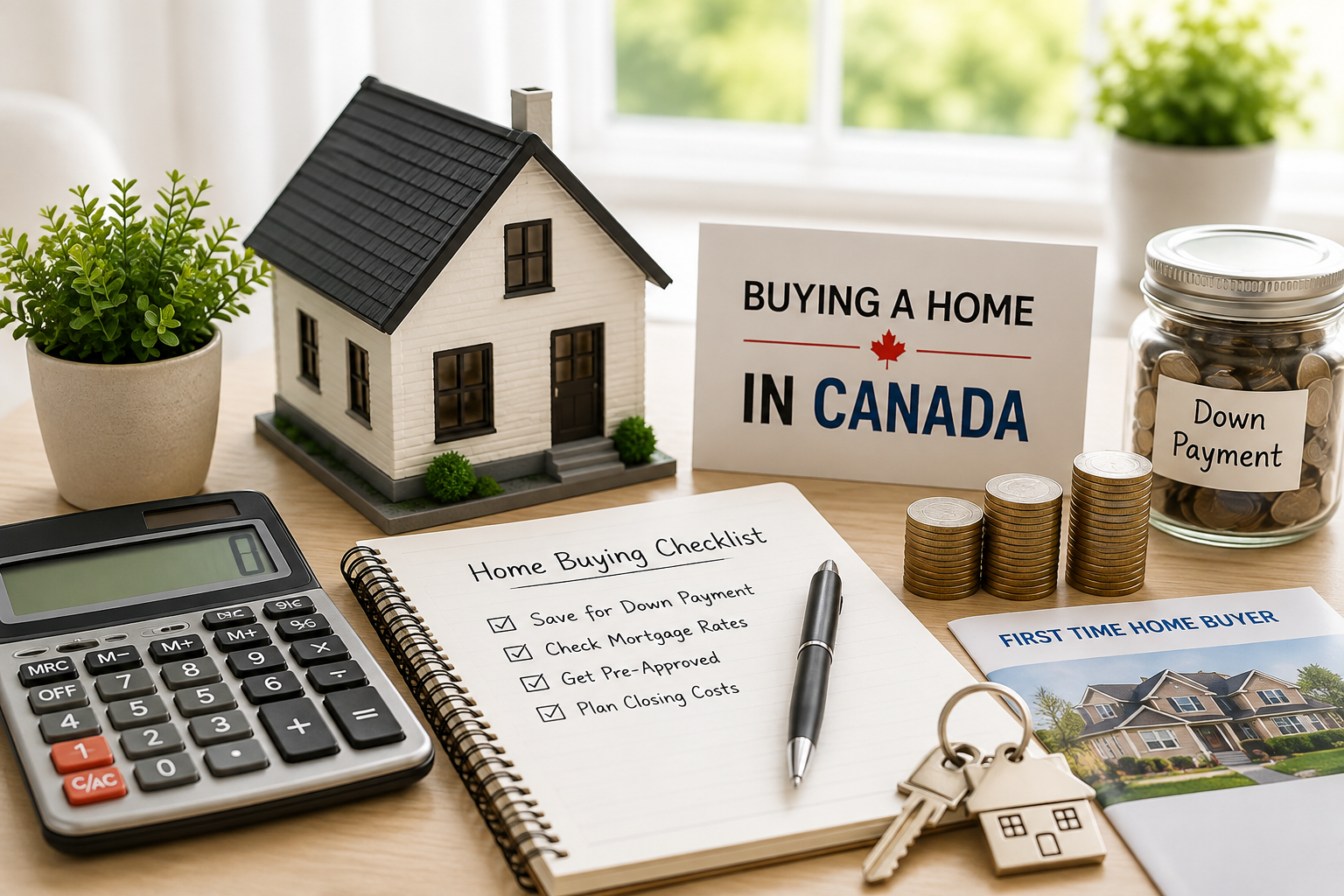
Buying a home in Canada requires more than finding a property you like. One of the first questions many buyers have is how much money they need to put down.
Your minimum down payment depends on the purchase price of the home. But the amount you should save may be higher than the legal minimum once you consider mortgage loan insurance, closing costs, and other expenses.
This guide explains down payment in Canada, shows examples at different home prices, and covers ways to save for your purchase.
Table of Contents
What Is a Down Payment in Canada?
A down payment is the portion of a home’s purchase price that you pay upfront. Your mortgage covers the remaining amount.
The minimum down payment you need depends on the purchase price. If you put down less than 20%, you will typically need mortgage loan insurance, provided the home and mortgage meet the applicable insurance requirements.
A larger down payment can reduce the amount you need to borrow and may also reduce your mortgage insurance costs.
How Much Down Payment Do You Need in Canada?
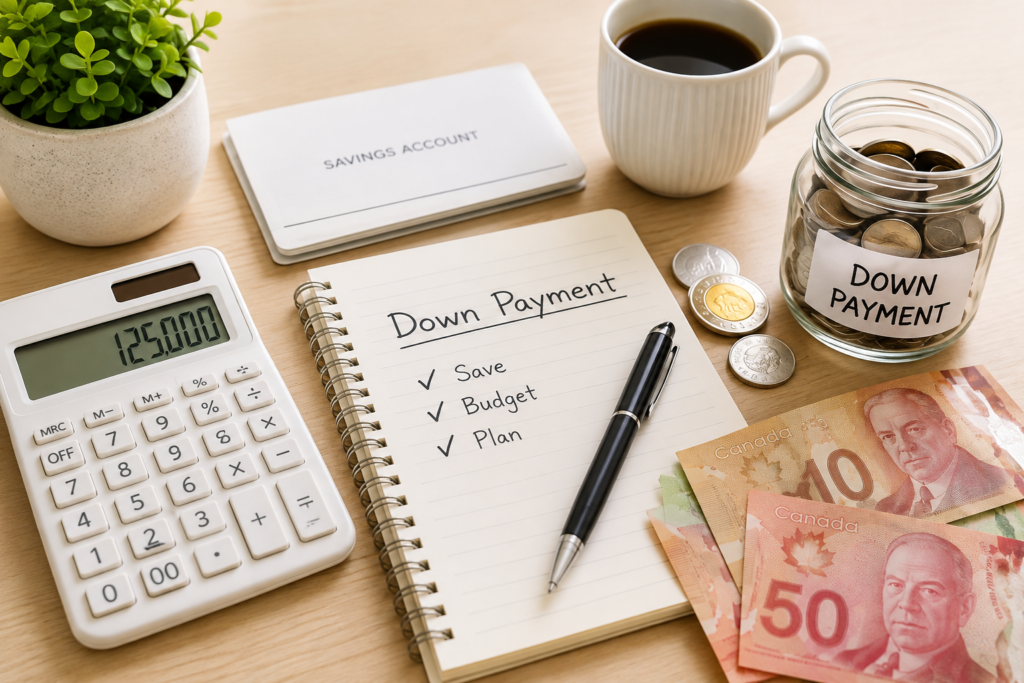
The minimum down payment in Canada is based on the home’s purchase price.
| Home Purchase Price | Minimum Down Payment |
|---|---|
| $500,000 or less | 5% |
| More than $500,000 and less than $1.5 million | 5% of the first $500,000 + 10% of the amount above $500,000 |
| $1.5 million or more | 20% |
For example, a $600,000 home requires a minimum down payment of $35,000: 5% of the first $500,000 ($25,000) plus 10% of the remaining $100,000 ($10,000).
Homes priced at $1.5 million or more require a minimum 20% down payment and are not eligible for insured mortgages under the applicable mortgage loan insurance rules.
Down Payment Examples
Here are some simple examples to help you estimate the minimum amount you may need:
| Home Price | Minimum Down Payment |
|---|---|
| $400,000 | $20,000 |
| $500,000 | $25,000 |
| $600,000 | $35,000 |
| $750,000 | $50,000 |
| $1,000,000 | $75,000 |
| $1,500,000 | $300,000 |
For a $750,000 home, for example, the minimum is $25,000 on the first $500,000 plus $25,000 on the remaining $250,000, for a total of $50,000.
Keep in mind that meeting the minimum down payment does not necessarily mean you will qualify for the mortgage you want. Lenders also consider your income, debts, credit history, and other financial factors.
Do You Need Mortgage Loan Insurance?
If your down payment in Canada is less than 20% of the home’s purchase price, you will typically need mortgage loan insurance.
Mortgage loan insurance protects the lender if the borrower cannot make the mortgage payments. It does not protect the homeowner.
The insurance premium depends on factors including your down payment and mortgage amount. Current CMHC information shows premiums ranging from 0.6% to 4.5% of the mortgage amount.
The premium may be paid upfront or added to the mortgage. If it is added to the mortgage, you will also pay interest on that amount.
For an exact estimate, buyers can use the official CMHC Mortgage Loan Insurance Premium Calculator.
Don’t Forget Closing Costs
Your down payment is not the only money you need when buying a home.
You may also need funds for expenses such as:
- Legal fees
- Land transfer taxes, where applicable
- Property adjustments
- Home inspection costs
- Moving expenses
- Other purchase-related costs
CMHC recommends allowing approximately 1.5% to 4% of the purchase price for closing costs.
For example, on a $600,000 home, that range could mean roughly $9,000 to $24,000 in additional costs.
That is why it is important not to use every dollar of your savings for the down payment.
How Can You Save for a Down Payment?
If you are planning to buy your first home, registered savings programs can help you build your down payment in Canada.
First Home Savings Account (FHSA)
The FHSA allows eligible first-time home buyers to save for a qualifying home while receiving tax benefits.
The annual FHSA contribution limit is $8,000, and the lifetime limit is $40,000.
Home Buyers’ Plan (HBP)
The Home Buyers’ Plan allows eligible buyers to withdraw up to $60,000 from their RRSP to buy or build a qualifying home. Amounts withdrawn under the HBP must generally be repaid to the RRSP over a repayment period of up to 15 years.
You may also be able to use the FHSA and HBP for the same qualifying home if you meet the requirements for both programs.
Before making a withdrawal, check the current CRA eligibility and repayment rules.
Is a 20% Down Payment Always Better?
Putting down 20% or more can have an important advantage: you will generally avoid mortgage loan insurance on a standard home purchase that meets the applicable requirements.
However, saving 20% is not always practical for every buyer.
For example, someone with $60,000 saved might qualify for a $750,000 home with the minimum required down payment of $50,000, while keeping some money available for closing costs and an emergency fund.
The right amount depends on your overall financial situation, not simply on reaching a particular percentage.
Down Payment Checklist
Before making an offer on a home, consider whether you have enough money for:
- Your required minimum down payment
- Mortgage loan insurance, if applicable
- Closing costs
- Moving and immediate home expenses
- An emergency fund
- Ongoing mortgage and housing costs
Also remember that a lender may require a larger down payment depending on your financial situation. For example, self-employed borrowers or borrowers with poor credit may face additional requirements.
Frequently Asked Questions
What is the minimum down payment in Canada?
For a home priced at $500,000 or less, the minimum is generally 5%. For homes above $500,000 and below $1.5 million, the minimum is 5% of the first $500,000 plus 10% of the remaining amount. Homes priced at $1.5 million or more require at least 20%.
Do I need 20% down to buy a home in Canada?
No. You can often buy with less than 20% down, but you will typically need mortgage loan insurance if the purchase qualifies for insured financing.
How much do I need for a $600,000 home?
The minimum down payment is $35,000: $25,000 on the first $500,000 and $10,000 on the remaining $100,000.
Can I use my RRSP for a down payment?
Eligible buyers can use the Home Buyers’ Plan to withdraw up to $60,000 from an RRSP for a qualifying home, subject to the program’s rules.
Can I use an FHSA for my down payment?
Eligible FHSA holders can use qualifying FHSA funds toward the purchase of a qualifying first home. The FHSA has an $8,000 annual contribution limit and a $40,000 lifetime limit.
Final Thoughts
The minimum down payment in Canada depends mainly on the price of the home, but your real savings target should include more than the down payment itself.
Before buying, consider mortgage insurance, closing costs, your monthly housing expenses, and the amount you want to keep available for unexpected expenses.
Understanding these costs before you start house hunting can help you set a realistic budget and avoid surprises later.
Official Resources
- Canada.ca — How much you need for a down payment
- CMHC — General requirements for mortgage loan insurance
- CMHC — Mortgage Loan Insurance Premium Calculator
- Canada Revenue Agency — Home Buyers’ Plan
- Canada Revenue Agency — First Home Savings Account
Related Reading
If you’re planning to buy a home, you may also want to read our guide on Mortgage Pre-Approval in Canada: What Home Buyers Need to Know.