
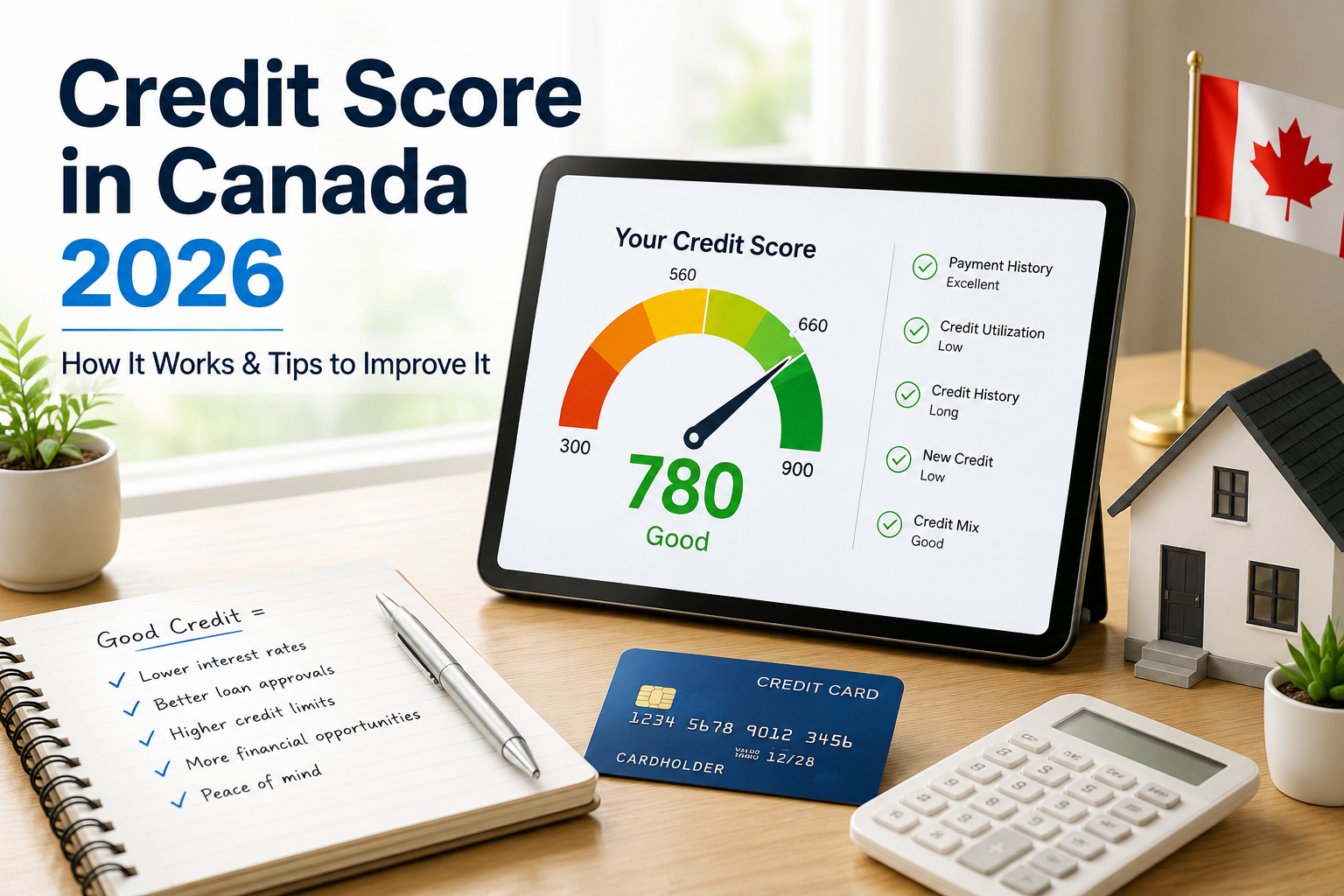
Your credit score in Canada can affect your ability to qualify for a credit card, loan or mortgage and may influence the interest rate a lender offers you.
A credit score is a three-digit number calculated using information in your credit report. In Canada, credit scores usually range from 300 to 900, and a higher score is generally better.
Understanding how credit scores work can help you build a stronger credit history and prepare for major financial decisions, including buying a home.
Table of Contents
What Is a Credit Score in Canada?
Your credit score represents how likely you are to repay borrowed money based on information in your credit report.
Canada has two main credit bureaus: Equifax and TransUnion. They collect information about your Canadian credit activity and create credit reports and scores.
Your credit report may include information about:
- Credit cards
- Loans and mortgages
- Amounts you owe
- Payment history
- Credit limits
- Collection accounts
Your score can change as lenders report new information about your accounts.
Credit Score Range in Canada
Credit scores in Canada generally range from 300 to 900.
| Credit Score | What It Means |
|---|---|
| 300 | Lower end of the typical Canadian range |
| Between 300 and 900 | Your score varies according to information in your credit history |
| 900 | Highest score in the typical Canadian range |
A higher score generally indicates lower lending risk.
However, there is no single credit score that guarantees approval for a loan, credit card or mortgage. Lenders use their own criteria, and the score you see may differ from the score a lender uses.
What Affects Your Credit Score?
Credit bureaus and lenders use different formulas and don’t disclose all the details of their calculations.
However, the Financial Consumer Agency of Canada identifies several common factors that may affect your score.
Payment History
Paying bills on time is essential for building a healthy credit score in Canada. FCAC describes payment history as the most important factor overall.
If you can’t pay the entire balance, making at least the minimum payment by the due date can help you avoid a missed payment.
Amount of Credit You Use
Being close to or exceeding your credit limits may negatively affect your score.
For example, consistently carrying a large balance relative to your available credit may make you appear riskier to lenders.
Length of Credit History
Lenders generally want to see a longer, stable credit history.
Closing an older credit account may shorten the history visible through your active accounts and reduce your available credit, so keeping an older no-fee account open may sometimes be helpful if you can manage it responsibly.
Credit Applications
Applying for credit may create a hard inquiry, which can affect your credit score.
Too many applications within a short period may also concern lenders. Checking your own credit report, however, is considered a soft inquiry and doesn’t affect your credit score.
How to Improve Your Credit Score in Canada
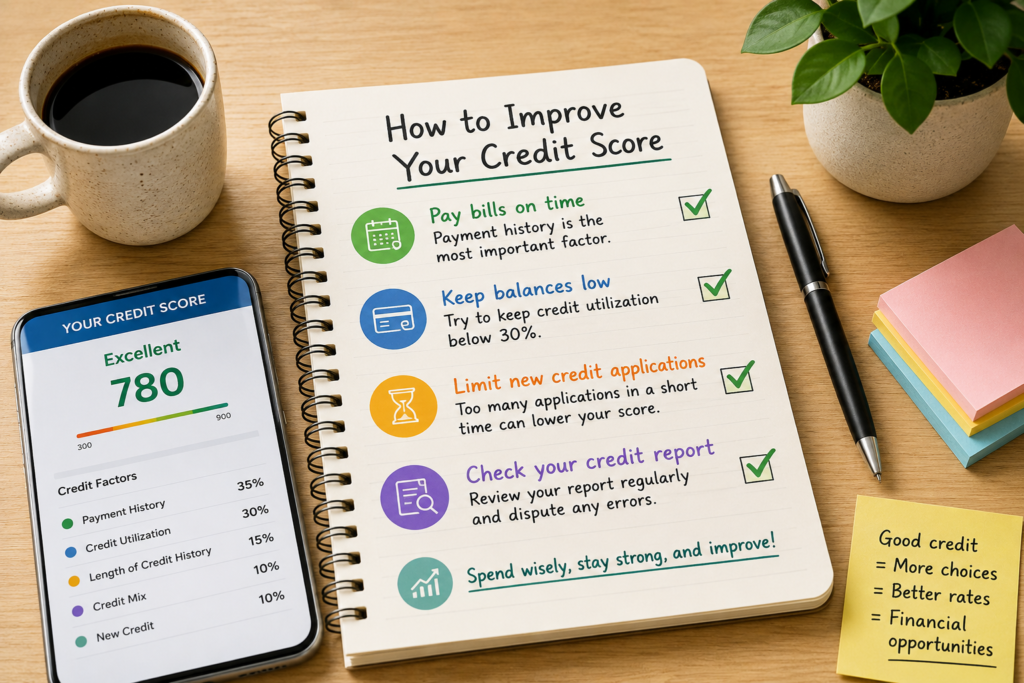
There is no instant way to create a strong credit history, but consistent credit habits may help over time.
Start by paying your bills on time. Avoid repeatedly approaching or exceeding your credit limits, and apply for new credit only when you actually need it.
Maintaining older accounts that are inexpensive and manageable may also help preserve a longer credit history.
If you’re shopping for a car loan or mortgage, FCAC advises getting quotes from different lenders within a two-week period, because credit bureaus treat those inquiries as one inquiry for this purpose.
How to Check Your Credit Report and Score for Free
You can access your credit report online for free from Canada’s two main credit bureaus, Equifax and TransUnion.
FCAC states that Equifax offers free online access to a credit score throughout Canada. TransUnion provides free score access through its Consumer Disclosure for residents of Quebec and Ontario. Some federally regulated financial institutions may also provide free credit scores through their banking apps.
Checking your own credit report or credit score does not lower your score.
It’s also a good idea to review reports from both credit bureaus for incorrect information or accounts you don’t recognize. Credit bureaus must correct errors for free when information is found to be incorrect.
Credit Score and Buying a Home
Your credit history becomes particularly important when you’re preparing to buy a home.
Mortgage lenders review your credit report before deciding whether to approve a mortgage. A poor credit score may result in a mortgage application being refused or a lender requiring a co-signer.
Lenders also consider other financial information, including your income and debt obligations, so your credit score isn’t the only factor involved in mortgage approval.
If you’re preparing to purchase a home, our Mortgage Pre-Approval in Canada and First-Time Home Buyer Programs in Canada guides can help you understand the next steps.
Frequently Asked Questions
What is the highest credit score in Canada?
Credit scores in Canada usually range from 300 to 900, with 900 at the top of the typical range.
What is considered a good credit score in Canada?
There isn’t one universal score that guarantees approval or a particular interest rate. Credit bureaus and lenders may use different scoring models and lending criteria.
Does checking my credit score lower it?
No. Checking your own credit report or credit score does not affect your credit score.
Can late payments hurt my credit score?
Yes. Late or missed payments may negatively affect your credit history and score. Payment history is an especially important factor.
Does my credit score matter when applying for a mortgage?
Yes. Mortgage lenders review your credit report as part of the approval process, although they also consider income, debt and other financial information.
Official Resources
FCAC — Credit Report and Score Basics
FCAC — Improving Your Credit Score